
Listen to this article in summarized format
Loading...
××
Subscribe to

Unlock AI Briefing and Premium Content
Subscribe NowWhat's Included
- Exclusive Stories
- Daily ePaper Access
- Smart Market Tools
- Curated Investment Ideas
- Ad-lite Experience
Subscription

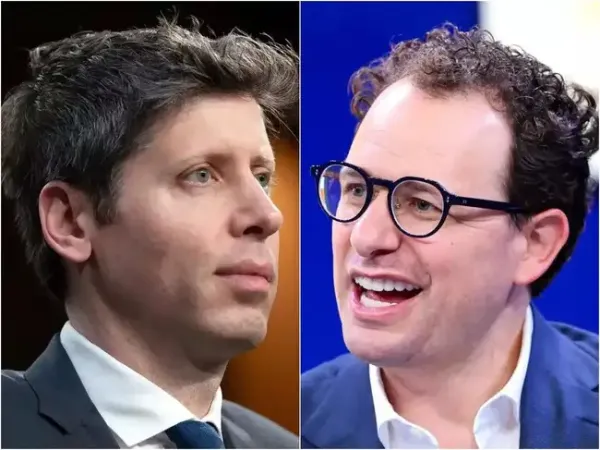
OpenAI CEO Sam Altman has sharply criticised advertising-led artificial intelligence (AI) strategies, taking an indirect swipe at rival Anthropic over its recent campaign and calling ads inside AI products a “crazy dystopic” idea.
Challenging the approach, Altman said, “using a deceptive ad to criticise deceptive ads something doesn't sit right with me about that.” While he acknowledged the execution, he added, “it was well played for sure and it was a funny ad,” but underscored that OpenAI remains fundamentally opposed to advertising within AI systems.
“I think it's good for them to not do ads. We have a different shaped business,” while speaking at the TBPN podcast hosted by John Coogan and Jordi Hays.
Altman was particularly blunt about ads inside chat-based AI applications, calling the practice fundamentally flawed. From a first-principles standpoint, he said OpenAI will not interfere with model outputs or insert commercial messaging into responses. “We are not going to put stuff into the LLM stream,” he said, describing the idea as “crazy dystopic” and likening it to “a bad sci-fi movie.”
Altman’s position draws a clear distinction between advertising around AI products and ads that shape or influence the model’s answers, a line he argued should not be crossed.
Despite the growing rivalry between AI labs, Altman downplayed competitive tensions, saying he is largely indifferent to the back-and-forth and that much of the public attention reflects excitement around the industry’s “food fight.”
Altman also spoke about OpenAI’s Super Bowl presence in the past, framing it as a cultural moment rather than a conventional marketing push. The effort, he said, was aimed at “speaking to the people who are at the center of this revolution and just trying to celebrate everything that's come before and after” (sic) and was executed in an old-fashioned way.
For knowledge, the Super Bowl is the annual championship game of the National Football League (NFL). It pits the champions of the league’s two conferences — the American Football Conference (AFC) and the National Football Conference (NFC )— against each other to decide the season’s overall champion.
In its first-ever television commercial during the 59th edition of the Super Bowl last year, OpenAI spent roughly $14 million on a 60-second spot to showcase ChatGPT and position AI as a historic leap in human innovation.
More broadly, Altman said OpenAI’s advertising strategy is focussed on education rather than promotion. “To teach people what they can do with AI,” he said, adding that “everyone can build amazing things now; if advertising can teach this, it would be great.”
Looking ahead, Altman said the ultimate measure of AI’s success will be its economic impact. “Soon the chart that matters is just going to be GDP impact,” he said, adding that “there is so much economic value in what models are doing.”
His comments came as AI startup Anthropic, founded by Dario Amodei, escalated its rivalry with OpenAI during the Super Bowl by airing two TV commercials that mocked ad-supported AI, implicitly targeting OpenAI’s plans to introduce advertising on free versions of ChatGPT, while positioning its own Claude chatbot as permanently ad-free.
The ads prompted a public response from OpenAI CEO Sam Altman, who said he found the commercials funny but misleading, accusing Anthropic of dishonesty and arguing that its ad-free stance is enabled by a smaller, more premium customer base.
Research labs are now ‘fashionable’
Altman noted a shift in how research is viewed across the technology industry. “Research labs have become ‘fashionable,’” he said, adding that industry support for research is “wonderful.”
When asked about potential acquisitions, Altman said the most attractive companies would combine deep research capabilities with strong product execution. The future, he suggested, lies in hybrid organisations where “truly extraordinary product work would have more and more research components.” However, he didn't name any potential acquisition.
‘Compute power is the new oil’
Reworking a familiar tech analogy, Altman argued that compute, rather than data, has become the most critical resource in AI development. Calling “compute power the new oil,” he said spending priorities are fluid, with companies sometimes needing to invest heavily in data and at other times in compute infrastructure.
Software is not dead
Altman also rejected claims that software is becoming obsolete. While acknowledging that how software is built and consumed is changing rapidly, he said it is far from dead. Instead, he argued, companies are increasingly structured around APIs, reflecting a shift in how digital products are delivered and integrated.
Reflecting on a prediction he made in 2016, Altman said emotional attachment to chatbots has moved from theory to reality. What once seemed speculative, he said, is now clearly visible in how people interact with AI systems today.
Challenging the approach, Altman said, “using a deceptive ad to criticise deceptive ads something doesn't sit right with me about that.” While he acknowledged the execution, he added, “it was well played for sure and it was a funny ad,” but underscored that OpenAI remains fundamentally opposed to advertising within AI systems.
“I think it's good for them to not do ads. We have a different shaped business,” while speaking at the TBPN podcast hosted by John Coogan and Jordi Hays.
Altman was particularly blunt about ads inside chat-based AI applications, calling the practice fundamentally flawed. From a first-principles standpoint, he said OpenAI will not interfere with model outputs or insert commercial messaging into responses. “We are not going to put stuff into the LLM stream,” he said, describing the idea as “crazy dystopic” and likening it to “a bad sci-fi movie.”
Altman’s position draws a clear distinction between advertising around AI products and ads that shape or influence the model’s answers, a line he argued should not be crossed.
Despite the growing rivalry between AI labs, Altman downplayed competitive tensions, saying he is largely indifferent to the back-and-forth and that much of the public attention reflects excitement around the industry’s “food fight.”
Altman also spoke about OpenAI’s Super Bowl presence in the past, framing it as a cultural moment rather than a conventional marketing push. The effort, he said, was aimed at “speaking to the people who are at the center of this revolution and just trying to celebrate everything that's come before and after” (sic) and was executed in an old-fashioned way.
For knowledge, the Super Bowl is the annual championship game of the National Football League (NFL). It pits the champions of the league’s two conferences — the American Football Conference (AFC) and the National Football Conference (NFC )— against each other to decide the season’s overall champion.
In its first-ever television commercial during the 59th edition of the Super Bowl last year, OpenAI spent roughly $14 million on a 60-second spot to showcase ChatGPT and position AI as a historic leap in human innovation.
More broadly, Altman said OpenAI’s advertising strategy is focussed on education rather than promotion. “To teach people what they can do with AI,” he said, adding that “everyone can build amazing things now; if advertising can teach this, it would be great.”
Looking ahead, Altman said the ultimate measure of AI’s success will be its economic impact. “Soon the chart that matters is just going to be GDP impact,” he said, adding that “there is so much economic value in what models are doing.”
His comments came as AI startup Anthropic, founded by Dario Amodei, escalated its rivalry with OpenAI during the Super Bowl by airing two TV commercials that mocked ad-supported AI, implicitly targeting OpenAI’s plans to introduce advertising on free versions of ChatGPT, while positioning its own Claude chatbot as permanently ad-free.
The ads prompted a public response from OpenAI CEO Sam Altman, who said he found the commercials funny but misleading, accusing Anthropic of dishonesty and arguing that its ad-free stance is enabled by a smaller, more premium customer base.
Research labs are now ‘fashionable’
Altman noted a shift in how research is viewed across the technology industry. “Research labs have become ‘fashionable,’” he said, adding that industry support for research is “wonderful.”
When asked about potential acquisitions, Altman said the most attractive companies would combine deep research capabilities with strong product execution. The future, he suggested, lies in hybrid organisations where “truly extraordinary product work would have more and more research components.” However, he didn't name any potential acquisition.
‘Compute power is the new oil’
Reworking a familiar tech analogy, Altman argued that compute, rather than data, has become the most critical resource in AI development. Calling “compute power the new oil,” he said spending priorities are fluid, with companies sometimes needing to invest heavily in data and at other times in compute infrastructure.
Software is not dead
Altman also rejected claims that software is becoming obsolete. While acknowledging that how software is built and consumed is changing rapidly, he said it is far from dead. Instead, he argued, companies are increasingly structured around APIs, reflecting a shift in how digital products are delivered and integrated.
Reflecting on a prediction he made in 2016, Altman said emotional attachment to chatbots has moved from theory to reality. What once seemed speculative, he said, is now clearly visible in how people interact with AI systems today.