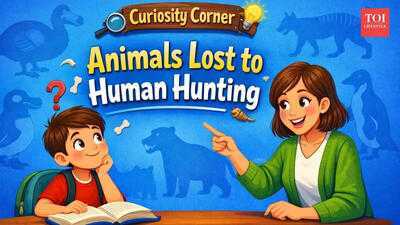
Long ago, Earth had animals that looked, moved, and lived very differently from those seen today. Some were gentle. Some were curious. Some trusted humans too easily. Sadly, a few of them disappeared forever because people hunted them faster than nature could protect them. This story is not meant to scare. It is meant to help children better understand how choices matter, even small ones.
The Dodo
The dodo lived on a small island called Mauritius, near Africa. It could not fly and had no natural enemies. When sailors arrived in the late 1600s, the dodo did not run away. People hunted it for food, and animals brought by humans destroyed its nests. Within about 100 years, the dodo was gone. Trust became its weakness, and speed became humanity’s mistake.
The Passenger Pigeon
Once, passenger pigeons filled the skies of North America in flocks so large they blocked sunlight. That sounds impossible, but it was true. People hunted them in huge numbers for meat and sport during the 1800s. Railways helped hunters reach nesting sites easily. By 1914, the very last passenger pigeon died in a zoo. A bird that seemed endless vanished in one human lifetime.
Steller’s Sea Cow
This giant sea animal lived near the cold waters of the Bering Sea. It was peaceful, slow, and lived close to shore. Sailors hunted it heavily for meat, fat, and skin. The shocking part is how fast it disappeared. Steller’s sea cow was discovered in 1741 and became extinct by 1768. That is just 27 years. Nature did not get a second chance.
The Great Auk
The great auk looked like a penguin and lived in the North Atlantic. It could not fly and nested on rocky islands. Humans hunted it for feathers, which were used to fill pillows and coats. Eggs were crushed, and adults were taken in large numbers. By the mid-1800s, the great auk was extinct. Comfort for humans came at a heavy cost for the bird.
The Quagga
The quagga was a kind of zebra that lived in South Africa. It had stripes only on the front part of its body. Farmers hunted it because it was seen as competition for grazing land. People did not think it would disappear. The last quagga died in 1883 in a zoo. Only pictures and preserved skins remain to show how unique it was.
Why these stories still matter
These animals did not disappear because they were weak. They disappeared because humans acted without thinking about tomorrow. Each story teaches one clear lesson. When people take more than nature can give back, silence follows. Learning these stories helps children grow into kinder, more careful adults.
Disclaimer: This article is written for educational purposes only. All information is based on widely accepted historical and scientific records from museums, conservation organisations, and natural history studies. The aim is to spread awareness and learning, not fear or blame.
-
Air Canada flight diverted to St. John’s after leaving Toronto, stranding 368 London-bound passengers; here’s what happened

-
After Situationship and Lovebombing, now Gen Z’s 6-7 dating formula has gone viral, meaning Millennials have gone crazy again.

-
Sitting for more than an hour is as dangerous as smoking a cigarette, experts warn

-
How to Remove Dark Circles: Want to get rid of dark circles under the eyes? Adopt these 5 easy solutions, there will be no need for expensive creams

-
Make ‘Sweet Potato Fries’ in minutes to add to the fun of tea, a dish that kids and adults alike will love.