The Income Tax Department has released the Draft Income Tax Rules, 2026, inviting feedback from taxpayers, professionals, and other stakeholders. These proposed rules have been framed in line with the Income Tax Act, 2025 and are expected to replace the existing Income Tax Rules, 1962 once approved by Parliament. If finalized, the new rules are likely to come into force from April 1, 2026.
The department has sought public suggestions on the draft rules and forms until February 22, 2026, allowing room for refinements before implementation.
Objective Behind the New Income Tax RulesAccording to the tax department, the primary goal of the Income Tax Rules, 2026 is to simplify tax compliance and improve the taxpayer experience. The language of the rules has been made clearer and more concise, while unnecessary and outdated provisions from the old framework have been removed.
Wherever required, tables, formulas, and structured explanations have been introduced to avoid ambiguity. Tax forms are also being redesigned to reduce complexity and errors. The department plans to introduce smart, tech-enabled forms with features such as pre-filled data and automated reconciliation, which will help speed up filing and reduce compliance burden.
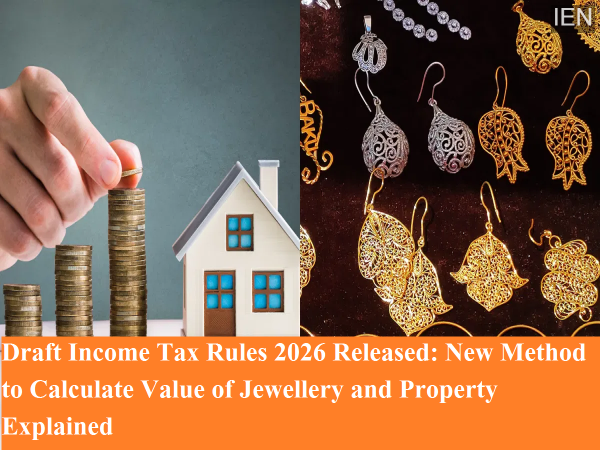
Rule 57: New Formula for Fair Market ValueOne of the most significant provisions in the draft rules is Rule 57, which explains how the Fair Market Value (FMV) of assets such as jewellery, artistic works, and immovable property will be determined for tax purposes.
Valuation of Jewellery and Artistic AssetsUnder the proposed rules, the FMV of jewellery or artistic items will be the price they would ordinarily fetch if sold in the open market on the valuation date.
-
If jewellery or artwork has been purchased from a registered dealer, the invoice value will be accepted as the fair value.
-
If such assets are acquired through other means and their value exceeds ₹50,000, the tax authorities may rely on a valuation report issued by a registered valuer.
Artistic assets covered under this rule include antiques, paintings, sculptures, drawings, and similar collectible items.
Valuation of Immovable PropertyFor land or buildings, the draft rules clearly state that the fair market value will be the value assessed or adopted by the stamp duty authority of the central or state government. This aligns income tax valuation with stamp duty assessments, reducing disputes and inconsistencies.
Valuation of Other AssetsFor assets not falling under the above categories, the FMV will be determined based on the price generally obtainable in the open market on the valuation date.
Asset Valuation Summary Under Draft Rules 2026-
Jewellery: Open market value or invoice value (if purchased from a registered dealer); valuation report if value exceeds ₹50,000.
-
Artistic Works: Open market value or invoice value; registered valuer report if value is above ₹50,000.
-
Immovable Property: Stamp duty value fixed by government authorities.
-
Other Assets: Normal market selling price on the valuation date.
The proposed valuation framework is expected to bring greater transparency and consistency in tax assessments. Clear valuation rules will reduce litigation, simplify reporting of capital assets, and make tax filing more predictable.
By aligning valuation norms with real-world market practices and official records, the new rules aim to create a more efficient and taxpayer-friendly system. Once finalized, these rules will play a crucial role in wealth reporting, capital gains computation, and compliance under the new tax regime.
-
NBCS Ghansoli Lift Girls U-14 Title With 4–0 Win; Don Bosco Matunga Edge St. Stanislaus 1–0 To Win Boys U-14 St. Andrews League

-
T20 World Cup 2026 Group C Points table: England survive Nepal scare to climb to the second spot

-
GB News halts for 'breaking news' alert in devastating blow for Keir Starmer

-
Japan polls: PM Takaichi set to retain power as LDP sweeps lower house elections

-
The BBC is finished - backers are holding onto the 1 thing that'll kill it