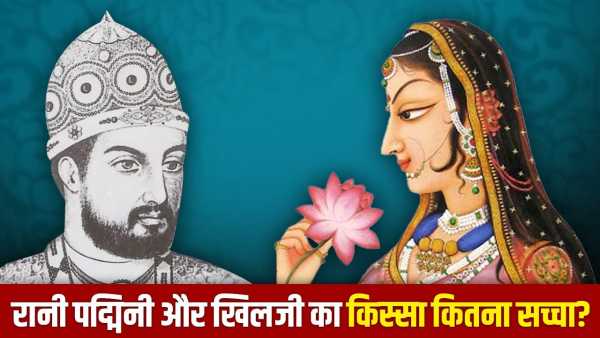
There are many stories of Queen Padmini and Alauddin Khilji in history.
There may be controversy over the historical existence of the incomparable beauty Queen Padmini of Chittor, but she is a character who is still alive in history and poetry as well as in folk belief. The story of Rani Padmini, also known as Padmavati, became popular through Mahakavi Jayasi's epic Padmavat 237 years after her Jauhar. But its influence has been so widespread that many historians have investigated and written about it. Some historians call it a product of imagination. The opinion of those who trust is also divided. The film maker presents the story of Alauddin Khilji being shown a glimpse of Queen Padmini in the mirror.
The second group, quoting the glorious tradition of Rajputs sacrificing their lives to protect honor and modesty, says that Queen Padmini was a brave woman and she had rescued her husband Rawal Ratan Singh from Khilji's captivity. During Khilji's second attack on Chittor in 1303, instead of falling into his hands, he performed Jauhar with thousands of women.
What was the reason for Khilji's attack on Chittor?
Queen Padmini Rajputi of Chittor is considered a symbol of dignity, women's respect and Jauhar. However, there is controversy among historians about his historical existence and the authenticity of the stories related to him. Was there really a queen named Padmini in Chittor? Did Alauddin Khilji, enamored by her beauty, attack Chittor just to get her and then be content with seeing her reflection in the mirror on the condition of lifting the siege?
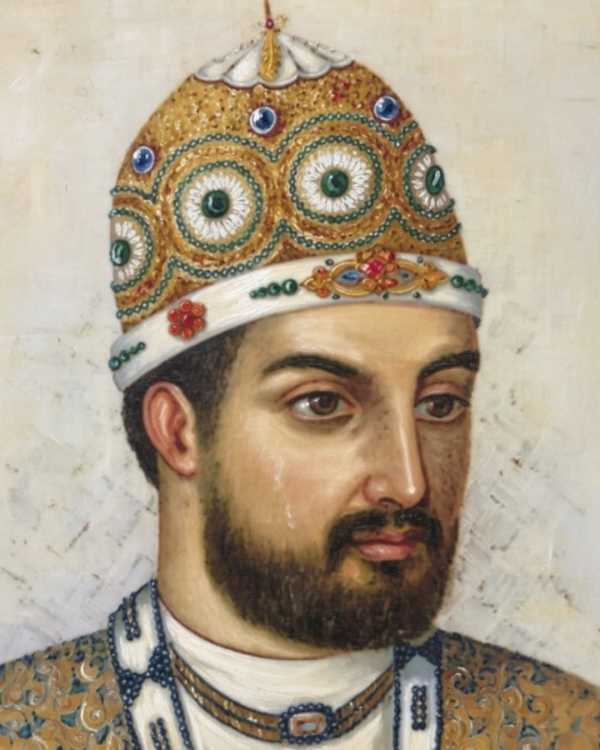
Alauddin Khilji.
Khilji's attack on Chittor in 1303 AD is a historical fact. Muslim historian Amir Khusro has mentioned this campaign in his work Khazain-ul-Futuh. But they cite political and military necessity as the reason for the attack. According to him, Chittor was a powerful fort of Mewar and it was an obstacle in the expansionist policy of Khilji's Delhi Sultanate. On the other hand, in Khusro's account there is no mention of Khilji's infatuation with Queen Padmini or her beauty. According to historian K.S.Lal, if Queen Padmini had been the reason for Khilji's attack on Chittor, Khusro would surely have recorded it.
Jayasi's Padmavat made Padmini famous
The first detailed mention of Queen Padmini of Chittor is found in the epic poem Padmavat of great poet Jayasi. Jayasi composed it in 1540 i.e. 237 years after Khilji's attack on Chittor. Jayasi wrote that his book is not history, but Sufi poetry, this story was not told by me, but by Allah. In Padmavat, Padmini is described as the princess of Sinhaladweep (Sri Lanka), whom King Ratnasen of Chittor marries. Later the story of her beauty reaches Alauddin. According to the famous critic Ramchandra Shukla, “Padmavat is not a historical text, but an allegorical poem, in which the hero and heroine are symbols of the soul and God.
Padmini's truth in the mirror!
The most controversial episode of Padmini story has been the condition of Alauddin Khilji to show Queen Padmini in the mirror in front of King Ratan Singh. According to the popular story, Ratan Singh accepts this condition. But historians dismiss it as a figment of imagination. Amir Khusro, who has confirmed Khilji's attack on Chittor in 1303, does not make any mention of Queen Padmini or giving her the reason for the attack.
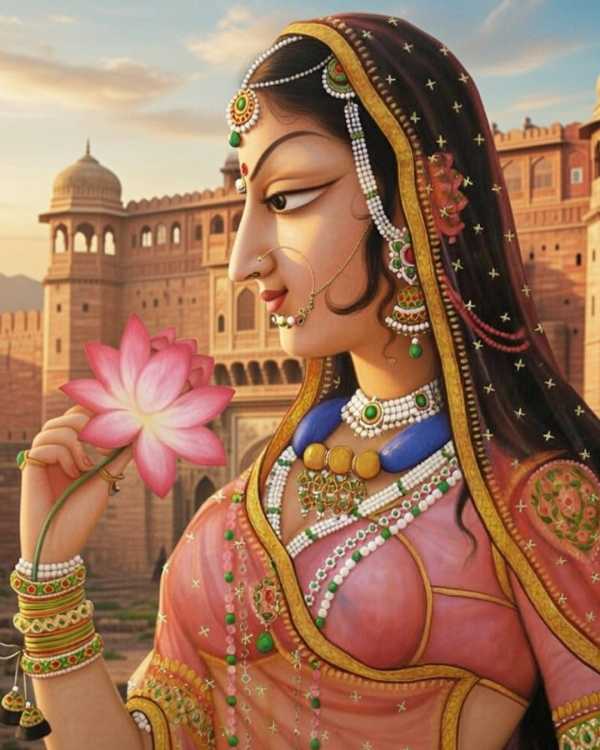
Queen Padmini.
There is no mention of this anywhere in the details of Ziauddin Barani. There is no reference to it even in the fourteenth century historian Ibn Battuta. According to historian Satish Chandra, Padmini's reflection in the mirror is a product of literary imagination. Contemporary history does not support this. Romila Thapar connects such references to an attempt to create the image of a heroine.
Khilji captured Ratan Singh by deceit
Those who recognize the existence of Queen Padmini, present this story in another form. Omendra Ratnu wrote in “Maharana” that after conquering Ranthambore and Shivana forts, Alauddin Khilji laid siege to Chittor in 1302 and in return set the condition of presenting Queen Padmini.
Rajputs considered it an insult. There was tremendous conflict and bloodshed. Then Khilji offered to talk. Ratan Singh accepted the condition of giving some tribute in return for lifting the siege of Khilji. However, the story of showing Queen Padmini in the mirror is false. Later, Ratan Singh, who had gone to leave Khilji below the fort, was captured by deceit.
At this juncture Omendra Ratnu presents Queen Padmini as a clever strategist and warrior. Khilji is informed that Queen Padmini will be sent to him along with her maids but he will have to remove the army from the vicinity and will have to follow the veil and decorum of women. Khilji accepts it.
Seven hundred palanquins are dispatched. Padmini is in one. Soldiers in the other. The palanquin bearers are also soldiers. Prisoner Ratan Singh gets half an hour to meet Queen Padmini for the last time. They go together for some distance in the same palanquin. Horse soldiers were ready to help them further. Those sitting in the palanquin and carrying it also appear in their soldier form. Khilji is stunned. Queen Padmini frees her husband Ratan Singh from the enemy and reaches Chittor safely.
Jauhar of thousands of women
Khilji's second attack on Chittor took place in 1303. After a long siege he conquered the southern part of Chittor. In the fierce struggle of three days, twelve princes including the elder prince Ari Singh achieved heroic feat. On the fourth day, Ratan Singh announced that now he will sacrifice himself for the protection of Chittor. The enemy army was overwhelming but Queen Padmini and other women were not afraid to sacrifice their lives to protect their honor and modesty. On 18 August 1303, under the leadership of Queen Padmini, thousands of women resolved to dedicate themselves to the fire. He entered the tunnel of the fort. They closed its doors and sacrificed themselves rather than fall into the hands of the Tatars.
Padmini, symbol of women's respect and resistance
Of course, the authenticity of Queen Padmini has been a matter of controversy. But the practice of Jauhar is real and historically proven. Jauhar took place after Khilji's attack on Chittor in 1303 AD, this is a historically proven fact. There may be differences of opinion on who led it.
Historian James Todd presented the story of Queen Padmini in an almost historical form in Annals and Antiquities of Rajasthan. But modern historians believe that Tod accepted Rajput folklore without critical examination and adopted a colonial romantic vision. Amidst these controversies, Queen Padmini has become a cultural symbol of women's respect and resistance. According to Harbans Mukhiya, Rani Padmini may not be a historical truth but her name is recorded in the memories of history.
-
PNB Apprentice Recruitment 2026: 5138 vacancies, a great opportunity for graduate youth to build a career in the banking sector..

-
Haryana Government Jobs: HSSC has released recruitment for 4227 Group C posts, apply soon..

-
A fake notice regarding the exam date for the UP Police SI Exam 2025 is going viral; UPPRPB has issued an alert..

-
RBI Recruitment 2026: Recruitment announced for several posts including Legal Officer Grade-B and Manager..

-
NCERT Recruitment 2026: The last date to apply for various positions, including Professor and Assistant Professor, is approaching..