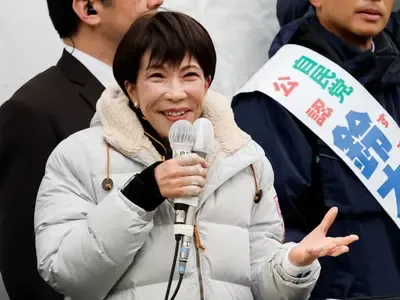

Japan began voting on Sunday in a rare winter general election, as citizens headed to polling stations amid heavy snowfall and widespread transport disruptions to decide the future of Prime Minister Sanae Takaichi’s government. The snap Lower House election, held under severe weather conditions, is widely seen as a referendum on Takaichi’s leadership and her policy agenda at a critical moment for the country’s economy, security posture, and global role.
Snowbound Polls and a High-Stakes Test of Political Authority
Polling stations opened across Japan early Sunday morning for the House of Representatives election, an event that has drawn national and international attention due to its timing, weather conditions, and political significance. It is the first time in more than three decades that Japan has held a general election in February, a month typically avoided because of harsh winter conditions in large parts of the country.
Heavy snowfall blanketed northern and central regions, including areas that rarely experience significant winter weather. Tokyo recorded snowfall overnight, while parts of northern Japan faced blizzard-like conditions, complicating travel for voters and election workers alike. Transport disruptions were widespread, with multiple train lines and ferry routes suspended and hundreds of domestic flights cancelled, limiting access to polling stations in several prefectures.
Despite the conditions, voting proceeded nationwide, with authorities implementing contingency measures to ensure polling stations remained operational. Voters in snow-affected regions described difficult journeys, snow-covered access routes, and delays, but many expressed determination to participate, viewing the election as a crucial moment for the country’s political direction.
Initial turnout figures suggested a slower pace compared to previous elections. By mid-morning, participation levels were notably lower than those recorded at the same time during the last general election, with officials attributing the decline primarily to weather-related challenges. While advance voting had increased significantly in the days leading up to election day, concerns remained that severe conditions could suppress overall turnout.
The election carries unusually high stakes for Prime Minister Sanae Takaichi, who took office last October and quickly moved to consolidate power by calling a snap poll. She has openly stated that she would resign if her ruling coalition fails to secure a majority in the 465-seat Lower House, tying her political future directly to the outcome.
A strong victory would provide Takaichi with a clear mandate to pursue her agenda, strengthen her position within the ruling Liberal Democratic Party, and neutralise internal opposition. A weaker result, even if her party remains in power, could raise questions about her authority and complicate efforts to advance reforms.
Nearly 1,300 candidates are contesting the election, with 289 seats decided in single-member constituencies and the remaining 176 allocated through proportional representation across regional blocs. Under this system, small shifts in voter behaviour can translate into significant changes in parliamentary strength, making turnout and local dynamics especially critical.
Economy, Youth Support, and Competing Visions for Japan’s Future
Economic concerns have dominated the campaign, with the cost-of-living crisis emerging as the central issue for many voters. Japan is facing its first sustained period of inflation in decades, placing pressure on household budgets and reviving debates over taxation, wages, and government spending.
Prime Minister Takaichi and her Liberal Democratic Party have pledged to ease the burden on families through targeted economic measures, including a proposed temporary cut in the sales tax on food items. The government has argued that such a move would provide immediate relief while preserving long-term fiscal stability.
The opposition has countered with alternative proposals, calling for permanent reductions in food taxes and broader reforms aimed at increasing disposable income. Smaller parties have advanced more aggressive platforms, ranging from sweeping tax cuts to expanded social spending, seeking to capitalise on voter frustration over rising prices.
Beyond economics, Takaichi has campaigned on an assertive vision for Japan’s future, emphasising proactive government investment, economic security, and industrial competitiveness. She has argued that the state must play a stronger role in guiding strategic sectors such as technology, manufacturing, and critical infrastructure to maintain Japan’s global standing.
One of the defining features of the election has been Takaichi’s unusually strong support among younger voters. Surveys have shown overwhelming approval ratings among those under 30, a demographic that has traditionally been disengaged from politics. Her popularity has been reflected in a youth-driven cultural phenomenon centred on her public image and leadership style.
However, analysts caution that youth enthusiasm does not always translate into high voter turnout, particularly under adverse weather conditions. Older voters, who form the backbone of the ruling party’s support base, are historically more reliable participants, giving turnout dynamics added significance in this election.
National security and foreign policy have also played a prominent role in shaping voter perceptions. Takaichi has advocated increased defence spending and a more robust military posture, citing regional instability and evolving security threats. Her early remarks on potential responses to a Taiwan contingency marked a sharp shift in tone and contributed to heightened tensions with China.
The prime minister has also taken a firm stance on immigration, calling for stricter controls on foreign residents and tighter regulations on foreign property ownership. Supporters argue these measures protect national interests, while critics warn they could exacerbate labour shortages and damage Japan’s international image.
Internationally, the election has been closely watched, particularly by Japan’s allies. Public endorsement from the United States has added a global dimension to the campaign, reinforcing Takaichi’s image as a leader aligned with stronger defence cooperation and strategic partnerships.
As polls close and vote counting begins, attention remains focused on whether the prime minister will secure the decisive mandate she seeks, or whether weather, turnout, and economic anxieties will produce a more complicated outcome.
The post Japan Votes in Snow-Hit Snap Election as Prime Minister Sanae Takaichi Seeks Strong Public Mandate | cliQ Latest appeared first on CliQ INDIA.
-
GST Rationalisation Turns: India's demand engine revives as consumption picks up

-
After Tiger Global ruling, Income Tax dept sends notices to foreign VCs, PE funds

-
Royal Family: Andrew and Fergie 'infuriated' staff as 'habits' laid bare by ex-butler

-
Epstein prison guards used 'fake body' to fool media outside jail after his death - files

-
Chelsea told why controversial Leeds goal stood as VAR surprises Mike Dean