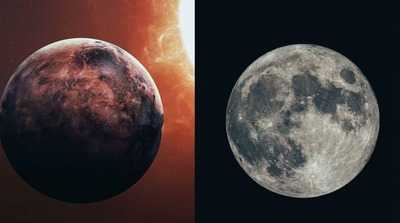
2 celestial events to light up sky on February 19
12 Feb 2026
On February 19, 2026, skywatchers will be treated to two celestial events.
First, Mercury will reach its greatest eastern elongation, the point where it appears farthest from the Sun in the sky.
Later in the evening, a thin crescent Moon will pass close to Saturn.
The double feature offers both scientific significance and a beautiful twilight pairing for stargazers across continents.
Timing of events
Event schedule
Mercury's greatest eastern elongation will occur between 2:00-3:00pm EST, making it visible shortly after local sunset.
The Moon-Saturn pairing, on the other hand, will be best viewed during twilight hours (6:00-6:30pm EST).
Both events will appear in the western sky shortly after sunset, providing an excellent opportunity for stargazers to witness these celestial phenomena.
Visibility across the world
Global view
The Mercury elongation will be visible worldwide after sunset, including in the US, Canada, Mexico, Europe, Asia, India and Australia.
The Crescent Moon near Saturn will be visible in the US, Europe, Middle East, India, and Africa.
Both events promise to light up the night sky on February 19, a unique combination of science and spectacle that highlights the dynamic nature of our solar system.
-
AI cloud firm Nebius posts surge in capex on GPU, data centre expenses

-
LSEG to build blockchain-friendly digital settlement platform

-
100 people rescued after fire engulfs Ahmedabad commercial complex; no casualties

-
Vijay Raghavendra’s Raakshasa OTT release date confirmed: When and where to watch the thriller series?

-
How cops nabbed the ‘monk’ who looted Jain temples across 3 states including 600g gold bar, 10kg silver crown from Chennai Sowcarpet