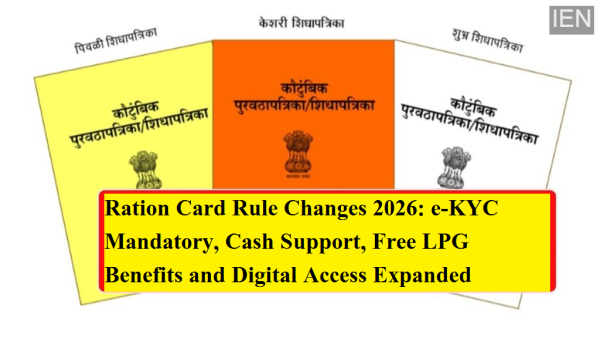
The Government of India has introduced major reforms to the ration card system in 2026, aiming to improve transparency, eliminate ineligible beneficiaries, and ensure that genuine families receive full benefits. These changes are part of the modernization of the Public Distribution System (PDS), which provides subsidized food grains and essential supplies to millions of households.
The new rules focus on digital verification, direct cash transfers, and improved access to ration and welfare services. If you are a ration card holder, understanding these updated guidelines is crucial to avoid disruption of benefits.
Mandatory e-KYC Verification Before Deadline
One of the most important changes is the compulsory electronic Know Your Customer (e-KYC) verification for all ration card holders. Every member listed on the ration card must complete Aadhaar-based authentication through biometric verification at ration shops or authorized centers.
This process ensures that only eligible families remain in the system. Those who fail to complete e-KYC within the prescribed deadline risk having their ration cards temporarily suspended or permanently removed from the beneficiary list.
The government has emphasized that this step will prevent duplication, fake entries, and misuse of welfare schemes.
Direct Cash Transfers to Support Essential Purchases
In addition to subsidized grains, eligible beneficiaries in certain schemes and regions may receive financial assistance through Direct Benefit Transfer (DBT). This support typically ranges from ₹1,000 to ₹1,500 and is transferred directly to beneficiaries’ bank accounts.
The objective of this financial aid is to help families purchase essential items such as pulses, cooking oil, and spices that are not always included in ration supplies. Direct transfers also eliminate middlemen and ensure that the funds reach beneficiaries without delays.
Face Recognition Introduced for Easier Identification
To make ration distribution more accessible, especially for elderly citizens and manual laborers whose fingerprints may not match biometric records, face authentication technology has been introduced.
Under this system, beneficiaries can verify their identity through facial recognition using digital devices at ration shops. This reduces dependency on fingerprint scanners and ensures that genuine beneficiaries do not lose access due to technical issues.
Free LPG Cylinders and Expanded Nutrition Support
Certain priority households, including Antyodaya and economically weaker families under specific welfare programs, may receive additional benefits such as free LPG cylinders during the year, subject to scheme eligibility and state-level implementation.
Along with wheat and rice, ration shops are also expanding supplies to include fortified rice, iodized salt, sugar, and nutritious millets such as bajra and ragi. This move supports better nutrition and aligns with the government’s focus on improving public health.
Strict Action Against Ineligible Beneficiaries
To improve fairness, the government has implemented data-based verification systems to identify ineligible ration card holders. Individuals with higher annual incomes, income taxpayers, government employees, or owners of certain assets may be excluded if they do not meet eligibility criteria.
These reforms aim to ensure that welfare benefits reach only those who genuinely need financial support.
One Nation One Ration Card and Digital Access Expansion
The One Nation One Ration Card initiative has been further strengthened. Beneficiaries can now access ration benefits from any fair price shop across the country using Aadhaar authentication, regardless of their location.
Additionally, digital ration cards can now be accessed through DigiLocker, eliminating the need to carry physical documents. Beneficiaries can also receive SMS alerts about ration availability, quantity, and transaction details.
Conclusion: A Major Step Toward Transparent Welfare Delivery
The ration card reforms introduced in 2026 represent a significant step toward making welfare delivery more efficient, transparent, and accessible. By introducing mandatory e-KYC, direct financial support, advanced authentication methods, and nationwide portability, the government aims to strengthen food security and reduce misuse.
Ration card holders are advised to complete their verification and stay informed about their eligibility to continue receiving benefits without interruption.
-
Tech: Gemini AI comes to Google Pay; now get an instant breakdown of every expense, big or small..

-
WhatsApp introduces new calling features: Now make calls directly from WhatsApp Web; call transfer option also available..

-
Will WhatsApp change for users under 18 in India? Screenshot of the feature surfaces..

-
The easiest way to download a digital ration card—get it done from the comfort of your home..
-
Tech Tips: Is the phone new or previously used? Easily check right after buying..