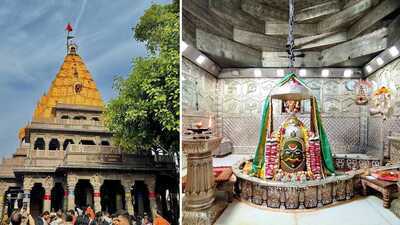
New Delhi: The sacred city of Ujjain in Madhya Pradesh awakens before dawn as chants echo across the ghats of the Kshipra. At the heart stands the revered Mahakaleshwar Temple, one among the 12 Jyotirlingas dedicated to Lord Shiva. On Maha Shivratri, February 15, the temple’s unique decor ritual transforms the swayambhu dakshinmukhi Shivling into breathtaking artistic forms rooted in devotion and tradition. Revered as Mahakal, the Lord of Time, the presiding deity of the temple symbolises cosmic power and protection.
The Mahakaleshwar decor attire and form on Maha Shivratri are crucial because they transform Lord Mahakal into a groom for his wedding procession with Goddess Parvati, following a nine-day “Shiv Navratri” celebration. The attire, specifically the headdress or the sehra and regal clothing, represents the union of Shiva and Shakti. This ritual, integral to the early morning Bhasma Aarti, includes styling the Shivling with sacred ash or bhasma, flowers, silver ornaments, and fabrics, creating over 10,000 distinct, artistic forms. Here are the tips on how to decorate Mahakaleshwar.
Shiv Navratri tradition at MahakaleshwarUnlike many Shiva temples across India, the Mahakaleshwar Temple in Ujjain observes a distinctive nine-day, sometimes ten-day, Shiv Navratri tradition leading up to Maha Shivratri, during which Lord Mahakal is adorned in a different divine roop each day. The celebrations culminate with a grand bridal adornment where the deity is styled as a royal groom, symbolising the sacred marriage festivities of Shiva in the ancient Avantika region. The daily-changing vastra, often in red and other vibrant hues, along with a crown, mundamaal and garlands of fruits, reflect his varied cosmic manifestations and reinforce the theological depth behind this elaborate ritual shringar.
Mahakaleshwar decoration details 1. Sehra or bridegroom decorThe central attraction is the special sehra decoration, in which the Mahakal Shivling is dressed as a groom, adorned with jewellery and flowers to represent the wedding with Goddess Parvati.
2. Sandalwood and makeupDuring the nine days of Shiv Navratri leading up to the main day, the deity is adorned in different forms with sandalwood paste and makeup.
3. Floral adornmentsThe temple, including the Nandi Hall and sanctum sanctorum, is decorated with over 40 varieties of exotic flowers.
4. Lighting and atmosphereThe temple premises are illuminated with lights and decorated to create a festive, traditional ambience for the wedding.
5. RitualsThe festivities conclude with the Bhasma Aarti and the symbolic marriage procession, where Mahakal is worshipped as a groom.
Key Mahakal decoration ideas at homeDevotees can recreate the spirit of Mahakaleshwar decor at home by shaping a serene and reverent space dedicated to Lord Shiva.
- Soft white drapes paired with subtle blue accents lend a tranquil backdrop, while a Shivaling placed at the centre of the prayer area becomes the focal point of worship.
- Offerings of bel patra, dhatura and fresh flowers hold traditional importance. White blooms such as roses, orchids and jasmine may be arranged alongside marigolds and gentle fairy lights to add warmth without excess.
- A thoughtfully designed rangoli, floral carpet or toran at the entrance sets a festive tone for guests, while incense sticks and traditional diyas complete the sacred ambience with fragrance and glow.
Bringing Mahakaleshwar decor into the home is not merely decorative. It symbolises strength, time consciousness and spiritual grounding. As one of the 12 Jyotirlingas, the temple embodies intense Shaivite energy. Devotees believe that installing a dakshinmukhi Mahakal roop invokes protection, discipline and inner transformation.
On Maha Shivratri, as chants rise in Ujjain and lamps glow through the night, the decor and vastra of Mahakal remind devotees of Shiva’s eternal presence beyond time.
-
Rain threat looms over India vs Pakistan T20 World Cup match
-
We rape Palestinian women also, IDF soldier confesses to livestreamer

-
India has all ingredients to be a full-stack AI leader: Sam Altman

-
1954 Speaker removal debate: Nehru said Congress MPs not bound by whip
-
BNP election victory: Big win, but small change likely in Bangladesh