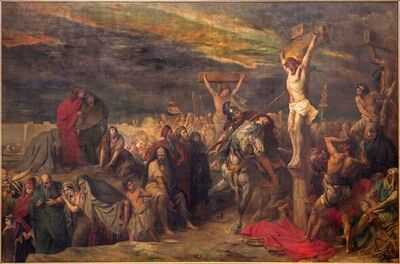
A film-maker who worked on Monty Python's Life of Brian says he has found fresh evidence suggesting Jesus was not crucified, claiming that artificial intelligence can help prove it. Julian Doyle said the idea began while editing the famous scene featuring Eric Idle, Graham Chapman and John Cleese singing Always Look on the Bright Side of Life on their crosses, which prompted decades of research.
40 years later, he argues the man executed by the Romans was actually Judas the Galilean, a rebel involved in an uprising. He believes early Christians merged the identities, and that Jesus instead underwent an earlier symbolic crucifixion before later dying by stoning. According to Doyle, the two narratives gradually fused, forming the traditional account of crucifixion and resurrection.

After 40 years of private research, the 83-year-old film-maker believes artificial intelligence has finally allowed him to test that suspicion, claiming that preliminary results support his views.
He believes that by feeding almost 100 apparent contradictions from the Bible into major AI systems, he was able to demonstrate that the man executed under Pontius Pilate was not Jesus but Judas.
Doyle says leading AI models including ChatGPT, Claude, Grok, DeepSeek and Google Gemini judged his explanation more coherent than the traditional Gospel narrative.
He has published the argument in a new book, How to Unravel the Gospel Story Using AI, presenting it as a step-by-step guide so readers can replicate the questioning process themselves.
The conventional account holds that Jesus was crucified at Golgotha outside Jerusalem, died on the cross and rose three days later - the foundation of Christian belief.
Doyle disputes each stage. He argues Jesus was a teacher and mystic who underwent an earlier symbolic crucifixion ritual that he survived, before being stoned years later on amid accusations of sorcery and blasphemy.
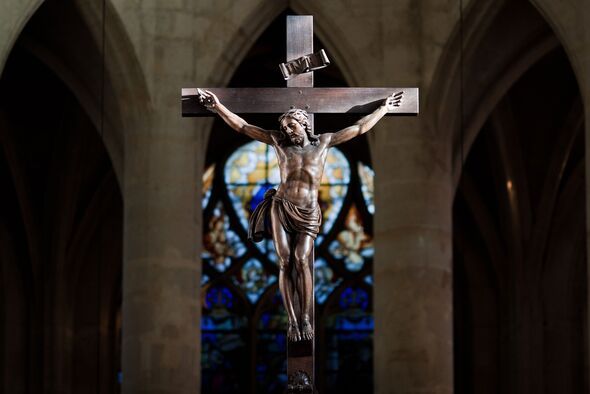
According to Doyle, early followers merged the lives of two separate men into a single narrative, creating the image of a crucified and resurrected saviour.
He kept the theory largely private for years, fearing ridicule, while continuing to compare texts and historical references using what he calls a process of eliminating impossibilities.
He says artificial intelligence matters because it can sift vast bodies of material without theological assumptions.
After entering 99 challenges to the Gospel narrative, he claims each system judged the theory logically consistent.
For Doyle, the conclusion is unchanged after decades of study - only now, he argues, machines have reached it too.
-
Winning Euromillions numbers LIVE: Full lottery results with Thunderball on 17 February

-
Jesse Jackson, civil rights titan, dies at 84

-
Jesse Jackson, civil rights titan, dies at 84
-
Doncaster railway: All lines blocked and train services cancelled near key station

-
Doncaster railway: All lines blocked and train services cancelled near key station