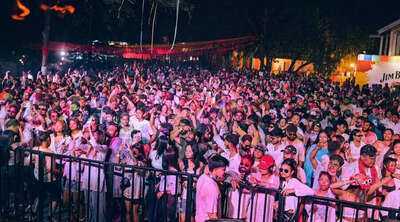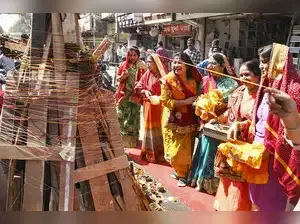
Holi, the festival of colours, is one of India’s most widely celebrated occasions, marking the arrival of spring and symbolising the triumph of good over evil. The festivities begin with Holika Dahan, a ritual bonfire observed on the night of the full moon. The ceremony commemorates the legend of Prahlad and Holika, reinforcing the belief that righteousness ultimately prevails.
This year, the full moon begins on March 2 in the evening and continues until March 3. Holika Dahan is being performed after the shadow of Bhadra ends, in keeping with traditional religious guidelines that consider Bhadra inauspicious for the ritual.
The ritual typically involves lighting a bonfire with wood and symbolic offerings, followed by prayers for prosperity, protection and well-being. Devotees gather with family and community members to perform parikrama around the fire, signifying the burning away of negativity and the ushering in of positive energy ahead of Rangwali Holi, which is celebrated the following day with colours, music and festivities.
This year, the full moon begins on March 2 in the evening and continues until March 3. Holika Dahan is being performed after the shadow of Bhadra ends, in keeping with traditional religious guidelines that consider Bhadra inauspicious for the ritual.
Holika Dahan 2026 city-wise timings
| City | Timings |
| Delhi | 6:39 pm to 9:00 pm |
| Noida | 6:39 pm to 9:00 pm |
| Mathura | 6:36 pm to 9:00 pm |
| Bhopal | 6:24 pm to 8:51 pm |
| Lucknow | 6:30 pm to 8:51 pm |
| Patna | 5:52 pm to 8:20 pm |
| Mumbai | 6:44 pm to 9:11 pm |
| Chandigarh | 6:23 pm to 8:51 pm |
| Shimla | 6:21 pm to 8:50 pm |
| Jaipur | 6:29 pm to 8:57 pm |
| Varanasi | 6:39 pm to 9:00 pm |
| Raipur | 6:08 pm to 8:35 pm |
| Bengaluru | 6:29 pm to 8:54 pm |
| Chennai | 6:18 pm to 8:43 pm |
| Hyderabad | 6:23 pm to 8:49 pm |
| Itanagar | 5:17 pm to 7:45 pm |
| Kolkata | 5:41 pm to 8:08 pm |
| Bhubaneswar | 5:52 pm to 8:19 pm |
| Nagpur | 6:19 pm to 8:45 pm |
| Ahmedabad | 6:43 pm to 9:11 pm |
| Ranchi | 5:53 pm to 8:20 pm |
The ritual typically involves lighting a bonfire with wood and symbolic offerings, followed by prayers for prosperity, protection and well-being. Devotees gather with family and community members to perform parikrama around the fire, signifying the burning away of negativity and the ushering in of positive energy ahead of Rangwali Holi, which is celebrated the following day with colours, music and festivities.