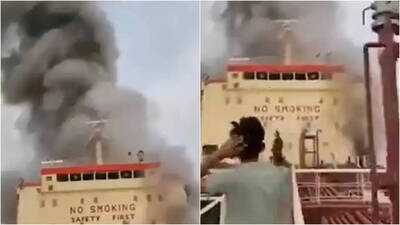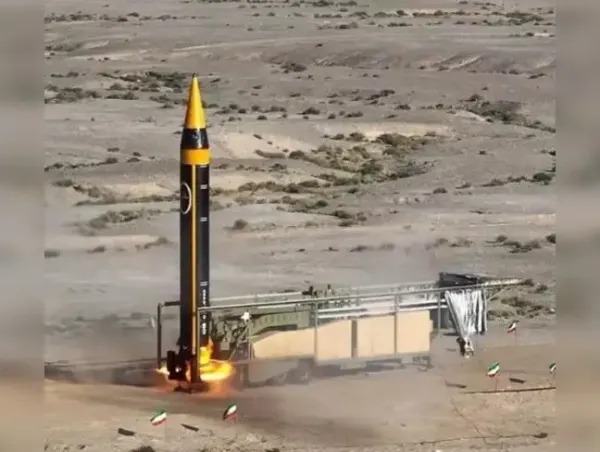
Operation Fury, the US strike that led to the death of Iran’s Supreme Leader Ayatollah Ali Khamenei, has triggered an intense backlash from Tehran. Since the Friday attack, Iran has launched hundreds of missiles and drones at neighbouring countries that host US military bases.
Videos circulating on social media show alleged attacks on Dubai airport, a drone crash into a residential building in Kuwait, and the latest strike targeting Saudi Aramco’s Ras Tanura oil refinery in Saudi Arabia.
Amid the escalating exchanges, Israel’s military said on Sunday that it had destroyed approximately 50 per cent of Iran’s missile inventory during recent operations. Despite the reported losses, Iran is continuing efforts to rebuild its military capabilities.
Military spokesman Brigadier General Effie Defrin said in a televised statement from Jerusalem that during the June 2025 operation, Israel destroyed approximately half of Iran’s missile stockpiles and prevented the production of at least 1,500 additional missiles. He added that Iran had recently been producing dozens of surface-to-surface missiles per month and had intended to increase output to hundreds per month.
Israeli officials had earlier estimated that Iran was left with about 1,500 missiles and 200 launchers at the end of the conflict. By late 2025, however, they observed signs that Tehran was attempting to replenish its stocks after expending hundreds of missiles in exchanges with Israel in April and October 2024 and during the June 2025 war.
Missile precision is measured by circular error probable, the radius within which half of fired missiles are expected to land. Some newer solid-fuel systems, including Fateh 313 and Zolfaghar variants, are assessed to have a circular error probable between 10 and 30 metres, compared with older Shahab-series missiles measured in hundreds or thousands of metres.
Solid-fuel propulsion has become central to Iran’s strategy. Such missiles are easier to store, faster to launch and less vulnerable to detection than liquid-fuel systems, which often require fuelling at the launch site. Iranian engineers are assessed to have developed stronger indigenous capabilities in producing solid rocket motors than advanced liquid-fuel engines.
Following mixed performance against US and Israeli air defences in 2024 and 2025, Iran has also invested in manoeuvrable re-entry vehicles and terminal guidance systems. Systems such as Fattah 1 and upgraded variants of Khorramshahr are designed to complicate interception by altering trajectory in the final phase of flight.
United Nations Security Council Resolution 1929, which returned to effect in September 2025, states that Iran shall not undertake any activity related to ballistic missiles capable of delivering nuclear weapons, including launches using ballistic missile technology. The resolution includes restrictions on the procurement of missile-related technology and targeted sanctions.
Tehran has continued developing ballistic missiles and space launch vehicles that share technologies with long-range missile systems.
This networked approach allows Iran to exert pressure across multiple theatres even if its domestic stockpiles are reduced.
Iran’s continued investment in solid-fuel production, precision guidance and manoeuvrable warheads indicates that missile forces remain central to its military doctrine and regional deterrence posture. While the precise size of its current inventory remains difficult to verify independently, the breadth of systems across short-range, medium-range and cruise missile categories suggests Iran retains the capacity to strike military bases, infrastructure and strategic targets across much of the Middle East.
Videos circulating on social media show alleged attacks on Dubai airport, a drone crash into a residential building in Kuwait, and the latest strike targeting Saudi Aramco’s Ras Tanura oil refinery in Saudi Arabia.
Amid the escalating exchanges, Israel’s military said on Sunday that it had destroyed approximately 50 per cent of Iran’s missile inventory during recent operations. Despite the reported losses, Iran is continuing efforts to rebuild its military capabilities.
Military spokesman Brigadier General Effie Defrin said in a televised statement from Jerusalem that during the June 2025 operation, Israel destroyed approximately half of Iran’s missile stockpiles and prevented the production of at least 1,500 additional missiles. He added that Iran had recently been producing dozens of surface-to-surface missiles per month and had intended to increase output to hundreds per month.
Israeli officials had earlier estimated that Iran was left with about 1,500 missiles and 200 launchers at the end of the conflict. By late 2025, however, they observed signs that Tehran was attempting to replenish its stocks after expending hundreds of missiles in exchanges with Israel in April and October 2024 and during the June 2025 war.
List of missiles in Iran's inventory
| Name | Type | Max range | Payload | Propulsion | CEP | Status |
| Shahab-1 (Scud B) | SRBM | up to 300 km | 770–1,000 kg | liquid fuel, single stage | ~500 m | deployed |
| Shahab-2 (Scud C) | SRBM | ~500 km | ~700 kg | liquid fuel, single stage | ~700 m | deployed |
| Qiam-1 / Qiam-1 (mod.) | SRBM | 700–800 km | 650 kg | liquid fuel, single stage | <500 m | deployed |
| Fateh-110 (incl. Khalij Fars, Hormuz) | SRBM | 300 km | ~450 kg | solid fuel, single stage | ~100 m | deployed |
| Fateh-313 | SRBM | 500 km | 350 kg | solid fuel, single stage | 10–30 m | deployed |
| Raad-500 | SRBM | 500 km | unknown | solid fuel, single stage | 30 m | tested |
| Zolfaghar (incl. Zolfaghar Basir) | SRBM | 700 km | 450–600 kg | solid fuel, single stage | 10–30 m | deployed |
| Dezful | SRBM | 1,000 km | 450–600 kg | solid fuel, single stage | 10–30 m | deployed |
| Shahab-3 | MRBM | 1,300 km | 750–1,000 kg | liquid fuel, single stage | ~3 km | deployed |
| Ghadr | MRBM | 1,600 km | ~750 kg | liquid fuel, single stage | ~300 m | deployed |
| Emad | MRBM | 1,800 km | ~750 kg | liquid fuel, single stage | <500 m | deployed |
| Khorramshahr-1/-2/-4 (BM-25/Musudan) | MRBM | 2,000–3,000 km | 750–1,500 kg | liquid fuel, single stage | ~30 m | possibly deployed |
| Fattah-1 | MRBM | 1,400 km | unknown | solid fuel single stage, solid fuel MaRV | unknown | deployed |
| Fattah-2 | MRBM | 1,500 km | unknown | solid fuel single stage, liquid fuel MaRV | unknown | displayed |
| Haj Qassem | MRBM | 1,400 km | 500 kg | solid fuel, single stage | unknown | deployed |
| Qassem Basir | MRBM | 1,200 km | ~500 kg | solid fuel, single stage | unknown | tested |
| Kheibar Shekan | MRBM | 1,450 km | 450–600 kg | solid fuel, single stage | unknown | deployed |
| Sejjil | MRBM | 2,000 km | ~750 kg | solid fuel, two stage | unknown | deployed |
| Soumar (Kh-55) | LACM | unknown | unknown | turbofan engine | N/A | possibly deployed |
| Hoveizeh | LACM | 1,350 km | unknown | turbojet engine | N/A | possibly deployed |
| Ya Ali | LACM | 700 km | unknown | turbojet engine | N/A | tested |
| Paveh | LACM | 1,650 km | unknown | turbojet engine | N/A | deployed |
| Safir | SLV | 2,100 km | 500–750 kg | liquid fuel, two stage | N/A | retired |
| Simorgh | SLV | 4,000–6,000 km | 500–750 kg | liquid fuel, two stage | N/A | operational |
| Qased | SLV | 2,200 km | 1,000 kg | liquid 1st stage; solid 2nd & 3rd stages | N/A | operational |
| Zuljanah | SLV | 4,000–5,000 km | 1,000 kg | solid 1st & 2nd stages; liquid 3rd stage | N/A | tested |
| Ghaem-100 | SLV | 3,000–4,000 km | 1,000 kg | solid fuel, three stage | N/A | operational |
Shift towards precision and solid fuel
Over the past two decades, Iran has prioritised precision, survivability and combat readiness rather than simply extending missile range.Missile precision is measured by circular error probable, the radius within which half of fired missiles are expected to land. Some newer solid-fuel systems, including Fateh 313 and Zolfaghar variants, are assessed to have a circular error probable between 10 and 30 metres, compared with older Shahab-series missiles measured in hundreds or thousands of metres.
Solid-fuel propulsion has become central to Iran’s strategy. Such missiles are easier to store, faster to launch and less vulnerable to detection than liquid-fuel systems, which often require fuelling at the launch site. Iranian engineers are assessed to have developed stronger indigenous capabilities in producing solid rocket motors than advanced liquid-fuel engines.
Following mixed performance against US and Israeli air defences in 2024 and 2025, Iran has also invested in manoeuvrable re-entry vehicles and terminal guidance systems. Systems such as Fattah 1 and upgraded variants of Khorramshahr are designed to complicate interception by altering trajectory in the final phase of flight.
Nuclear capability concerns
Although Iran describes its missile programme as a conventional deterrent, many of its medium-range ballistic missiles are capable of carrying a nuclear warhead, a longstanding international concern.United Nations Security Council Resolution 1929, which returned to effect in September 2025, states that Iran shall not undertake any activity related to ballistic missiles capable of delivering nuclear weapons, including launches using ballistic missile technology. The resolution includes restrictions on the procurement of missile-related technology and targeted sanctions.
Tehran has continued developing ballistic missiles and space launch vehicles that share technologies with long-range missile systems.
Regional reach and proxy transfers
Iran’s missile capabilities extend beyond its borders through transfers to regional proxies. Yemen’s Houthi movement has used Iranian-derived missiles to strike targets in Saudi Arabia and the United Arab Emirates and to target commercial shipping in the Red Sea. Tehran has also supplied hundreds of close-range ballistic missiles and air defence missiles to Russia for use in Ukraine.This networked approach allows Iran to exert pressure across multiple theatres even if its domestic stockpiles are reduced.
Arsenal rebuilding under way
Israel’s assertion that half of Iran’s missile stockpile was destroyed highlights the scale of the June 2025 conflict. However, statements that Iran had been producing dozens of missiles per month and intended to expand output suggest regeneration efforts are advancing.Iran’s continued investment in solid-fuel production, precision guidance and manoeuvrable warheads indicates that missile forces remain central to its military doctrine and regional deterrence posture. While the precise size of its current inventory remains difficult to verify independently, the breadth of systems across short-range, medium-range and cruise missile categories suggests Iran retains the capacity to strike military bases, infrastructure and strategic targets across much of the Middle East.