
Listen to this article in summarized format
Loading...
××
Subscribe to

Unlock AI Briefing and Premium Content
New Year Offer 24 Hours Left
Subscribe NowAlready a member? Sign In
What's Included
- Exclusive Stories
- Daily ePaper Access
- Smart Market Tools
- Curated Investment Ideas
- Ad-lite Experience
Subscription

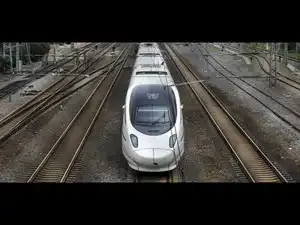
New Delhi: India will procure 16 more domestically manufactured bullet trains as the nation makes a beeline for launching high speed rail travel in the country. Two Japan-made E-5 variant Shinkansen trains will also arrive in the country by 2029-30, officials said.
“These trains will run on the Mumbai-Ahmedabad Highspeed rail (MAHSR) corridor,” a senior official told ET, adding they will work alongside the pair of trainsets already awarded to defence public sector undertaking-BEML by the Indian Railway’s Integral Coach Factory (ICF) for this route.
The 508-kilometre (km) bullet project is being developed with Japanese collaboration and funding. Out of 12 stations, foundation works are complete at eight stations. Its progress was recently reviewed by UNO Yoshimasa, Special Advisor to Prime Minister of Japan, and his delegation. In a post on X, Union Railways Minister Ashwini Vaishnaw said they expressed satisfaction with the progress, adding it is “a testament to the strong India-Japan partnership.”
This project is supported by Japan International Cooperation Agency (JICA) through Rs 59,396 crore worth soft loans since 2017. According to the multi-lateral financing agency, the assistance includes a range of technical contributions, such as feasibility studies, fundamental and intricate design work, training programmes in Japan, collaboration on station area development, and the deployment of Japanese Shinkansen experts to work alongside India’s National High-Speed Rail Corporation Limited (NHSRCL).
Globally, high-speed trains are those which operate at over 250 kmph such as the French TGV and Japanese Shinkansen.
In an October 2024 BEML statement, their trainsets will run at 280 kmph, and are being built at the company’s Bengaluru rail coach complex. These two-fully air-conditioned chair car configuration trains are scheduled for delivery by 2026-end.
ICF has priced these trains at Rs 866.87 crore, with each coach costing Rs 27.86 crore. The total contract value includes design costs, one-time development costs, non-recurring charges, and one-time costs for jigs, fixtures, tooling, and testing facilities.
In her Budget 2026-27 speech, Finance Minister Nirmala Sitharaman had announced seven new bullet train corridors in India. Responding to a query in the Lok Sabha, Vaishnaw said India’s technical capabilities for developing high speed rail travel being developed through the MAHSR project. He listed gains in track construction, advanced signalling, rolling stock manufacturing and maintenance, and project management, among others.
“These are expected to provide a strong foundation for future high-speed rail corridors in the country,” the railway minister had said.
“These trains will run on the Mumbai-Ahmedabad Highspeed rail (MAHSR) corridor,” a senior official told ET, adding they will work alongside the pair of trainsets already awarded to defence public sector undertaking-BEML by the Indian Railway’s Integral Coach Factory (ICF) for this route.
The 508-kilometre (km) bullet project is being developed with Japanese collaboration and funding. Out of 12 stations, foundation works are complete at eight stations. Its progress was recently reviewed by UNO Yoshimasa, Special Advisor to Prime Minister of Japan, and his delegation. In a post on X, Union Railways Minister Ashwini Vaishnaw said they expressed satisfaction with the progress, adding it is “a testament to the strong India-Japan partnership.”
This project is supported by Japan International Cooperation Agency (JICA) through Rs 59,396 crore worth soft loans since 2017. According to the multi-lateral financing agency, the assistance includes a range of technical contributions, such as feasibility studies, fundamental and intricate design work, training programmes in Japan, collaboration on station area development, and the deployment of Japanese Shinkansen experts to work alongside India’s National High-Speed Rail Corporation Limited (NHSRCL).
Globally, high-speed trains are those which operate at over 250 kmph such as the French TGV and Japanese Shinkansen.
In an October 2024 BEML statement, their trainsets will run at 280 kmph, and are being built at the company’s Bengaluru rail coach complex. These two-fully air-conditioned chair car configuration trains are scheduled for delivery by 2026-end.
ICF has priced these trains at Rs 866.87 crore, with each coach costing Rs 27.86 crore. The total contract value includes design costs, one-time development costs, non-recurring charges, and one-time costs for jigs, fixtures, tooling, and testing facilities.
In her Budget 2026-27 speech, Finance Minister Nirmala Sitharaman had announced seven new bullet train corridors in India. Responding to a query in the Lok Sabha, Vaishnaw said India’s technical capabilities for developing high speed rail travel being developed through the MAHSR project. He listed gains in track construction, advanced signalling, rolling stock manufacturing and maintenance, and project management, among others.
“These are expected to provide a strong foundation for future high-speed rail corridors in the country,” the railway minister had said.