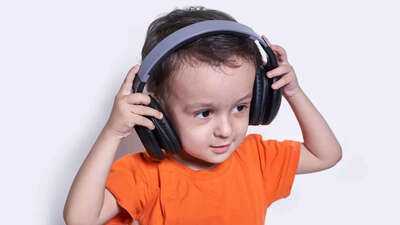
Sometimes it is not distraction or disobedience, sometimes a child is simply struggling to hear the world clearly
A child not responding when called causing worry? This often begins in ways families barely notice at first. A parent calls out from the kitchen and there is no response from the child. Teachers mention that a child seems “lost” during instructions. At home, conversations start repeating – “I just told you that five minutes ago”.
The assumption usually is the obvious: the child is distracted, stubborn, or too absorbed in gadget screens. But in paediatric practice, another concern emerges: some children who appear inattentive are not ignoring sound. They are working harder than anyone can realise just to understand the sounds. Over time, the effort simply becomes exhausting.
When Listening Looks Like Misbehaviour
Children rarely say, “I can’t hear properly”. Most do not even recognise the change themselves. Instead, behaviour shifts slowly. A child watches lips carefully while others speak. Answers are slightly off-topic. Group conversations become uncomfortable. Classrooms feel confusing rather than engaging.
While families describe these children as daydreamers or slow responders, such children may actually be experiencing auditory processing difficulty — where sound reaches the ears, but the brain struggles to organise and interpret it clearly, especially in noisy environments.
Imagine trying to follow a conversation in a crowded railway station. Now imagine that feeling lasting all day.
Why Young Ears Tire More Easily
Inside every ear sits the cochlea, a tiny spiral structure lined with microscopic cochlear hair cells. These cells translate sound vibrations into signals the brain understands as speech, music, or laughter. They are delicate, and if damaged, they do not grow back.
Children’s auditory systems are still developing, which makes them more sensitive to sustained sound exposure. Loud environments can temporarily dull hearing, known as a temporary threshold shift — the muffled sensation many people notice after a noisy event. When exposure repeats frequently, the change may become permanent, leading to noise-induced hearing loss (NIHL).
Unlike sudden injury, this process is gradual. There is no dramatic moment when hearing suddenly disappears. It simply becomes less clear.
A Childhood Surrounded by Constant Noise
Modern childhood rarely experiences true stillness. Online classes, gaming, streaming videos, and music through headphones mean sound now sits directly inside a child’s ears for hours. Add amplified sounds like urban traffic, construction noise, and loud celebrations, and young ears receive very little recovery time.
Many devices easily cross safe decibel exposure thresholds without families realising it. Because damage builds slowly, children continue daily routines unaware that their auditory system is under strain.
Clinicians are increasingly observing concerns which were once seen mostly in adults, now appearing in school-going children.
Small Signs Parents Often Dismiss
The earliest clues are subtle and easy to overlook:
●Frequently increasing headphone or TV volume
●Saying “huh?” or asking for repeated instructions multiple times a day
●Difficulty following instructions when background noise is present
●Speech clarity or gradual delays in speech and language development
●Withdrawal from conversations or appearing unusually quiet in groups
These behaviours rarely feel urgent — which is exactly why they should matter.
Protecting Hearing Without Taking Away Joy
Healthy listening habits do not mean removing technology or celebrations from childhood. Small adjustments make a meaningful difference:
●Keep headphone volume below 60 per cent, provide noise cancelling variants, if possible, and encourage listening breaks
●Allow quiet time after loud events so ears can recover
●Encourage using ear muffs to loud events or fireworks displays
●Prefer outdoor or well-ventilated play spaces during festivals
●Use parental volume controls on devices when available
●Consider periodic hearing checks using audiometry or otoacoustic emission (OAE) screening, especially if behavioural changes appear. Early screening is simple, painless, and often reassuring.
Confidence and Connection, More Than Hearing
Hearing shapes how children learn language, build friendships, and feel confident speaking up. When sounds become unclear, misunderstandings increase. A child corrected repeatedly for not listening may slowly stop trying to participate at all. What appears like lack of attention can quietly affect self-esteem.
The encouraging reality is that early recognition changes outcomes dramatically. With timely support, children often regain comfort in communication and reconnect with learning environments that once felt overwhelming.
Listening a Little More Closely
Childhood is filled with voices calling names across playgrounds, whispered jokes between friends, instructions from teachers, bedtime stories, and music and games at birthday parties. When a child stops responding, the instinct is often to repeat louder.
Perhaps, when parents notice such silence, the important step is to pause and ask a gentler question: Is the child truly not listening — or is the world simply not reaching them the way it used to? The answers may restore something profound — not just hearing, but confidence, connection, and the quiet reassurance of feeling included in every conversation once again.
(Dr Shruti Bansal, Consultant - Paediatric ENT, Narayana Health SRCC Children’s Hospital, Mumbai)
-
Indian Government Establishes Control Room for Citizens in West Asia Amid Rising Tensions

-
India Enforces SIM-Link Rule for Messaging Apps; Accounts May Stop Working Without Active Registered SIM
-
Pranav Vashisht calls being a part of Amar Singh Chamkila & Border 2 'a dream come true'
-
BBC Silent Witness confirms future as series ends and fans are thrilled

-
UK railway company plunges into liquidation - in business since 1952