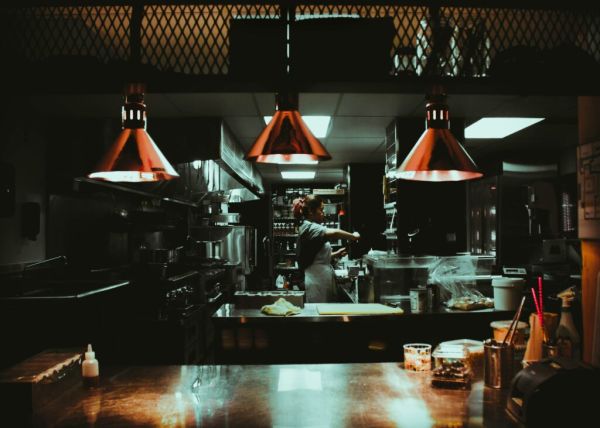
Think about the last time a plate of food genuinely stopped you in your tracks. Chances are it wasn’t a foam-topped molecular creation or a single artfully placed scallop. It was probably a plate of pani puri handed to you through a small window, a paper cone of bhel dripping with chutneys, or a skewer of seekh kebab eaten standing up on a cold winter night. Street food has always been the most honest kind of cooking: bold, unapologetic, rooted in memory, and absurdly good. Now, fine dining has figured out what the rest of us always knew. The best food in the world was never behind velvet ropes. It was on the corner all along.
The Most Democratic Food In The World Goes Upscale
There is a certain irony in the fact that street food, which was historically the food of working-class people, servants, and daily-wage labourers, is now being plated under soft lighting and served with a seven-course tasting menu. Food historians point out that street food has existed in virtually every ancient urban civilization precisely because it was cheap, filling, and quick. It was never meant to be precious. And yet, here we are.
The shift has been building globally for a while. In Bangkok, Jay Fai, a 70-something street cook who wears ski goggles to protect her eyes from wok flames, earned a Michelin star for her crab omelette. In Istanbul, chef Fatih Tutak put stuffed mussels, a classic coastal street snack eaten with a squeeze of lemon, on his tasting menu at TURK restaurant, reimagined in a presentation that makes diners stop and stare. In New York and London, menus at serious restaurants started featuring tacos, ramen, and bánh mì with the same reverence usually reserved for French classics.
In India, the conversation is sharper, more personal, and more complex. Because Indian street food isn’t just delicious. It is deeply tied to regional identity, community ritual, and childhood memory in a way that almost nothing else is. When a chef picks up golgappa or daulat ki chaat or sev puri and puts it on a fine dining menu, they aren’t just adding a popular dish. They’re making a statement about what Indian food means and who it belongs to.
The Chefs Doing It Best
Two names come up again and again in any conversation about the elevation of Indian street food: Chef Manish Mehrotra of Indian Accent and Chef Hussain Shahzad of The Bombay Canteen. Both have spent years doing the careful, unglamorous work of figuring out what it actually means to honor a street food dish rather than simply steal its name.
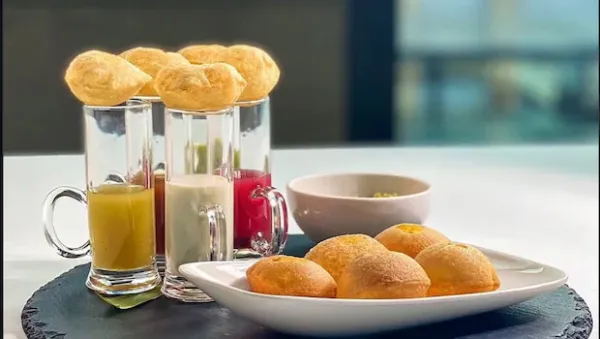
Chef Mehrotra, widely considered the pioneer of modern Indian fine dining, has a clear guiding principle behind his approach. “Street food really creates nostalgia,” he has said. “It reminds me of my childhood. That reflects on my menu as I try to uplift these dishes for a fine dining experience while preserving their original flavours.” His version of the Golgappa, for instance, draws from two different street traditions at once, incorporating flavors from Kolkata’s jhaal pani and Bihar’s version of the filling. Guests get five different waters and five different fillings. The dish is recognizable and completely surprising at the same time.
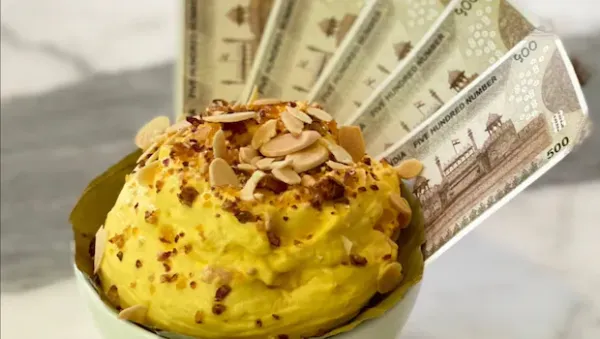
His take on Daulat ki Chaat is even more remarkable. This is one of Old Delhi’s most beloved and most ephemeral street desserts: a cloud-like confection of whisked milk, saffron, and cream, traditionally only available in winter, only in the bylanes of Chandni Chowk, and only for a few hours each morning before it melts away. Mehrotra worked with technology to make it available year-round, adding crispy almonds, rose-speckled chikki, and fake rupee notes as garnish. It is a dish that makes people nostalgic for a place they may never have been, which is its own kind of culinary magic.
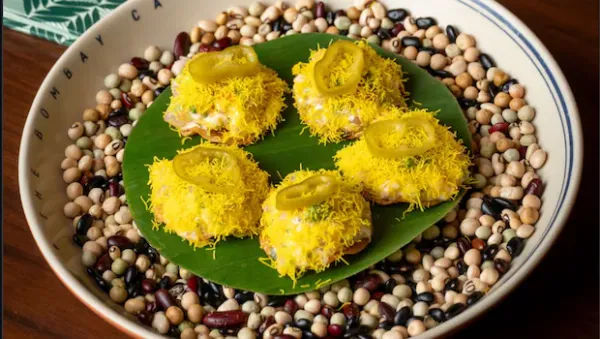
At The Bombay Canteen, Hussain Shahzad works with a similar philosophy but a very different energy. His food is playful, irreverent, and deeply Mumbai. His Chilled Sea Bass Sev Puri uses a crispy fried chapati as the base instead of the usual puri, cured sea bass instead of potato or chana, raw mango chutney for tang, and pickled Bhavnagri chillies for heat. The soul of sev puri, the layered, textural, punchy joy of it, is entirely intact. But the execution is something else entirely. “Street food isn’t just about the food; it’s about the whole experience,” he has explained. “The bold, tangy, and spicy flavors have taught us a lot about balance and creativity.”
His seasonal menus have also featured Stone Fruit Chaat, which takes Delhi’s beloved fruit chaat tradition and rebuilds it with smoky grilled peaches and goat cheese dahi, and a Bone Marrow Naan Chaap that pays direct tribute to the seekh kebab and naan stalls of Mohammed Ali Road in Mumbai. The street reference is always clear. The upgrade is always worth it.
Chef Rijul Gulati of Indian Accent Mumbai puts the whole thing as plainly as anyone has. “Fine dining is flirting with the streets, and honestly, it’s about time,” he has said. “The best flavors don’t live in rulebooks; they live in alleys, on khomchas, and in memories.” At Indian Accent, that philosophy has translated into golgappa, pao bhaji, chana jor garam, papdi chaat, and dahi bhalla, all finding their way onto the menu in elevated form, each one carrying the emotional weight of the original while offering something new to discover. “It’s that quiet moment of surprise when nostalgia crashes the table,” he explains. “Because real luxury today isn’t complicated. It’s emotional, honest, and wildly delicious.” It is as good a summary of this entire trend as you will find anywhere.
Why This Works (And Why It Doesn’t Always)
The best versions of this trend work because the chefs understand what made the original great. The worst versions fail because they treat street food as a vibe rather than a discipline. A pani puri placed inside a champagne flute is just a pani puri in a champagne flute. The elevation has to come from somewhere real: a new technique that reveals a hidden flavour, a seasonal ingredient that adds something the original couldn’t access, or a presentation that makes you see a familiar thing with fresh eyes.
What Indian street food brings to the fine dining table is something that took chefs a long time to name clearly: balance. A plate of chaat contains sweet, sour, salty, spicy, and bitter elements, sometimes all at once. It has crunch from sev and puri, softness from the filling, heat from the chilli, and cool relief from the yoghurt. That complexity, executed instinctively by a chaatwalla with 30 years of experience, is exactly what a high-end kitchen spends enormous effort trying to achieve. Fine dining has been learning from street food without always crediting it. The chefs who are doing this well are the ones making the credit explicit.
It’s also worth noting that this conversation flows both ways. Street food vendors, particularly in urban India, have been absorbing the language of presentation, hygiene, and experience from the fine dining world for years. Food trucks in Mumbai and Delhi have got better lighting and cleaner service. QR code menus have arrived in places that used to just shout the day’s specials. The gap between the street stall and the white-tablecloth restaurant has been quietly narrowing from both sides.
What’s On The Menu: Street Dishes That Fine Dining Has Claimed
Here are some of the street food dishes that have made their way, in various elevated forms, onto fine dining menus across India.
Golgappa/Pani Puri: Arguably the most reimagined street food in Indian fine dining. Fine dining versions experiment with flavored waters (aam panna, jeera tamarind, jaljeera, vodka at some places) and non-traditional fillings like guacamole, pulled chicken, or truffle mashed potato. Indian Accent’s five-water version remains the benchmark.
Chat of Wealth: Old Delhi’s winter cloud dessert, now appearing on menus year-round through refrigeration and molecular stabilization. The key is keeping the featherweight texture while adding complexity through garnish rather than interference.
Sev Puri / Bhel Puri: The Bombay Canteen’s Sea Bass Sev Puri is the most-cited example, but other restaurants have experimented with tuna tartare on papadis, and bhel reconstructed with puffed amaranth and pickled vegetables.
Vada Pav: Mumbai’s great contribution to Indian street food has seen fine dining versions featuring brioche buns, truffle-spiced potato filling, and house-made green chutney with fresh herbs. Some restaurants serve miniature versions as an amuse-bouche.
Seekh Kebab: Street versions are smoky, charred, and served with raw onion and a lime wedge. Fine dining versions use aged meat, specialty spice blends, and accompaniments like pomegranate raita, micro herb salad, or a deconstructed chutney. The Bone Marrow Naan Chaap at The Bombay Canteen is the most ambitious version.
Kulfi/Faluda: Once a cart dessert, now appearing in plated form with compressed lychee, rose granita, compressed mango, basil seeds in agar, and other embellishments that keep the nostalgia while adding restraint.
Samosa: The most democratic Indian snack has seen versions filled with everything from braised lamb shoulder to sun-dried tomato and ricotta. The best versions maintain the spiced potato original as a reference point while building outward.
The Flavor Question
There is one genuine tension at the heart of this trend, and it is worth naming directly. Street food is designed to be eaten fast, in small quantities, standing up, in the middle of noise and crowds and smells. A significant part of the experience is the context. When you remove that context, strip away the aluminum serving spoon and the newspaper wrapper and the vendor who has known your order for fifteen years, and replace it with a tasting menu and a formal dining room, something inevitably shifts.
The best chefs acknowledge this honestly. The goal, as Hussain Shahzad has put it, is to elevate a dish “just enough to make it feel fresh while respecting its roots.” The moment you over-refine, over-complicate, or over-present a street food dish, you lose the thing that made people love it in the first place: its directness, its honesty, its lack of pretense. The sev puri should still taste like sev puri. The vada pav should still taste like a vada pav. If it doesn’t, the whole exercise becomes performance rather than food.
The global trend points in the same direction. The reason Jay Fai earned a Michelin star wasn’t that she started serving her crab omelette in a different room. It was because her technique, her sourcing, and her consistency were simply outstanding, and the recognition finally caught up with what her regular customers already knew. The food always came first.
And Yes, The Alley Always Wins
Indian street food was never humble. It was always extraordinary, and the cooks who made it knew it, even when no one was writing about them. What fine dining is doing now is not discovering something new. It is, belatedly, paying attention. The pani puri vendor at the corner of the lane was running a Michelin-star kitchen long before anyone thought to give him a star. He just never had a PR agency or a tasting menu. The best thing that can come from this trend is a long-overdue acknowledgment that great cooking is great cooking, regardless of the address it comes from. Pull up a stool. The food got fancy, but the soul stayed the same.
-
Dubai explosion LIVE: US Consulate fire sparks panic amid new cancelled flights update

-
Thalapathy Vijay Addresses Delay of Jana Nayagan Amid Controversy

-
Family told to 'say goodbyes' after woman had stroke at 26

-
Foreign Office urges Brits 'do not go' to 1 country in new travel warning

-
Use Two WhatsApp Accounts on One Phone: Simple Guide to Set Up and Switch Between Multiple Accounts