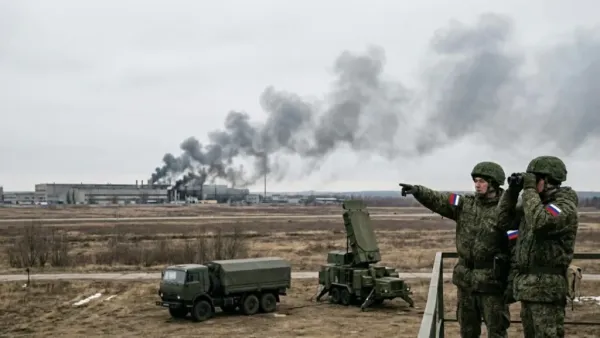
Russia’s ongoing conflict with Ukraine continues to evolve rapidly, with recent developments showing a shift in how the war is being waged on both sides.
In late February, a major change took place in Russia-Ukraine War, Ukrainian forces carried out what Kyiv described as a significant airstrike deep inside Russian territory using missiles developed within Ukraine itself. The target was a large arms-production facility in the Udmurt Republica site known for manufacturing missiles and components for the Russian armed forces. Ukrainian officials said this operation demonstrated the ability of their domestic missile industry to strike farther and more accurately than before. Russia acknowledged that an attack occurred but has not fully confirmed Ukrainian statements about the specific weapons involved.
For Moscow, this represents a noteworthy change in the operational environment. Since the invasion began in 2022, the Russian military has relied on long-range strikes and large aerial campaigns against Ukrainian infrastructure, particularly energy systems during the winter months. In February alone, Russian forces launched what analysts describe as the highest number of overnight missiles in over three years, with hundreds of missiles fired toward Ukrainian targets and much of this activity focused on power stations, substations, and other critical systems.
Officials in Kyiv reported that Russia’s winter offensive included thousands of guided aerial bombs, drones, and missiles. Ukraine’s leadership said this sustained pressure was one of the toughest phases of the conflict yet, citing the extensive use of aerial weapons without official justification.
From the Kremlin’s standpoint, maintaining military pressure remains a priority, even as its forces adapt to new threats. Russian leaders have highlighted efforts to enhance missile capabilities and sustain operations in Ukraine throughout 2026. This includes deploying longer-range systems and sustaining high volumes of aerial strikes, reflecting Moscow’s intention to continue its strategic objectives despite economic and operational strains.
At the same time, Russia faces increasing global attention on how the conflict affects regional security and international commerce. Ongoing hostilities and expanding ranges of weapons used by both sides contribute to complicated diplomatic engagements and ongoing debate among international partners about how best to achieve stability.
-
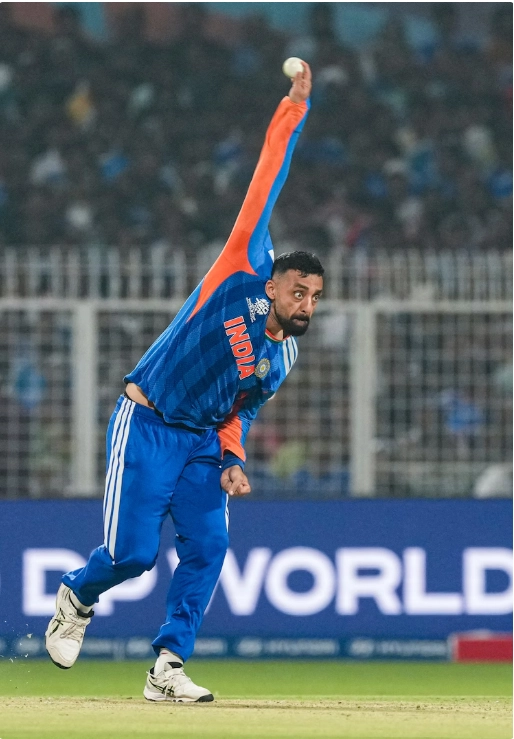
Varun Chakravarthy's ultimate test: Is the spin chakravuyuh finally cracking?
-
Rashmika and Vijay embrace tradition in stunning Mysore silk saree and veshti at their wedding reception

-
Ideal Places to Visit in March: India Travel Guide

-
Chinese actress Dilraba Dilmurat misses Dior show after being stranded in Dubai amid Middle East tensions

-
Will March timing dull the 2026 Oscars buzz?