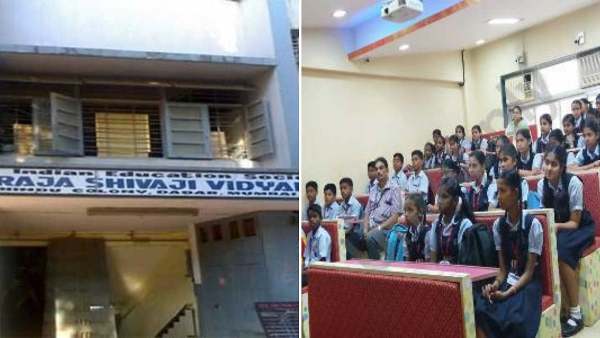
Founded on nationalist ideals inspired by Bal Gangadhar Tilak, the Indian Education Society has grown from a 23-student school in Dadar to 59 schools and three colleges educating 72,000 students. Now, the alumni-run trust plans to launch a Skill Tech University in Bandra, marking a new chapter in its 109-year journey.
Mumbai: The walls standing tall spread across three acres of Raja Shivaji Vidyalaya, in Hindu Colony, Dadar hold the history of revolt against British rule, and an embodiment of nationalistic education system based on the values of Lokmanya Tilak.
From a Modest Bungalow to a Vast Institute
What started in a modest bungalow near Dadar’s Portuguese church has today evolved into a vast educational institute of over 59 schools and three colleges under the umbrella of Indian Education Society (IES) with 72,000 students.
The roots of this movement lie in Pune, where Tilak, Vishnushastri Chiplunkar and Gopal Ganesh Agarkar founded a school in 1880 to counter the British model of education, which largely aimed at producing clerical manpower for the East India Company. Their curriculum emphasised Indian scriptures, Sanskrit and nationalist thought.
A Missionary Takes the Torch to Bombay
Inspired by their work, Gopalrao Akshikar, studying in Pune, expressed interest in joining the mission. As the Pune institutions were already being managed by the trio, he was encouraged to take the movement elsewhere. Akshikar moved to the then Bombay Presidency and founded Chhabildas English medium school in Dadar, carrying forward Tilak’s philosophy.
Soon, five teachers from this school -- Nagesh Kale, Krishnaji Barre, Deshmukh, Aras and Koranne -- moved out and laid the foundation of IES. The first batch had just 23 students studying in a friend’s bungalow near Portuguese Church. It was also the first school with Indian values to have a uniform. The school was initially named King George English School, marking King George V’s visit to India, before shifting to Hindu Colony, the city's first planned neighbourhood. In 1918, they also started the first girls' school in Dadar. In its early decades, when transport was limited, schools were strategically located near markets and railway stations to ensure accessibility and not avoid becoming a competition to the existing schools.
In 1924, Kale purchased land in Hindu Colony, giving the school a permanent base. The nationalist spirit remained evident in 1942, when students participated in the Quit India rally at Gowalia Tank.
The Chance Encounter That Shaped IES
A defining moment came when headmaster S.V. Nabar encountered his former student, businessman Manik Lotlikar, in the market. Reprimanded him for distancing himself from the institution that had shaped him, Lotlikar returned the next day and began actively managing school affairs, said Achala Joshi, the senior most trustee of IES.
Under his vision, the institute expanded, however, administrative challenges surfaced. On Lotlikar’s initiative, educationist, former University of Bombay Vice Chancellor, and seasoned politician N. G. Chandavarkar visited the school. He extended his support to the institution and advised it to form a governing council for better management. In 1917, the Indian Education Society was formally established.
Renaming and Evolution of Pedagogy
In 1974, the school was renamed Raja Shivaji Vidyalaya and adopted Marathi as its medium of instruction. Over the years, it transitioned to a semi-English format, while one IES institution switched from the state board to the Indian School of Secondary Education, other non-state board schools also started coming up.
However, changing educational preferences took a toll on the legacy institution. In 2025, IES’s Nabar Guruji Vidyalay in Dadar, the oldest Marathi-medium school, shut down, marking the end of an era. Over 50 percent of the schools under IES continue to remain semi-english medium.
The Living Legacy of Alumni Governance
Today, IES continues to educate over 72,000 students across Mumbai and Greater Mumbai. Interestingly, all its governing members are alumni, continuing the legacy from within. Carrying the torch forward, the institute aims to establish a university. “We have started building the university in Bandra campus where there will be a ground plus ten storeys building. The proposal for IES Skill tech university is expected to be approved this year. It will be run on a hub and spoke model, so that the students in all campuses across the institution can study the courses designed by the university,” said Satish Nayak, the trustee of IES.
The history of the 59 schools, three colleges and the upcoming university under IES have been compiled by Achala Joshi in a book set to be released soon. “With very little documentation available, it took me over eight years to only write the first chapter. The history and legacy has to be documented, so I took the onus myself to do it,” she said. The proposal to convert the behemoth into a university will be a big milestone for IES.
To get details on exclusive and budget-friendly property deals in Mumbai & surrounding regions, do visit:https://budgetproperties.in/
-
BB 17's Anurag Dhobal cites intercaste marriage as reason for mental harrasment, hints at suicide

-
'Young Sherlock' review: The iconic detective gets a hectic, action-heavy imagined origin story

-
SSC NCC Special Entry: Opportunity to become a Lieutenant in the Army without examination, NCC candidates can apply..
-
Fardeen Khan pens heartfelt 'Sunrise Again' note about life's second chances
-
Govinda Responds to Criticism Over Recent Event Appearances