
Listen to this article in summarized format
Loading...
××
Subscribe to

Unlock AI Briefing and Premium Content
New Year Offer 24 Hours Left
Subscribe NowAlready a member? Sign In
What's Included
- Exclusive Stories
- Daily ePaper Access
- Smart Market Tools
- Curated Investment Ideas
- Ad-lite Experience
Subscription

A week after the US and Israel launched coordinated strikes on Iran, the conflict has rapidly spiralled into one of the most serious crises in the Middle East in decades. The attacks, which began on February 28, targeted Iran’s leadership, military sites and nuclear infrastructure. Iran’s Supreme Leader Ayatollah Ali Khamenei was killed in the strikes, and the violence has since spread across several countries in the region.
The fighting has now drawn in multiple fronts. Iranian-backed groups such as Hezbollah and the Houthis have launched attacks on Israel, while Gulf countries have faced Iranian retaliation. Nearly 1,200 people have been killed in Iran so far, including 165 schoolgirls. In another dramatic episode, a US submarine sank an Iranian naval vessel in the Indian Ocean, killing 87 sailors and bringing the conflict closer to India’s neighbourhood.
The crisis has also shaken global travel and energy markets. Thousands of flights have been cancelled and oil prices have surged after Iran closed the Strait of Hormuz, a crucial route for global oil shipments.
Below is a quick look at how the war unfolded over the past seven days.
The conflict began with a coordinated US–Israeli military operation against Iran. The campaign, called Epic Fury by the US tates and Roaring Lion by Israel, involved more than 100 aircraft and heavy missile strikes.
The strikes targeted several key locations including government buildings, the President’s residence and the office of the Supreme Leader. Ayatollah Ali Khamenei was killed in one of the attacks.
The day also saw one of the deadliest incidents of the war. A missile strike on a primary school in Iran’s Minab killed 165 girls.
Iran responded quickly, launching missiles and drones toward Israel and US military facilities across the Gulf region. Some attacks also hit tourist areas in Dubai.
Iran war: Day 2
The fighting expanded further as the US launched attacks on Iran’s navy. Nine Iranian naval vessels were sunk and the navy headquarters was partly destroyed.
The headquarters of Iran’s Islamic Revolutionary Guard Corps (IRGC) was also hit.
Iran struck back the same day. A drone attack on a US military base in Kuwait killed six American personnel. In Israel, nine people died after an Iranian missile hit the town of Beit Shemesh.
Iran war: Day 3
The war widened into Lebanon after Hezbollah launched missiles into Israel. Israel responded with heavy airstrikes on Beirut, leaving 31 people dead.
Iran also targeted energy infrastructure in the Gulf. A major strike focused on Saudi Arabia’s Ras Tanura refining facility.
Meanwhile, the United States faced another setback after three military aircraft crashed in Kuwait in what officials described as an apparent "friendly fire" incident. The pilots ejected safely.
Iran war: Day 4
The US deployed B-2 bombers capable of carrying bunker-buster weapons. Israel continued strikes on Iranian positions and Hezbollah targets.
Iran took a dramatic step by closing the Strait of Hormuz, a key shipping route for global oil supplies.
Iranian drones also targeted US embassies in Riyadh and Kuwait, forcing both diplomatic missions to shut temporarily.
At the same time, air defence systems across Doha, Dubai, Abu Dhabi, Bahrain and Kuwait intercepted multiple incoming missiles, causing explosions across the region.
Iran war: Day 5
A ballistic missile fired by Iran toward Turkey was intercepted by NATO air defences. In another major incident, a US submarine torpedoed and sank an Iranian warship in the Indian Ocean.
The vessel, IRIS Dena, was returning from a naval exercise in India when it was attacked. The strike killed 87 Iranian sailors.
Iran war: Day 6
The war saw its first aerial dogfight. An Israeli F-35 fighter jet shot down an Iranian Su-35 over Tehran.
Iran retaliated by attacking a US tanker in the Persian Gulf following the sinking of the IRIS Dena.
Elsewhere, Azerbaijan became the first country in the Caucasus region affected by the conflict. A drone struck a building at an airport in Nakhchivan, injuring four people. Iran distanced itself from the incident.
Iran war: Day 7
Missile and drone attacks continued across the Middle East.
Israel announced it had begun a "broad-scale wave of strikes" in Tehran as well as in Lebanon.
Iran responded with drone and missile strikes on targets in "the heart" of Tel Aviv, signalling that neither side was ready to step back.
Global impact of US–Israel–Iran war
The war has disrupted global travel and energy markets within days.
Over 11,000 flights across the region have been reporteedly cancelled since February 28 after several Gulf countries temporarily closed their airspace. Cities like Dubai are major transit hubs for international travel, adding to the disruption.
Some Gulf airlines have resumed limited flights in recent days, mainly to evacuate stranded passengers.
Energy markets have also reacted sharply. The closure of the Strait of Hormuz, through which nearly one-fifth of the world’s oil passes, has triggered a spike in oil prices.
Crude prices have jumped more than 10% to their highest level since the summer of 2024. Natural gas prices in Europe and Asia have also surged because many countries depend on LNG shipments from the Middle East.
The US has announced several steps to stabilise energy supply. Trump has granted India a 30-day waiver to buy Russian oil. He also said the US would provide naval escorts to protect oil tankers and offer "political risk insurance" for ships passing through the Strait of Hormuz.
However, recent data suggests the pace of Iran’s attacks may be slowing.
The US Central Command said Iranian ballistic missile attacks had dropped by 90% and drone strikes by 83%, according to CNN.
Israel also said it has achieved "near-complete air superiority" after destroying about 80% of Iran’s air defence systems.
Despite losing much of its political leadership, Iran continues to resist and retaliate across multiple fronts. A key part of its strategy has been the use of low-cost drones and missiles to overwhelm Israel’s air defence network.
The Shahed-136 'kamikaze' drone has played a major role in these attacks.
Iran’s broader plan appears aimed at stretching US and Israeli forces across several battlefronts while increasing economic pressure by disrupting shipping in the Strait of Hormuz.
Trump initially suggested the war could end in two to three days after the first strikes. A day later, he revised the estimate and said the conflict might continue for up to four weeks.
Defence Secretary Pete Hegseth has taken a different view, warning that there may be no fixed timeline for the war.
For now, the biggest question remains unanswered: which side will step back first, or whether the conflict could expand into an even larger regional war.
The fighting has now drawn in multiple fronts. Iranian-backed groups such as Hezbollah and the Houthis have launched attacks on Israel, while Gulf countries have faced Iranian retaliation. Nearly 1,200 people have been killed in Iran so far, including 165 schoolgirls. In another dramatic episode, a US submarine sank an Iranian naval vessel in the Indian Ocean, killing 87 sailors and bringing the conflict closer to India’s neighbourhood.
The crisis has also shaken global travel and energy markets. Thousands of flights have been cancelled and oil prices have surged after Iran closed the Strait of Hormuz, a crucial route for global oil shipments.
Below is a quick look at how the war unfolded over the past seven days.
How the Iran war escalated
Iran war: Day 1The conflict began with a coordinated US–Israeli military operation against Iran. The campaign, called Epic Fury by the US tates and Roaring Lion by Israel, involved more than 100 aircraft and heavy missile strikes.
The strikes targeted several key locations including government buildings, the President’s residence and the office of the Supreme Leader. Ayatollah Ali Khamenei was killed in one of the attacks.
The day also saw one of the deadliest incidents of the war. A missile strike on a primary school in Iran’s Minab killed 165 girls.
Iran responded quickly, launching missiles and drones toward Israel and US military facilities across the Gulf region. Some attacks also hit tourist areas in Dubai.
Iran war: Day 2
The fighting expanded further as the US launched attacks on Iran’s navy. Nine Iranian naval vessels were sunk and the navy headquarters was partly destroyed.
The headquarters of Iran’s Islamic Revolutionary Guard Corps (IRGC) was also hit.
Iran struck back the same day. A drone attack on a US military base in Kuwait killed six American personnel. In Israel, nine people died after an Iranian missile hit the town of Beit Shemesh.
Iran war: Day 3
The war widened into Lebanon after Hezbollah launched missiles into Israel. Israel responded with heavy airstrikes on Beirut, leaving 31 people dead.
Iran also targeted energy infrastructure in the Gulf. A major strike focused on Saudi Arabia’s Ras Tanura refining facility.
Meanwhile, the United States faced another setback after three military aircraft crashed in Kuwait in what officials described as an apparent "friendly fire" incident. The pilots ejected safely.
Iran war: Day 4
The US deployed B-2 bombers capable of carrying bunker-buster weapons. Israel continued strikes on Iranian positions and Hezbollah targets.
Iran took a dramatic step by closing the Strait of Hormuz, a key shipping route for global oil supplies.
Iranian drones also targeted US embassies in Riyadh and Kuwait, forcing both diplomatic missions to shut temporarily.
At the same time, air defence systems across Doha, Dubai, Abu Dhabi, Bahrain and Kuwait intercepted multiple incoming missiles, causing explosions across the region.
Iran war: Day 5
A ballistic missile fired by Iran toward Turkey was intercepted by NATO air defences. In another major incident, a US submarine torpedoed and sank an Iranian warship in the Indian Ocean.
The vessel, IRIS Dena, was returning from a naval exercise in India when it was attacked. The strike killed 87 Iranian sailors.
Iran war: Day 6
The war saw its first aerial dogfight. An Israeli F-35 fighter jet shot down an Iranian Su-35 over Tehran.
Iran retaliated by attacking a US tanker in the Persian Gulf following the sinking of the IRIS Dena.
Elsewhere, Azerbaijan became the first country in the Caucasus region affected by the conflict. A drone struck a building at an airport in Nakhchivan, injuring four people. Iran distanced itself from the incident.
Iran war: Day 7
Missile and drone attacks continued across the Middle East.
Israel announced it had begun a "broad-scale wave of strikes" in Tehran as well as in Lebanon.
Iran responded with drone and missile strikes on targets in "the heart" of Tel Aviv, signalling that neither side was ready to step back.
Global impact of US–Israel–Iran war
The war has disrupted global travel and energy markets within days.
Over 11,000 flights across the region have been reporteedly cancelled since February 28 after several Gulf countries temporarily closed their airspace. Cities like Dubai are major transit hubs for international travel, adding to the disruption.
Some Gulf airlines have resumed limited flights in recent days, mainly to evacuate stranded passengers.
Energy markets have also reacted sharply. The closure of the Strait of Hormuz, through which nearly one-fifth of the world’s oil passes, has triggered a spike in oil prices.
Crude prices have jumped more than 10% to their highest level since the summer of 2024. Natural gas prices in Europe and Asia have also surged because many countries depend on LNG shipments from the Middle East.
The US has announced several steps to stabilise energy supply. Trump has granted India a 30-day waiver to buy Russian oil. He also said the US would provide naval escorts to protect oil tankers and offer "political risk insurance" for ships passing through the Strait of Hormuz.
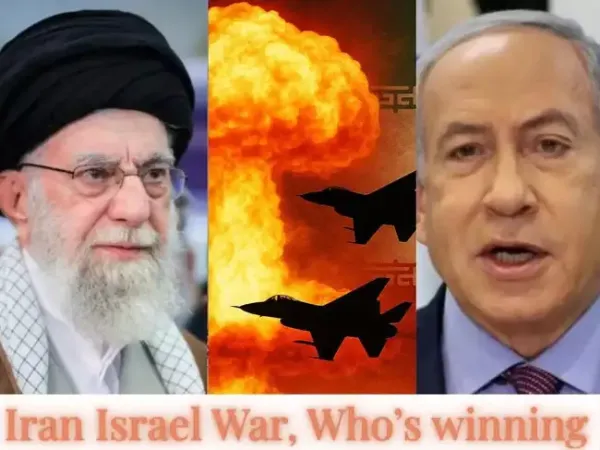
Who is winning Iran-Israel war? Where does the conflict stand?
The conflict has expanded rapidly since it began on February 28 and now affects around 14 countries across the Middle East and nearby regions.However, recent data suggests the pace of Iran’s attacks may be slowing.
The US Central Command said Iranian ballistic missile attacks had dropped by 90% and drone strikes by 83%, according to CNN.
Israel also said it has achieved "near-complete air superiority" after destroying about 80% of Iran’s air defence systems.
Despite losing much of its political leadership, Iran continues to resist and retaliate across multiple fronts. A key part of its strategy has been the use of low-cost drones and missiles to overwhelm Israel’s air defence network.
The Shahed-136 'kamikaze' drone has played a major role in these attacks.
Iran’s broader plan appears aimed at stretching US and Israeli forces across several battlefronts while increasing economic pressure by disrupting shipping in the Strait of Hormuz.
How long can the Israel-Iran war last?
Neither Israel nor the US as provided a clear timeline for the conflict.Trump initially suggested the war could end in two to three days after the first strikes. A day later, he revised the estimate and said the conflict might continue for up to four weeks.
Defence Secretary Pete Hegseth has taken a different view, warning that there may be no fixed timeline for the war.
For now, the biggest question remains unanswered: which side will step back first, or whether the conflict could expand into an even larger regional war.