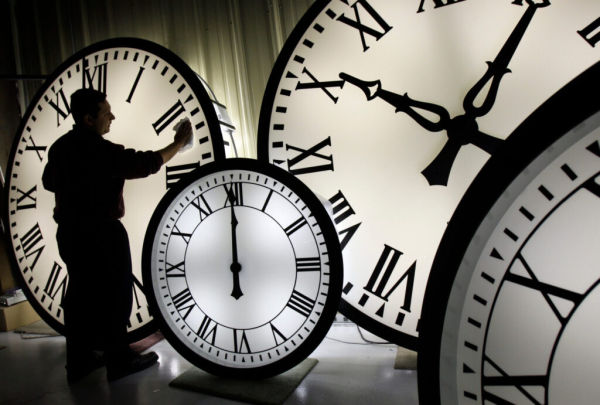
This weekend’s US Clock Change is a Problem, Fixing it is a Deep Divide/ TezzBuzz/ WASHINGTON/ J. Mansour/ Morning Edition/ Americans will move clocks forward this weekend for daylight saving time, reviving frustration with the twice-yearly clock change. While most Americans dislike switching clocks, lawmakers remain divided on whether to adopt permanent daylight saving time or permanent standard time. Experts warn that changing clocks disrupts sleep patterns, health, and daily routines.
US Daylight Saving Time Debate Quick Looks
- Most Americans will set clocks forward one hour Sunday at 2 a.m.
- The change creates a 23-hour day and disrupts sleep schedules.
- Polls show widespread dissatisfaction with changing clocks twice each year.
- Lawmakers remain divided between permanent daylight saving time or standard time.
- Sleep experts say standard time aligns better with human circadian rhythms.
- Several states have passed laws supporting permanent daylight saving time, pending federal approval.
- Congress has struggled to pass legislation ending the clock change.
As Americans prepare to move their clocks forward for daylight saving time this weekend, the long-running debate over whether the United States should continue changing clocks twice a year is once again gaining attention.
At 2 a.m. Sunday, most clocks across the country will jump ahead by one hour, creating a shorter 23-hour day. The shift often disrupts sleep patterns, darkens early morning routines, and sparks annual complaints from millions of Americans.
Despite widespread frustration with the system, political leaders have struggled to reach agreement on how to reform it. The debate centers on whether the country should adopt permanent daylight saving time, remain on permanent standard time, or maintain the current system of changing clocks twice each year.
Public opinion suggests most Americans want some type of change.
According to a recent AP-NORC poll, only about one in ten U.S. adults support the current practice of adjusting clocks twice annually. Roughly half oppose the system, while about 40% say they are unsure.
Among those who favor a change, most prefer making daylight saving time permanent rather than adopting year-round standard time.
However, each proposal carries trade-offs that have complicated efforts to pass legislation.
If the United States adopted permanent daylight saving time, winter mornings in northern cities would remain dark for longer. For example, the sun would not rise until around 9 a.m. for part of the winter in Detroit.
Conversely, permanent standard time would produce extremely early sunrises in summer. In Seattle, the sun would rise shortly after 4 a.m. in June.
Jay Pea, president of the advocacy group Save Standard Time, says the challenge stems from the reality that government policies cannot change the natural cycles of daylight.
The debate highlights how modern societies attempt to impose fixed schedules on a planet that rotates and tilts throughout the year.
For some Americans, the seasonal changes in daylight already create frustration even without the clock adjustments.
Genie Lauren, a healthcare worker who lives in New York Citysays winter evenings can feel especially limiting when darkness falls early.
She said she often waits weeks for the sun to stay up late enough for outdoor activities after work.
The United States has experimented with daylight saving policies for more than a century.
Time zones were first standardized in 1883 when railroads coordinated schedules across the country. Since then, the federal government has repeatedly adjusted daylight saving policies.
Globally, many countries have also experimented with similar systems. Roughly 140 nations have used daylight saving time at some pointthough only about half still do today.
In recent years, state governments have taken steps to try to eliminate the twice-yearly clock change.
Since 2018, nineteen states have passed laws supporting permanent daylight saving time. Many of those states are located in the South and the Pacific Northwest.
However, federal law currently prevents states from making that change independently. Congress would need to approve legislation allowing states to adopt permanent daylight saving time.
Lawmakers have attempted to pass such legislation in recent years.
In 2022, the U.S. Senate approved a bill that would have made daylight saving time permanent nationwide. The measure, often referred to as the “Sunshine Protection Act,” stalled in the House of Representatives and never became law.
Rep. Mike Rogers of Alabama has introduced similar legislation in multiple congressional sessions. He said resistance from industries affected by scheduling changes, including airlines, has contributed to the lack of progress.
Other lawmakers have proposed compromise solutions.
Rep. Greg Steube of Florida has suggested shifting the nation’s clocks by 30 minutes instead of a full hour. Under that proposal, the United States would effectively split the difference between daylight saving and standard time.
Steube believes such a compromise could attract bipartisan support, though it would place the United States out of sync with many other countries.
Some nations already operate on unique time offsets. India uses a half-hour difference from nearby time zones, while Nepal’s clock is set 15 minutes ahead of India.
Health experts, however, largely support permanent standard time rather than daylight saving time.
Sleep researchers argue that morning sunlight is critical for regulating the body’s circadian rhythm, the internal clock that controls sleep cycles and alertness.
Karin Johnson, a neurologist and sleep specialist at the University of Massachusetts Chan Medical School, says permanent standard time would better align daily schedules with natural daylight patterns.
Other researchers point to studies showing that health risks increase immediately after the spring clock change.
Kenneth Wright, who directs the Sleep and Chronobiology Laboratory at the University of Colorado, says data indicates spikes in heart attacks, strokes, and fatal car accidents in the days following the switch to daylight saving time.
For those reasons, Wright believes the country should ultimately adopt permanent standard time.
Still, political obstacles remain.
Currently, only two states—Arizona and Hawaii—do not observe daylight saving time. Arizona’s exemption does not apply to the Navajo Nation, which continues to follow the national schedule.
Several states have considered legislation to move to permanent standard time as well. In recent legislative sessions, proposals advanced in at least one chamber in states such as Virginia.
However, many state lawmakers include provisions requiring neighboring states to adopt the same system before changes take effect. For example, Virginia would only move to standard time if Maryland and Washington, D.C., did the same.
Such provisions attempt to avoid confusion for broadcasters, transportation systems, and businesses that operate across state lines.
Industry groups also influence the debate. For example, representatives of the golf industry have opposed permanent standard time because darker evenings would reduce opportunities for after-work recreation.
Some advocates believe the best solution is to eliminate the clock change and allow states to choose their preferred time system.
Scott Yates, a Colorado activist who runs the website Lock the Clock, proposes that Congress set a deadline to end the twice-yearly time change. Under his plan, states would then decide whether to remain on daylight saving time or standard time permanently.
Until lawmakers reach a decision, Americans will continue adjusting their clocks each spring and fall.
For now, Yates offers a simple suggestion to ease the transition after the upcoming time change.
More on US News
-
National Selection Trials: Panwar, Chaudhary win 10m Air Rifle; Anish wins 25m Rapid Fire Pistol

-
Exclusive: Prosus Joins Mukesh Bansal-Led Nurix AI's Cap Table With Fresh Capital Infusion

-
Gardeners told not to mow lawn at all until July

-
EPF Balance Check Made Easy: Simple Online Methods to View Your Provident Fund Savings

-
'I reviewed the UK's cheapest three-course meal - one thing put a smile on my face'