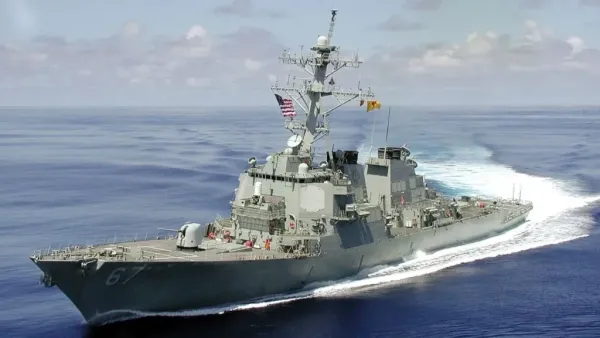
In a moment that encapsulates the complexity of twenty first century geopolitics, India permitted the Iranian naval vessel IRIS Lavan to dock at the southern port city of Kochi even as a United States submarine destroyed the Iranian frigate IRIS Dena off the coast of Sri Lanka.
The decision, confirmed by India’s External Affairs Minister Subrahmanyam Jaishankar during remarks at the strategic forum Raisina Dialogue, has ignited debate among legal scholars, maritime strategists and foreign policy observers. While New Delhi characterises the move as a humanitarian response to a distressed vessel, the timing has placed India at the intersection of an escalating military confrontation between Iran and the United States led coalition under the leadership of Donald Trump.
At stake is far more than a single naval docking. The episode illustrates how maritime law, wartime neutrality and strategic autonomy collide in the Indo Pacific.
According to officials familiar with the matter, Iran requested emergency docking permission on 28 February after the IRIS Lavan reportedly developed technical problems while en route to participate in a naval fleet review hosted by India.
The vessel eventually docked in Kochi on Wednesday with 183 crew members who have since been accommodated in facilities managed by the Indian Navy.
On that same day, events at sea dramatically escalated. A submarine belonging to the United States Navy struck and sank the Iranian frigate IRIS Dena approximately nineteen nautical miles off the Sri Lankan coast. Reports indicate that at least eighty seven personnel were killed in the strike, which occurred within Sri Lanka’s Exclusive Economic Zone but outside its territorial waters.
The destruction of the Dena forms part of a broader campaign announced by President Donald Trump, who has publicly declared that dismantling Iran’s naval capability is a strategic objective of the ongoing conflict launched jointly with Israel against the Islamic Republic.
The simultaneity of these events has created a diplomatic tableau few states would wish to navigate.
From a strictly legal standpoint, India’s decision rests on well established principles of maritime law.
Under customary international law and conventions governing navigation, vessels experiencing technical failure or distress may request entry into a foreign port for safety and repair. Coastal states typically grant such requests unless there is a compelling security threat.
In practical terms, denying harbour to a distressed warship could expose a coastal state to accusations of violating humanitarian maritime obligations. Naval vessels, although sovereign immune under international law, still fall within the broader framework of safe navigation obligations recognised by the global maritime order.
Thus, Jaishankar’s explanation that the decision was guided by “humanity” is not merely rhetorical. It reflects a long standing maritime norm that transcends geopolitical alignment.
However, the presence of a belligerent warship during an active armed conflict introduces additional layers of complexity.
If the conflict between Iran and the United States is characterised legally as an international armed conflict, states that are not parties to the war must adhere to rules governing neutrality.
Under traditional neutrality law, a neutral state may permit belligerent warships to enter its ports but typically restricts the duration of their stay, limits resupply and prevents the use of its territory for military advantage.
India therefore walks a careful line. By allowing the IRIS Lavan to dock for technical assistance but not for combat resupply, New Delhi can plausibly argue that it remains within the boundaries of neutrality.
The real legal risk would arise if the vessel were allowed to refuel, rearm or undertake operational planning within Indian territory. There is currently no evidence that such activities have been authorised.
Beyond legal doctrine lies the strategic calculus that has long defined India’s foreign policy.
India has historically pursued what policymakers describe as strategic autonomy. This doctrine allows New Delhi to maintain working relationships with competing global powers while avoiding rigid alliance structures.
Permitting the Iranian vessel to dock fits squarely within that framework. Iran remains a critical regional actor with whom India has long maintained economic and security ties, particularly in relation to connectivity projects and regional energy considerations.
Simultaneously, India has deepened defence and technological cooperation with the United States over the past decade.
Balancing these relationships requires calibrated decisions that demonstrate independence without provoking confrontation.
Allowing emergency docking while avoiding overt military assistance appears designed precisely for that purpose.
The incident also places the spotlight on Sri Lanka, whose waters have unexpectedly become a theatre for the wider Iran United States confrontation.
The strike against IRIS Dena occurred inside Sri Lanka’s Exclusive Economic Zone, raising questions regarding the application of international law governing military operations at sea.
While states may conduct hostilities in EEZ waters during armed conflict, such operations often trigger diplomatic sensitivity when they occur near neutral territory.
Sri Lankan authorities have already taken precautionary measures, escorting another Iranian naval vessel toward harbour while relocating crew members to a naval camp near Colombo.
These steps underscore how regional states are being pulled into the gravitational field of a conflict that began far beyond their shores.
Ultimately, the docking of IRIS Lavan in Kochi is not merely a logistical episode. It is a microcosm of the fragile balance that defines contemporary geopolitics.
For India, the decision demonstrates a willingness to uphold maritime humanitarian principles even amid escalating military tensions. For Washington, it may serve as a reminder that partners in the Indo Pacific will not always align perfectly with American strategic priorities.
Most importantly, the episode highlights how quickly local maritime incidents can evolve into global legal and diplomatic questions.
As the Iran United States conflict continues to unfold across sea lanes and strategic chokepoints, every port call, naval strike and humanitarian request will carry consequences far beyond the immediate theatre of operations.
India’s carefully measured response in Kochi suggests that New Delhi understands this reality all too well.
-
National Selection Trials: Panwar, Chaudhary win 10m Air Rifle; Anish wins 25m Rapid Fire Pistol

-
Exclusive: Prosus Joins Mukesh Bansal-Led Nurix AI's Cap Table With Fresh Capital Infusion

-
Gardeners told not to mow lawn at all until July

-
EPF Balance Check Made Easy: Simple Online Methods to View Your Provident Fund Savings

-
'I reviewed the UK's cheapest three-course meal - one thing put a smile on my face'