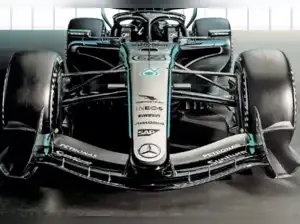
Formula 1 is back. As the five red lights go out at Albert Park in Melbourne in Australia and 22 cars go pedal to the metal at 15,000 rpm, it will bring to an end one of the most dramatic off seasons in recent F1 memory.
This wasn’t an off-season dominated by news of driver movements, as last year was when six rookies made their full debut, historically the highest ever. This was about the other half of the tango, the car.
This is the year when the most comprehensive regulation change since 2014 takes root. Both the chassis and the power unit have gone through a reset of the ‘formula’, and the result is smaller and nimbler cars, a likely shake up in the recent grid order going by preseason testing, and some of the most technically cool interpretations of the new rules.
Also Read: Chequered funds- In motorsport, money revs louder than talent
The latter is what made the preseason especially dramatic.
This time around one such rule was around the compression ratio — a measure of how much an engine squeezes the air-fuel mixture in its cylinders before it ignites. The 2026 regulations had set the permissible compression ratio maximum at 16:1.
The loophole: This was to be measured at ambient temperature.
Some teams, notably Mercedes, seem to have figured out a way around by the smart use of materials science and design of the internal parts and the overall geometry of its engine. This means that while at ambient temperature it will adhere to the 16:1 ratio, at high temperature the engine allows for an 18:1 ratio, which means better power and better fuel efficiency. Both are critical, especially the latter, since the maximum fuel permitted in the race is also dramatically lower this year.
Naturally, other teams protested making the preseason testing quite testy. FIA, the governing body of racing, has since closed this loophole by saying that a new test will also measure the compression ratio at 130 degrees, which puts an end to Mercedes’s ingenuity, but not before it gets the first seven races of the season to max out its advantage, until new testing rules take hold.
Ferrari has, of late, rarely been in the news for technical innovation, so imagine the surprise of F1 fans to see a rather clever interpretation of the new Active aerodynamics rules during preseason testing.
While normally the rear wings flap tilt up when going around a corner, or down when on the straights, Ferrari figured out a way to rotate it 180 degrees, turning upside down when on the straights, effectively lowering aerodynamic drag. Rivals have cried foul, not just because of this, but also because of Ferrari’s use of engine exhaust to hit the rear wing.
It remains to be seen if the FIA will intervene.
In both cases, any intervention is a shame, since the fun in F1 is about finding the very edge of the regulations, to squeeze out an advantage.
The tension between innovation and enforcement is part of the sport’s magic. It also has the added benefit of making fans glued into the technical wizardry on display as much as the driving daredevilry.
This wasn’t an off-season dominated by news of driver movements, as last year was when six rookies made their full debut, historically the highest ever. This was about the other half of the tango, the car.
This is the year when the most comprehensive regulation change since 2014 takes root. Both the chassis and the power unit have gone through a reset of the ‘formula’, and the result is smaller and nimbler cars, a likely shake up in the recent grid order going by preseason testing, and some of the most technically cool interpretations of the new rules.
Also Read: Chequered funds- In motorsport, money revs louder than talent
The latter is what made the preseason especially dramatic.
ENGINES
The formula in Formula 1 refers to a set of rules that all participants must follow.This time around one such rule was around the compression ratio — a measure of how much an engine squeezes the air-fuel mixture in its cylinders before it ignites. The 2026 regulations had set the permissible compression ratio maximum at 16:1.
The loophole: This was to be measured at ambient temperature.
Some teams, notably Mercedes, seem to have figured out a way around by the smart use of materials science and design of the internal parts and the overall geometry of its engine. This means that while at ambient temperature it will adhere to the 16:1 ratio, at high temperature the engine allows for an 18:1 ratio, which means better power and better fuel efficiency. Both are critical, especially the latter, since the maximum fuel permitted in the race is also dramatically lower this year.
Naturally, other teams protested making the preseason testing quite testy. FIA, the governing body of racing, has since closed this loophole by saying that a new test will also measure the compression ratio at 130 degrees, which puts an end to Mercedes’s ingenuity, but not before it gets the first seven races of the season to max out its advantage, until new testing rules take hold.
THE REAR WING
Ferrari is the most successful team in F1. It is also the oldest, most popular and possibly the most glamorous team in the most glamorous sport in the world. What, however, is also true, is that Ferrari has been having a long drought in winning. Since Kimi Raikkonen in 2007, no Ferrari driver has won the World Drivers’ Championship.Ferrari has, of late, rarely been in the news for technical innovation, so imagine the surprise of F1 fans to see a rather clever interpretation of the new Active aerodynamics rules during preseason testing.
While normally the rear wings flap tilt up when going around a corner, or down when on the straights, Ferrari figured out a way to rotate it 180 degrees, turning upside down when on the straights, effectively lowering aerodynamic drag. Rivals have cried foul, not just because of this, but also because of Ferrari’s use of engine exhaust to hit the rear wing.
It remains to be seen if the FIA will intervene.
In both cases, any intervention is a shame, since the fun in F1 is about finding the very edge of the regulations, to squeeze out an advantage.
The tension between innovation and enforcement is part of the sport’s magic. It also has the added benefit of making fans glued into the technical wizardry on display as much as the driving daredevilry.