Brent and WTI Crude Slide Sharply After Signals of Possible De-escalation in the Middle East
Global crude oil prices witnessed a sharp decline of more than 6% on Tuesday after signs emerged that geopolitical tensions in the Middle East could ease in the coming weeks. The drop came just a day after oil markets had surged to multi-year highs amid fears of supply disruptions due to escalating conflict in the region.
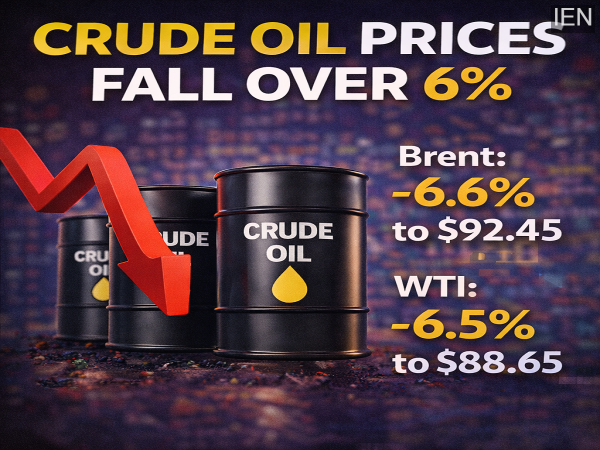
According to market data, Brent crude futures fell by $6.51, or about 6.6%, to $92.45 per barrel, while U.S. West Texas Intermediate (WTI) crude dropped $6.12, or roughly 6.5%, to $88.65 per barrel during early trading hours.
The sudden decline reflects growing expectations that the conflict affecting global oil supply routes may soon stabilize, easing concerns about long-term disruptions in the energy market.
Oil Prices Had Reached Multi-Year Highs a Day Earlier
Just a day before the sharp decline, crude oil prices had surged above $100 per barrel, marking their highest levels in more than three years.
During Monday’s trading session:
-
Brent crude briefly touched $119.50 per barrel
-
WTI crude climbed to around $119.48 per barrel
These price spikes were driven by escalating tensions related to the conflict involving the United States, Israel, and Iran, which raised fears that oil supply from key Middle Eastern producers could be disrupted.
The Middle East accounts for a significant portion of global oil production, and any instability in the region can quickly affect energy markets worldwide.
Political Signals Trigger Market Reaction
The recent drop in prices followed comments suggesting that the ongoing conflict in the Middle East could end sooner than expected.
Former U.S. President Donald Trump, speaking in an interview with CBS News, said he believes the war involving Iran could already be nearing its conclusion. He indicated that the conflict had gone far beyond the initially expected timeframe of four to five weeks.
These remarks led traders to believe that the risk of prolonged supply disruptions may decline, triggering a sharp correction in oil prices.
Russia’s Diplomatic Role Also Influences Sentiment
Reports also suggested that Russian President Vladimir Putin held discussions with Trump and shared proposals aimed at resolving the Iran conflict quickly.
According to sources familiar with the matter, these diplomatic efforts could potentially reduce concerns over long-term supply interruptions in the global energy market.
As a result, traders began reassessing the risk premium that had previously pushed oil prices higher.
Iran Responds With Strong Warning
Despite signs of possible diplomatic efforts, tensions in the region remain high.
Iran’s Islamic Revolutionary Guard Corps (IRGC) warned that it would decide how the conflict ends. The group also cautioned that if U.S. or Israeli attacks continue, Tehran could prevent oil exports from leaving the region.
Such warnings highlight the fragile nature of the situation and explain why analysts expect continued volatility in oil markets.
Additional Factors Pressuring Oil Prices
Apart from geopolitical developments, other policy discussions also contributed to the drop in crude prices.
Reports indicate that U.S. authorities are considering measures to control rising oil prices, including:
-
Easing certain restrictions on Russian oil
-
Releasing emergency crude reserves
-
Exploring other policy options to stabilize global energy markets
These potential measures could increase available supply and put additional downward pressure on prices.
Analysts Expect High Volatility Ahead
Market analysts believe oil prices could remain highly volatile in the coming weeks due to uncertain geopolitical developments.
According to IG market analyst Tony Sycamore, crude oil could trade within a wide range in the near term.
He suggested that prices may fluctuate between approximately $75 and $105 per barrel, depending on how the geopolitical situation evolves and whether supply disruptions intensify or ease.
Supply Cuts Continue Across the Region
Meanwhile, production adjustments by major oil producers have added further complexity to the market.
Recent reports indicate:
-
Iraq reduced production by about 70% at major southern oil fields, bringing output down to roughly 1.3 million barrels per day.
-
Kuwait Petroleum Corporation also began lowering output and declared force majeure at certain facilities.
-
Saudi Arabia has reportedly started cutting production as well.
These actions were initially taken to manage supply risks during the conflict but could continue to influence price movements in global energy markets.
G7 Nations Monitoring the Situation
Leaders from G7 countries have stated that they are prepared to take necessary steps to address rising oil prices if required.
However, they have not yet committed to releasing strategic petroleum reserves. Instead, governments are closely monitoring market developments and the geopolitical situation.
Disclaimer
The views and market analysis mentioned in this article are based on publicly available reports and expert commentary. Oil prices are highly volatile and influenced by global economic and geopolitical factors. Readers should consult financial experts before making investment decisions related to commodity markets.
-
Jet Li says he failed as father as daughter Jada battled depression at 7

-
Ahmed Shehzad blames 90s players for Pakistan cricket’s decline

-
Try Cloud Dancer shade Nail Polish this summer, your nails will look very beautiful…

-
5 Scientifically Proven Benefits Of Having A Beard

-
6 Chinese Zodiac Signs Attract Major Luck & Prosperity On March 11, 2026