
An aviation expert and engineer has outlined precisely why they believe we will never locate the missing MH370 plane which vanished into thin air on March 8, 2014.
All 227 passengers and 12 crew disappeared along with the Boeing 777 aircraft following its departure from Kuala Lumpur to Beijing. The final communication crew had with air traffic control was 38 minutes into the flight.
It was tracked by military radar for another hour after its last communication and had deviated from its planned flight path.
After leaving radar range 230 miles away from Penang Island in Malaysia, MH370 was not seen or heard from again.
Ismail Hammad, chief engineer at Egypt Air, told the Mirror his theory "is not a guesswork but it is an engineering inevitability if we follow the aviation fundamentals.", reportsthe Mirror.
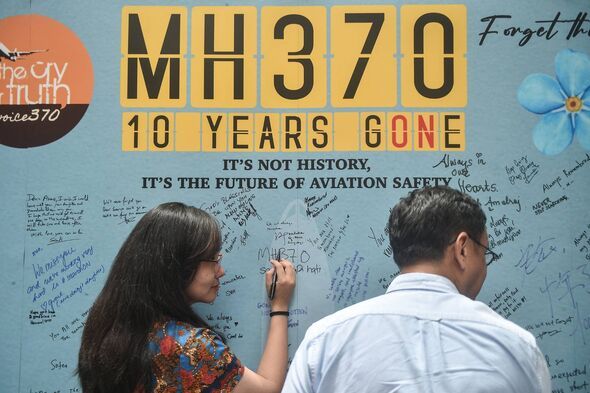
Hammad believes the difficulty the search operation faces is it is relying on the wrong information.
He explained: "The good technical condition of the aircraft wreckage which might result from a ditching on relatively calm water, along with the ocean currents in the Indian Ocean basin off the west coast of Australia, and the deviation value of the aircraft's magnetic compass.
"All of that make the presence of the aircraft around these corridors and water strips highly probable.
"And that is not a guesswork, but it is an engineering inevitability if we follow the aviation fundamentals. Relying solely on the signals of the Inmarsat satellite has left the investigators confused for a decade."
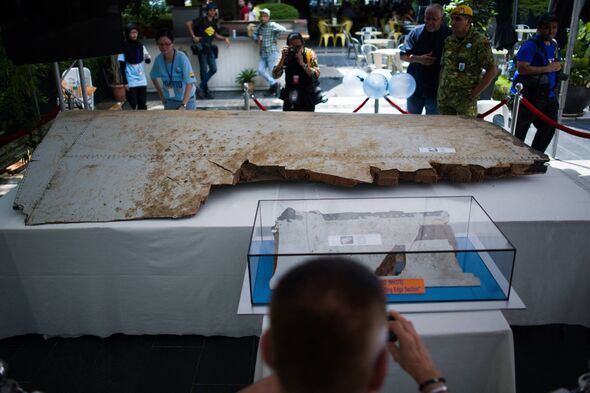
The latest search efforts by marine robotics firm Ocean Infinity recommenced in December after being suspended due to seasonal conditions the previous spring.
The notorious Malaysia Airlines Boeing 777, carrying 227 passengers and 12 crew members vanished on March 8, 2014, whilst travelling from Kuala Lumpur to Beijing, remains at the heart of aviation history's greatest mysteries and represents the deadliest single incident involving a missing aircraft.
During searches over the years fragments were discovered on the eastern coast of Africa. Hammad said these parts "have no signs of damage which indicate the crashing of the fuselage with the turbulent surface of the ocean water and the subsequent explosion of the aircraft due to saturating its tanks with fuel vapor."
He added: " We cannot find on these pieces the damages of dents, sooty appearance or dark discoloration due to the explosion of the tanks. that suggested a smooth ditching in a relatively shallow and calm water surface."
Hammad disputes the search resuming once more off the coast of Perth. He said this fails to account for the deviation between the magnetic north of the magnetic compass of the aircraft and the true north of the earth.
Hammad believes he possesses the solution to save everyone "money and time" and ultimately locate the aircraft that has caused immense distress to authorities and bereaved families. He also suggests exploring the "labyrinth of the Philippine archipelago, which comprises 7,641 islands."
He clarified that programming the autopilot computer using only spatial coordinates can be challenging.
He added: "Likewise, a pilot alone would not be able to continue flying a large aircraft like B777-200 for 9 hours since take off till vanishing, including the 3 hours on average it takes to check the condition of the aircraft and its documentations before the taking off according to the aviation regulations."
Hammad concluded that without autopilot systems or navigational equipment, relying solely on the aircraft's magnetic compass would mean focusing the search zone between the Malacca Strait and Perth coastline given "all those stresses".
-
Archaeologists Discover A 150-Year-Old Mystery Alcohol Bottle In Utah, Reveal Its Taste

-
Can Menstrual Blood Reveal Cancer, PCOS & Diabetes? 9 Health Insights

-
All the work of mosquitoes! Make 100% natural ‘mosquito repellent’ at home; Say bye-bye to market coils and liquids

-
Technology is playing a major role in media entertainment sector: Ashwini Vaishnav

-
Don’t make AI a lawyer, use ‘Artificial Intelligence’ wisely, strict warning from HC judges