In February 1996 Oasis released their latest single from What's The Story (Morning Glory). The song was Don't Look Back in Anger, a modern classic, but thirty years on few remember another, darker side of the nineties. A time when Britain had a thriving gun culture that would shock people today. For if you had an easily obtainable gun licence, after buying Oasis's latest single, you could pop into either a specialist sports store or ironmongers and buy a .357 Magnum or a 9 mm Browning automatic for less than £400. Dum-dum bullets, designed to shred on impact and cause the greatest possible damage to the human body, were easily available.
Maxim, the popular lad's magazine, ran a cover story in March 1996 headlined "Happiness is a warm gun" about the popularity of gun clubs as stress relief. The House of Commons in 1996 did not yet have a creche but it did have a shooting gallery to allow MPs and Peers to keep up their marksmanship.
Today the very thought of an individual travelling on a bus or train, on route to a Home Office licensed gun club, with a Magnum revolver, a Browning automatic and hundreds of rounds of ammunition, in a plastic bag or brief case, as happened in the 1990s, is utterly inconceivable. Why? What changed?
The answer, in part, is the horrific events of the morning of March 13 1996 when 43-year-old gun owner Thomas Hamilton walked into the gymnasium of Dunblane Primary school in Scotland, armed with four handguns and over 700 rounds of ammunition. He had hoped to be on time for the school assembly when as many as 300 children were in the assembly hall but he arrived a few minutes too late. Instead he found a primary one class at play in a varnished spring-floored gymnasium with ropes and low beams and three dedicated teachers.
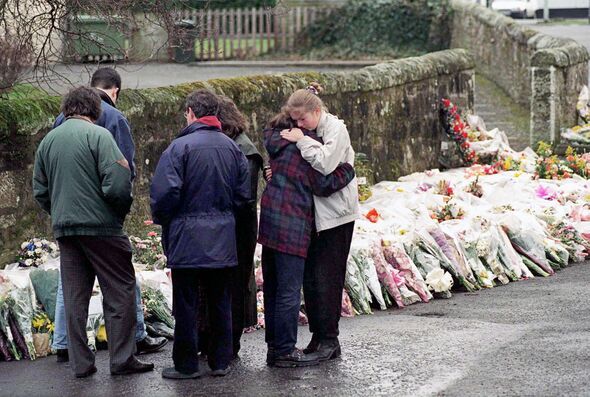
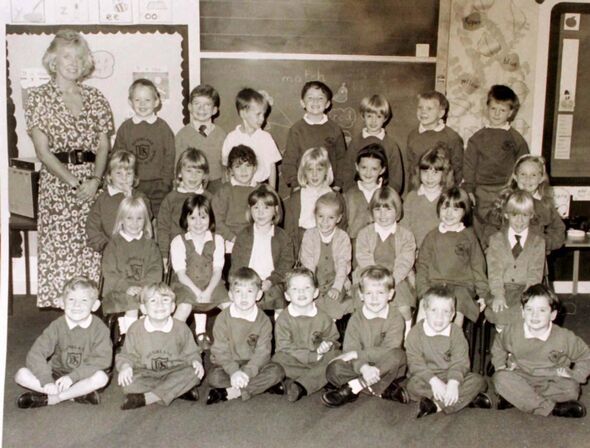
Over the next four minutes the gunman fired 105 bullets, killing 16 children and their primary one teacher Gwen Mayor, and seriously injuring 13 other children and two adults, gym teacher Eileen Harrold and teaching assistant Mary Blake, who both managed to usher a number of children into a cupboard. They tried to shelter them with their bodies and keep them quiet. One little boy, who had also been shot, kept saying, "what a bad man...what a bad man."
During the shooting one pupil from a neighbouring classroom could see into the gym hall only to be told by his teacher, who misheard the sounds of shooting as builders at work, to turn around and face the front. Another classroom was sprayed with bullets, with pupils ducking to the floor, only to emerge to see a bullet hole where one had been sitting a few seconds before.
The gunman then ditched the 9 mm Browning automatic he had used and pulled out a .357 Smith & Wesson Magnum, put the barrel in his mouth and pulled the trigger. The bullet passed through his skull, bounced off the stone wall behind and fell tinkling to the wooden floor.
For anyone over the age of 40 the shooting at Dunblane remains a 'JFK' moment - everyone knows where they were when they heard news that was, literally, unbelievable. The small town was, within hours, overwhelmed with journalists and film crews from around the world.
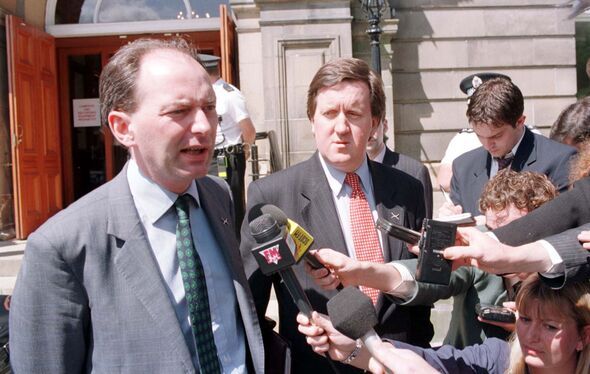
George Robertson, the Labour MP and shadow secretary of state for Scotland, who lived in Dunblane and whose children had attended the school, arrived in the early afternoon with Michael Forsyth, the Conservative MP and Secretary of State for Scotland. The children's bodies were still in place when they visited the gym. Robertson remained composed (he broke down at home) but Forsyth began to weep uncontrollably and took several minutes to compose himself before attending a press conference with the world's media.
Yet what is remarkable about the horror of that day was the political response. In researching my new book, One Morning in March: Dunblane and the Shooting that Changed Britain I learned that 24 hours after the shooting the Cabinet of John Major's government met at 10 Downing Street. The Dunblane shooting was third on the agenda and as the official minutes recorded, the consensus was: "The incident did not suggest a need for substantive change to firearms law."
The general view was, though sympathetic to the community and shocked by the event, the government could not legislate for the rogue actions of maniacs. One man, however, had a very different view. Michael Forsyth had left the gym hall with a crushing sense of responsibility. He knew that after the Hungerford massacre of 1987, the Home Office had banned semi-automatic rifles, like the replica Kalashnikov Michael Ryan had used in the shooting, but allowed the powerful automatic handguns that he used to kill the majority of his victims to remain legal.
Forsyth was now committed to securing a complete ban on all handguns, but in cabinet had to fight hard even to ensure a judge-led inquiry into the shooting. John Major was concerned a judge might make recommendations the government would not wish to honour. However, Forsyth was insistent that Scotland (and Britain) expected no less.
The events that unfolded over the next fifteen months take up the second half of my book and serve as an important lesson in both people power and the crucial nature of cross-party co-operation. George Robertson and Michael Forsyth would go on to work tirelessly for the good of the community, even persuading both John Major and Tony Blair to make an unusual joint visit to the stricken town.
Yet the first MP to come out and argue in favour of a complete ban on all handguns was David Mellor, the former Conservative minister, who eloquently argued that Britain, in accepting gun culture, had "embraced the American way of life and the American way of death".
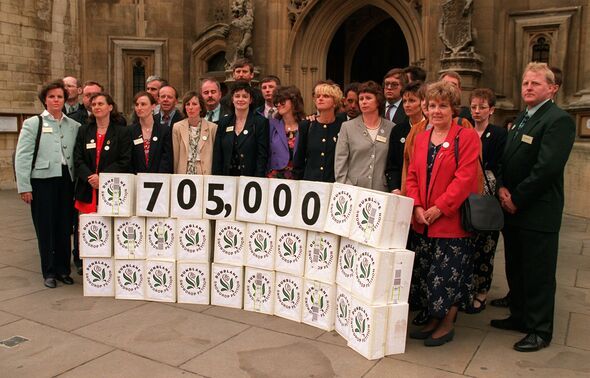
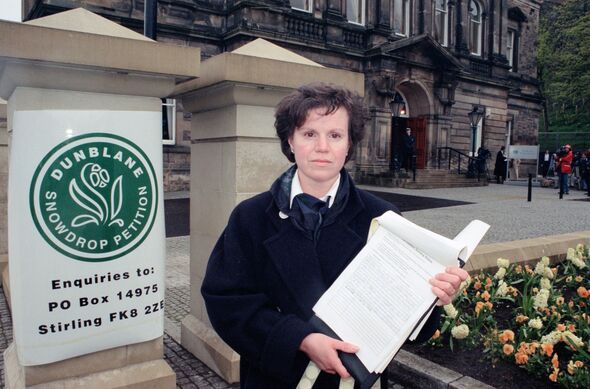
In the days after the shooting a new pressure group was set up by three women who lived near Dunblane. Together Ann Pearston, Rosemary Hunter and Jacqueline Walsh set up the Snowdrop Petition, named after the only flower in bloom on the day of the shooting, which called for a ban on handguns. Over the next 12 months the trio were ubiquitous on television, radio and in print as they gathered over 700,000 signatures from across Britain and faced down members of Britain's gun lobby. They endured hate mail and even violent death threats, one man was sent to prison for threatening Rosemary Hunter, but refused to be cowed. Even when members of the House of Lords called them at home to suggest they were wasting their time.
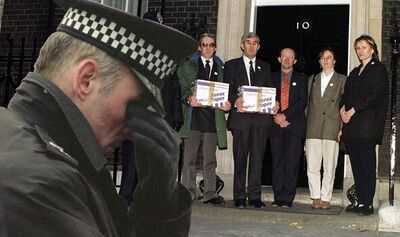
The Snowdrop Petition was supported first by Mick North, whose daughter Sophie had been killed in the shooting, and who published an early statement calling for "no more guns and no more worship of guns". Other parents followed. When the parents visited 10 Downing Street in April, Kareen Turner, who lost her daughter Megan, argued with John Major who suggested a motivated killer could use other substitutes such as Semtex. Turner pointed out their children had been killed, not by hard to source explosives, but by legally owned and licensed handguns. Pam Ross, who lost her daughter Joanna, appeared on Newsnight to argue for a ban.
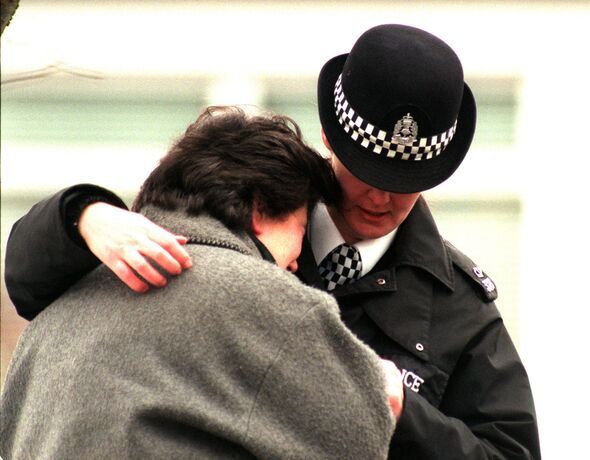
Her husband Kenny clashed with Tony Blair in an emotional encounter at the House of Commons. When he sensed the leader of the Labour Party prevaricating he asked, "Excuse me, Mr Blair, do you have a daughter?" When Blair replied that yes, he did [his third child Kathryn was then eight]. Ross replied: "Well, I had a daughter. She was five years old and now she's six feet under the ground in a wooden box and she was put there by someone with a legally held weapon."
When Lord Cullen, who led the public inquiry into the shooting, published his recommendation in October he did not recommend a full ban on handguns. But Michael Forsyth quietly threatened to resign unless Michael Howard, the Home Secretary and John Major go beyond the Judge's report. Yet both parents and the Snowdrop campaign had created a political environment where the public supported radical change.
The Conservative government announced a ban on almost all handguns, permitting the retention of .22 pistols used by Olympic shooters, but this was not enough for the parents and when New Labour were elected in May 1997 one of their first pieces of legislation banned .22 pistols.
Today Britain has among the toughest gun laws in the world, thanks to the parents of Dunblane who turned their grief into fuel for a bold political fight.
Thirty years on we cannot help but look back in anger at what happened, on March 13 1996, but we should also look back with a deep sense of gratitude for the parents who made Britain a safer place.
• Stephen McGinty is the author of One Morning in March: Dunblane & The Shooting that Changed Britain (Swift, £20) is published on March 12.
-
IPL 2026 Schedule: BCCI will not announce all the IPL matches, big reason revealed

-
Rohit Sharma: Rohit Sharma has made his body iron, fans were surprised to see his shirtless photo.

-
Influencer’s love Habudubu Dasha? Are you involved in the trending ‘parasocial’ relationship?

-
Did Tesla And Google Join Hands For Something Big? Here’s Everything To Know About The Big Energy Affordability Campaign

-
Nvidia CEO Jensen Huang Frames AI As ‘Foundational Infrastructure’ Ahead Of GTC Event Next Week