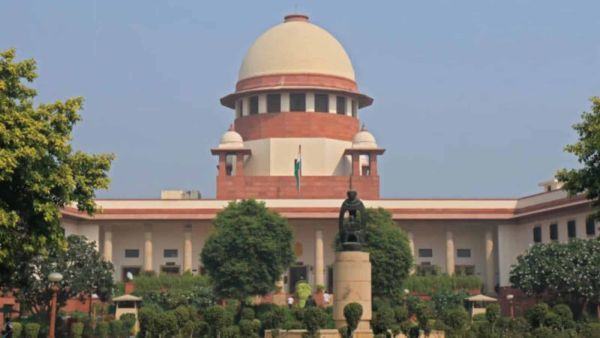
New Delhi: In a significant judgment to be delivered on Wednesday, the Supreme Court will decide the fate of a Ghaziabad man who has been in a permanent vegetative state for nearly 13 years, as his family seeks permission to withdraw life-sustaining medical support and allow passive euthanasia.
A Bench of Justices J.B. Pardiwala and K.V. Viswanathan is scheduled to pronounce its verdict on March 11 in the plea concerning Harish Rana, who has been bedridden since 2013 after suffering severe head injuries in a fall from the fourth floor while he was a student.
Rana, now around 30-years-old, has been in a permanent vegetative state with 100 per cent disability and quadriplegia, requiring continuous medical assistance for breathing, feeding, and daily care.

Earlier in the proceedings, the apex court had directed the constitution of a Primary Medical Board to evaluate whether the life-sustaining treatment could be withdrawn, in line with the Supreme Court’s rulings governing passive euthanasia.
A team of medical experts that visited Rana at his residence reported that he was lying in bed with a tracheostomy tube for respiration and a gastrostomy tube for feeding, and that the “chances of his recovery from this state is negligible”.
Subsequently, the top court also directed the All India Institute of Medical Sciences (AIIMS), New Delhi, to constitute a Secondary Medical Board to independently examine his condition.
The case traces back to a petition filed before the Delhi High Court by Rana’s parents seeking a medical Board to examine whether passive euthanasia could be considered.
The Delhi High Court had dismissed the plea, observing that active euthanasia is impermissible under Indian law. When the matter reached the Supreme Court in August 2024, the top court issued notice to the Union government to explore whether a humanitarian solution could be found, noting that the parents were struggling to continue providing care to their son who had remained in a vegetative state for more than a decade.
In November 2024, the apex court disposed of the matter after recording a government proposal to provide home-based medical assistance, including physiotherapy visits, dietician support, nursing care and free medicines.
However, liberty was granted to the parents to approach the court again if further directions were required. The family subsequently moved the Supreme Court again stating that Rana’s condition had deteriorated further and that there had been no improvement despite years of treatment.
After hearing the parties at length and receiving written submissions, the Justice Pardiwala-led Bench reserved its verdict on January 15 this year. The apex court will now deliver its final judgment on Wednesday, deciding whether passive euthanasia can be permitted in Rana’s case in accordance with the legal framework laid down in earlier rulings on the right to die with dignity.
-
NEET UG Registration 2026: Last date for filling NEET UG form extended, now you will have the opportunity to fill the form till this date..

-
How much do teachers earn during UP Board exam evaluation? Find out how much they earn for checking a single copy..
-
RRB NTPC City Intimation Slip Link: Download RRB NTPC Graduate Exam City Slip Here..

-
Board exam paper leak… Mass cheating was taking place using ChatGpt, now 81 teachers suspended, learn the whole story.

-
CTET 2026 Answer Key: CBSE may release the answer key anytime, here's how to download it..