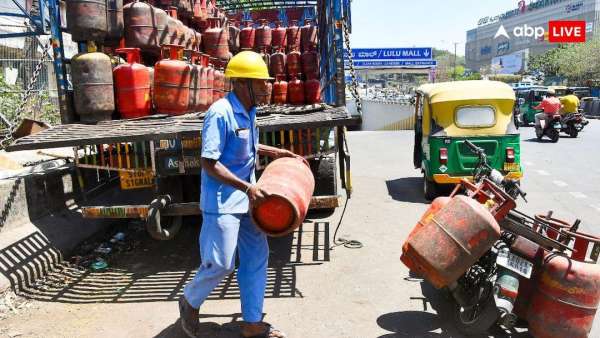
A shortage of commercial cooking gas has begun disrupting restaurant operations in parts of Delhi, forcing several eateries to temporarily shut their kitchens as supplies of LPG cylinders tighten amid the ongoing geopolitical crisis in West Asia.
According to a report by The Times of India, at least 12 eateries across the city suspended kitchen operations on Wednesday after their available stock of commercial LPG cylinders ran out.
Restaurant owners say the situation has worsened over the past few days as fresh supply has slowed and existing reserves have nearly been exhausted.
The supply disruption is being linked to the broader energy market volatility triggered by the escalating conflict in West Asia, which has already pushed global crude oil prices sharply higher and disrupted key supply routes such as the Strait of Hormuz, one of the world’s most critical energy shipping corridors.
Kitchens Go Quiet As Gas Supply Dries Up
Restaurant operators say the shortage has forced them to pause operations temporarily while they search for alternative arrangements.
"The restaurants will take a day or two and come up with different arrangements, like moving to induction-based cooking if they are able to — before reopening," Anurag Katriar, founder of Indigo Hospitality, told The Times of India.
Many food businesses in the capital depend heavily on commercial LPG cylinders for daily operations, particularly smaller restaurants that do not have access to large-scale cooking infrastructure.
Industry insiders say that once the existing stock of cylinders is exhausted, kitchens cannot function unless emergency supplies are arranged.
Allegations Of Black Market Sales
As the shortage intensifies, some restaurant owners have alleged that commercial cylinders are now being sold in the black market at sharply inflated prices.
Delhi-based restaurateur Gagandeep Singh Sapra wrote on social media that some suppliers were demanding more than Rs 5,000 per cylinder, several times higher than the usual rate.
"We are shutting down too now, gas is finished. Black marketeers are now asking for Rs 5000+++ for gas cylinders. If there is no supply for commercial cylinders, how do they have it in the black market?" Sapra said in a post quoted by The Economic Times.
He also questioned how such supplies were reaching unofficial channels despite shortages in the formal distribution network.
PNG Supply Also Tightened
Compounding the problem for restaurants is a parallel restriction on piped natural gas (PNG), which is often used as a fallback when LPG supply becomes irregular.
According to The Times of India, Indraprastha Gas Limited (IGL), the primary supplier of PNG in Delhi, has issued an advisory asking commercial and industrial consumers to reduce gas usage.
Amit Bagga, co-founder of Daryaganj Hospitality, told The TOI that IGL has limited supply for commercial users to around 80 per cent of their average gas consumption over the previous six months.
The advisory came into effect at 6 AM on March 11.
Restaurants operating inside malls and commercial complexes were also informed about the reduced supply. A communication circulated among tenants at Ambience Mall in Vasant Kunj warned that restaurants and food outlets may face interruptions in gas availability.
Businesses were advised to keep electrical cooking appliances ready as backup in case gas supplies fall further.
Restaurants Struggle To Stay Open
For many establishments, the shortage has already translated into operational shutdowns.
The shortage has also affected institutional kitchens in the capital.
According to media reports, the lawyers' canteen at the Delhi High Court temporarily stopped serving its main course menu after running out of cooking gas earlier in the day.
The management later managed to resume services once a fresh LPG cylinder was arranged.
Energy Market Turbulence Adds Pressure
The shortage in Delhi’s food sector comes at a time when global energy markets are experiencing significant disruption.
Oil prices have surged sharply in recent weeks as geopolitical tensions in West Asia intensified, raising concerns about supply disruptions from major oil and gas producers in the region.
Shipping through the Strait of Hormuz, a critical energy corridor through which a large share of global oil and liquefied natural gas flows, has faced uncertainty amid the conflict.
Such disruptions can ripple across global energy supply chains, affecting fuel prices and availability across multiple sectors.
-
Woman in China gives birth at 63 after losing only child

-
One Piece season 2 ends, fans await season 3 on Netflix

-
Dosa batter has become thin, so correct the consistency with the help of these tips…

-
People Are Fed Up With Tipping, Survey Finds They Want It Banned

-
Relationships Get So Much Better For 5 Zodiac Signs The Week Of March 16 – 22, 2026