
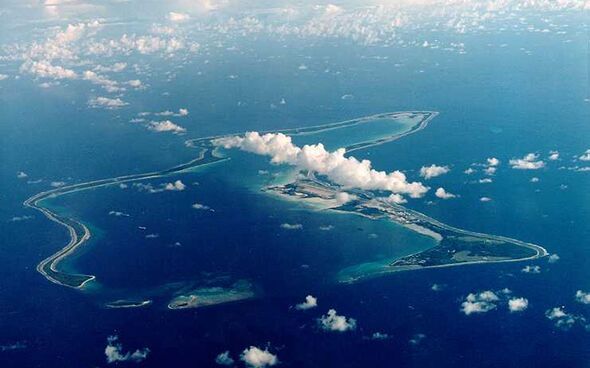
A group of migrants left stranded on the Chagos Islands could be set for a taxpayer-funded payout after a tribunal ruled that the UK wrongly denied them access to benefits. The case centres on three Tamil asylum seekers who were rescued at sea by the Royal Navy and taken to Diego Garcia, the UK-US military base in the Indian Ocean.
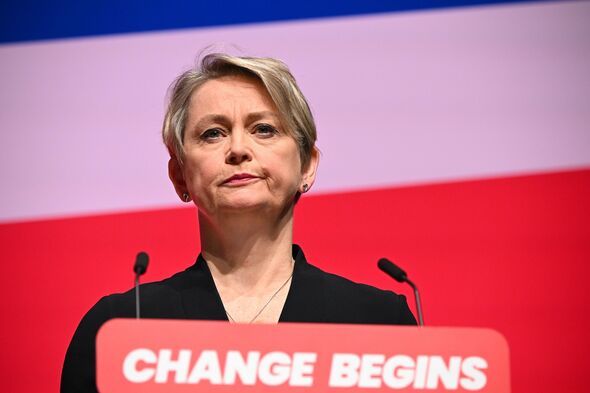
They were among dozens of migrants who ended up in the isolated territory after their boat ran into trouble in 2021 while travelling through the region. The migrants later argued they had been unfairly blocked from accessing public funds once they were moved to Britain. Now, an immigration tribunal has ruled that ex-Home Secretary Yvette Cooper's decision to prevent them from claiming benefits was unlawful, opening the door to compensation payments. The ruling means the Government - and therefore the taxpayer - may have to foot the bill, after judges concluded the Home Office should not have cut them off from support.
The migrants were part of a group of more than 50 Sri Lankan Tamils, including children, who ended up stranded on Diego Garcia. One was abused by the authorities in Sri Lanka. The second, who was born in a refugee camp in India, suffered abuse, torture and rape by the Indian authorities. The third, a mother of two, left India with her husband after he was persecuted for his political affiliations, according to The Telegraph.
They remained on the island for years in a fenced camp while their cases were considered. Previous reports described difficult living conditions in temporary tents, with allegations of overcrowding and rat infestations.
The Supreme Court found in 2024 that "all of the individuals who were held in the camp, including 16 children, had been detained, and that their detention had been unlawful throughout". It also found that the migrants "had been falsely imprisoned in inhumane conditions for a lengthy period".
The majority of the group were transferred to the UK after the Supreme Court judgment, and Ms Cooper granted leave to all three migrants in the tribunal for a period of six months, during which they had access to public funds. All three were initially housed in an asylum hotel in West Sussex, where they received Universal Credit for their first six months and were in a "considerably better financial position than the vast majority of asylum seekers".
All three claimed asylum "well before the expiry of their six months' leave to remain". However, they stopped receiving Universal Credit after May 2025, the six-month cut-off for their leave-to-remain. This led to the first migrant becoming "lonely, depressed, anxious and penniless", and the second migrant's mental health deteriorated to the point he contacted the Samaritans, the tribunal was told.
Vinesh Mandalia and Mark Blundell, the upper tribunal judges, found that the decision to deny migrants access to public funds was invalid because of legal errors. The Home Office had not taken the migrants' circumstances into account, the judges found, and failed to give them an opportunity to make representations when it stopped their entitlement to public funds.
The judges said: "Their circumstances were highly unusual when they arrived in December 2024, but they were all the more unusual in May 2025, by which stage they had had access to public funds for several months and had benefited in various ways from that allowance.
"They had been in a considerably better financial position than the vast majority of asylum seekers in the UK and the decision to place them in the same position as other asylum seekers would necessarily have real human consequences which the respondent was obliged to consider."
The migrants' ability to access public funds, particularly Universal Credit, had "finally brought some stability to their lives", the judges said. The Home Office has been refused permission to appeal the decision.
The migrants' claims for damages will be assessed by a tribunal in due course.
-
Four US soldiers killed in Iraq plane crash as Iran continues strikes in Middle East

-
Commercial LPG shortage pushes Mangaluru hotels and temples towards firewood for cooking

-
BJP core panel discusses candidates for Bagalkote, Davanagere South bypolls

-
BJP core panel discusses candidates for Bagalkote, Davanagere South bypolls
-
Manipal: Apartment sewage water entering Mannapalla Lake