India’s fintech giant PhonePe has pressed pause on its highly anticipated IPO plans, citing market volatility triggered by geopolitical tensions like the Israel–Iran conflict. But behind the official narrative, industry insiders suggest a deeper story—one that revolves around valuation expectations, profitability concerns, and comparisons with rivals.
The Official Line: Blame It on Market Volatility
On March 16, PhonePe announced its decision to defer its IPO, attributing the move entirely to unstable market conditions. The company emphasized that global uncertainties, particularly tensions in West Asia, made it an unfavourable time to go public.
In a firm statement, PhonePe dismissed speculation around internal issues: the pause, it said, had “nothing to do with valuation or company-specific concerns.” With approval already secured from Securities and Exchange Board of Indiathe company still has ample time until May 2027 to launch its IPO.
The Valuation Debate: A Gap Too Big?
Despite PhonePe’s stance, conversations with investors reveal a different angle. The fintech major reportedly sought a valuation between $6 billion and $8 billion, with discussions hovering around $7 billion. This is a sharp drop from the $15 billion valuation it commanded in its last private funding round.
This mismatch appears to have made investors cautious. Public market investors today are far more valuation-sensitive, especially when compared to the exuberance seen in private markets over the past few years.
Adding to the pressure is the benchmark set by rival Paytm (One 97 Communications), which currently trades at a valuation of around $7.5 billion—despite having a more diversified and monetised business model.
The Paytm Comparison: A Tough Benchmark
Analysts have been quick to draw comparisons between PhonePe and Paytm—and not always in PhonePe’s favour. While both companies generate similar revenues, Paytm is widely seen as being ahead in its monetisation journey.
Paytm’s diversified offerings—spanning payments, lending, wealth management, and commerce—have helped it build stronger margins. In contrast, PhonePe still derives nearly 85% of its revenue from payments, a segment that remains low-margin.
This reliance on a single vertical has raised concerns among investors, especially at a time when public markets are rewarding profitability and business diversity.
Dominance in UPI: Strength or Overdependence?
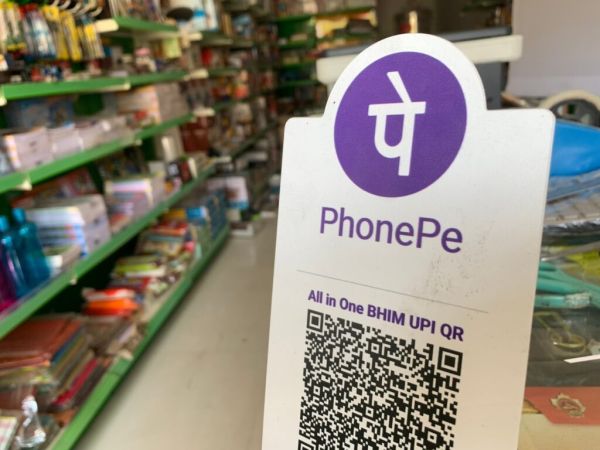
There’s no denying PhonePe’s leadership in India’s digital payments ecosystem. The company commands nearly 45% of all UPI transactions, ahead of Google Pay and Paytm.
Processing close to 10 billion transactions monthly, worth over ₹12 lakh crore, PhonePe is at the heart of India’s digital economy powered by Unified Payments Interface.
However, this dominance also comes with a caveat. Payments alone do not generate significant profits, and investors are increasingly looking beyond transaction volumes to sustainable revenue streams.
Profitability Concerns and ESOP Burden
One of the biggest red flags flagged by analysts is PhonePe’s profitability—or lack thereof. The company’s high employee stock ownership plan (ESOP) costs have significantly impacted its margins.
Brokerage reports suggest that these ESOP expenses are among the highest in the new-age tech ecosystem, dragging down EBITDA and raising concerns about long-term profitability.
Additionally, the impact of discontinued services, such as rent payments and regulatory challenges in gaming, has further weighed on revenue growth.
Lending: The Next Big Growth Engine
If there’s one area that could redefine PhonePe’s future, it’s lending. Industry experts believe that the next phase of growth for fintech companies lies in credit distribution.
PhonePe has already begun tapping into this space, generating around ₹300 crore from lending in the first half of the current fiscal. With access to over 30 crore users, the potential is enormous.
However, scaling lending is not just about growth—it’s about maintaining credit quality. Investors are waiting for proof that PhonePe can expand this vertical sustainably without increasing risk.
The Super App Dream Faces Reality
Like many fintech players, PhonePe has also pursued the “super app” vision—offering multiple services under one platform. However, analysts argue that this model hasn’t worked as effectively in India as it has in markets like China or Southeast Asia.
Instead, India’s fintech ecosystem remains fragmented, with category leaders like groww and Zerodha dominating investments, and Policybazaar leading insurance aggregation.
This fragmentation limits the ability of any single platform to capture outsized value across segments—thereby capping valuation upside.
Merchant Growth: Another Missing Piece
PhonePe’s merchant ecosystem, while large, is growing at a relatively slower pace. Monthly active merchants have plateaued at around 1.1 crore, and its merchant device subscriptions lag behind Paytm.
With around 92 lakh devices compared to Paytm’s 1.37 crore, there is still room for expansion. Strengthening this segment could unlock additional revenue streams and improve monetisation.
-
This concoction from the kitchen will do wonders! fever and cold will go away

-
‘Stop the car, I’m not doing this film!’ When Rishi Kapoor left the director in the middle of the road after hearing the first scene

-
BYD Launches First Anniversary Edition BYD Sealion 7: 567 km Range, Premium Features and Strong Performance—Check All Features, Price and Exclusive Benefits

-
U.S. could soon begin escorting oil tankers through Strait of Hormuz to restore key trade route

-
OpenAI launches GPT-5.4 Mini and Nano models, now work will be faster