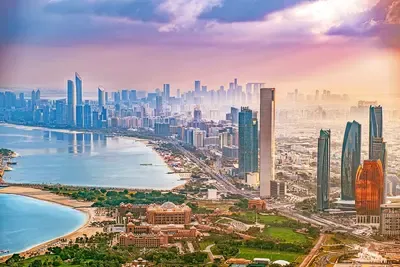
Dubai’s real estate sector is demonstrating strong resilience despite geopolitical tensions triggered by the Iran conflict, with investors holding firm positions, transactions continuing at scale and developers reporting stable cash flows — reinforcing the emirate’s status as a global safe haven for capital even during periods of regional uncertainty.
Market sentiment remains anchored by strong fundamentals and institutional confidence.
Mohamed Alabbar, founder of Emaar Properties, said capital inflows into the property sector remain steady and installment collections from off-plan buyers continue at healthy levels despite temporary disruptions linked to regional tensions. He noted that visitor traffic at Dubai Mall has eased from around 250,000 daily previously to about 180,000 during Ramadan but described the adjustment as modest and temporary rather than structural.
Fresh market intelligence from Smart Bricks reinforces that confidence. A recent survey found that 85 per cent of landlords in Dubai are not considering selling their properties, signalling continued belief in the emirate’s long-term fundamentals. Residential listings increased only marginally from about 105,300 on February 20 to 110,800 by March 16, a rise of just over 5 per cent — far below levels typically associated with panic-driven exits during geopolitical shocks.
Transaction activity continues to underline the market’s depth. Between late February and mid-March alone, Dubai recorded more than 6,048 residential transactions worth Dh20.2 billion, with roughly 63 per cent concentrated in off-plan projects, highlighting sustained investor appetite for long-term assets backed by established developers and flexible payment structures.
Global consultancies including CBRE and Knight Frank continue to highlight strong rental yields, population inflows and sustained international demand as key drivers supporting the sector. Residential rental returns across several Dubai communities remain in the 6 to 8 per cent range, among the highest in major global cities.
Real estate consultancies have also reported continued demand from high-net-worth individuals relocating to the UAE, particularly from Europe, Asia and emerging markets, reinforcing Dubai’s positioning as a long-term capital preservation destination at a time when investors are increasingly seeking stability.
The UAE’s macroeconomic strength remains another stabilising force. Analysts at S&P Global Ratings and Fitch Ratings have repeatedly emphasised that strong sovereign balance sheets, fiscal buffers and policy agility continue to underpin investor confidence during regional volatility. These strengths support sectors such as real estate that are closely linked to capital inflows, relocation trends and long-term residency demand.
Industry observers say the current shift in market behaviour reflects a maturing investment cycle rather than weakening demand. Off-plan developments backed by leading developers and prime locations continue attracting capital, while activity in the ready-property segment is increasingly driven by end-users and income-focused investors targeting rental stability rather than speculative gains.
Historical trends reinforce this pattern. Previous geopolitical disruptions in the region have typically affected transaction timelines temporarily rather than triggering broad-based price corrections — particularly in prime and well-located communities where supply remains constrained and demand continues to expand.
Economists at Oxford Economics similarly note that the UAE’s diversified non-oil growth model and strong external balances provide an effective buffer against geopolitical shocks, helping sustain housing demand even during periods of uncertainty.
Dubai’s growing role as a relocation hub for entrepreneurs, professionals and family offices is providing additional support. Long-term residency initiatives, regulatory reforms and infrastructure investment are strengthening structural housing demand across mid-market apartments and ultra-prime villas alike.
Retail and tourism indicators, although softer in recent weeks, remain broadly stable. Alabbar said temporary adjustments in visitor flows are normal during periods of regional tension and do not alter the long-term trajectory of the UAE’s diversified economy. He added that the country’s institutional strength and security environment continue to reinforce investor confidence and support a swift return to stronger momentum once regional conditions stabilise.
Economists at Oxford Economics similarly note that the UAE’s diversified non-oil growth model and strong external balances provide an effective buffer against geopolitical shocks, helping sustain housing demand even during periods of uncertainty.
Importantly, the absence of distress selling signals that Dubai property is increasingly viewed as a strategic long-term store of value rather than a short-term trading asset. For investors across the UAE and wider Gulf, the message is becoming clearer: while regional tensions may influence sentiment temporarily, the emirate’s real estate market remains fundamentally resilient, liquid and supported by powerful structural demand drivers.
-
Bank of America settles Epstein case for $72.5 million

-
Avneet Kaur's Stunning Instagram Looks Captivate Fans

-
A Kerala Man's Lottery Win Leads to an Unexpected Historical Discovery

-
Telangana: CM Reddy floats 'people credits' tax on AI firms for job losses

-
Intense heat in coastal region: Maximum temperature recorded