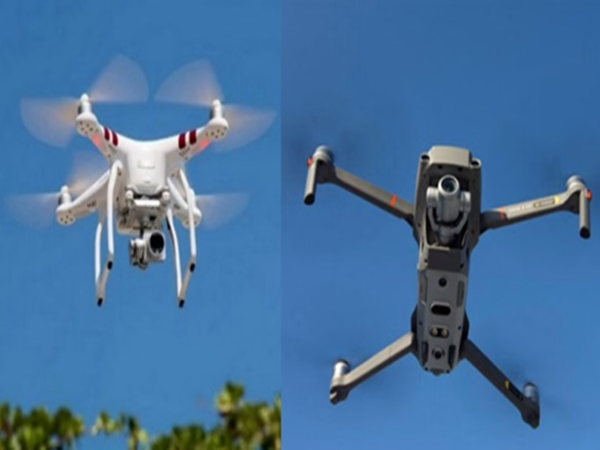
The use of drones in India has expanded rapidly over the past few years. Whether for photography at weddings, spraying pesticides in fields, or e-commerce deliveries, drones are increasingly becoming an integral part of our lives. However, not every drone soaring through the skies can fly at its own whim. The Government of India has established specific regulations that drone operators must strictly adhere to.
**What are the Rules for Flying Drones in India?**
In India, the use of drones is regulated by the Directorate General of Civil Aviation (DGCA), and the 'Drone Rules, 2021' are currently in force. Under these regulations, it is mandatory to register any drone before flying it. Every drone is assigned a Unique Identification Number (UIN), and the operator is required to register on the 'Digital Sky' platform. This process facilitates easier monitoring and tracking of drones.
**Flight Permissions Granted Based on Drone Category**
In India, drones are categorized into five classes based on their weight. The smallest category is the 'Nano' drone (weighing less than 250 grams), for which a license is not required. Following this are the 'Micro' (250 grams to 2 kg), 'Small' (2 kg to 25 kg), 'Medium' (25 kg to 150 kg), and 'Large' (over 150 kg) categories. Except the Nano category, registration and a Unique Identification Number (UIN) are mandatory for all other categories.
**Where Can Drones Be Flown, and Where Are They Prohibited?**
There are several sensitive locations across the country where flying drones is strictly prohibited. These areas include the vicinity of airports, military bases, border regions, government buildings, and VIP zones. Additionally, it is advisable to refrain from flying drones in crowded areas, as doing so could compromise public safety and infringe upon individuals' privacy.
Furthermore, to obtain permission to fly a drone, operators are required to consult the DGCA's 'Digital Sky' platform. The government has divided the entire Indian airspace into three color-coded zones:
Green Zone: This is the area where no prior permission is required to fly drones up to an altitude of 400 feet.
Yellow Zone: This is controlled airspace. To fly a drone here, permission must be obtained from Air Traffic Control (ATC). Typically, areas surrounding airports fall under this category.
Red Zone: This is a 'No-Fly Zone.' Flying drones here is strictly prohibited. This includes military bases, critical government buildings, and international borders.
What precautions should be taken while flying?
When flying a drone, it is essential to keep it within your visual line of sight at all times. Flying at an altitude exceeding the prescribed limit is a violation of the rules. Separate permission is required to fly drones during nighttime hours. Furthermore, intruding upon an individual's privacy is considered legally wrongful. The sole objective of these regulations is to ensure safety and security.
Legal Action for Violation of Rules
Violating drone regulations can result in consequences that are not only financial but also criminal in nature. Under Rule 49 of the Drone Rules, 2021, if an individual disregards these regulations, they may be liable for a fine of up to ₹1 lakh.
If a drone is flown within a Red Zone or a restricted area, in addition to heavy fines, the drone itself may be confiscated.
If a drone is used to infringe upon someone's privacy or to pose a threat to security, a case may be registered under various sections of the Bharatiya Nyaya Sanhita (BNS), which includes provisions for imprisonment.
Strict action will also be taken against those flying commercial drones without a valid license or valid insurance coverage.
Disclaimer: This content has been sourced and edited from Amar Ujala. While we have made modifications for clarity and presentation, the original content belongs to its respective authors and website. We do not claim ownership of the content.
-
UP Co-operative Bank Recruitment 2026: Apply for 116 Vacancies

-
SSC JE Tier II City Intimation Slip Released for 2026 Exam

-
Long-Studying MBBS Students at Gorakhpur College Face Examination Challenges

-
Outlander's Sam Heughan details the one part of playing Jamie Fraser he 'hated'

-
BJP approaches Election Commission over 'seal' controversy in Kerala