Many homeowners with hydronic (hot-water) heating systems believe that turning off radiators when they aren’t using a room is an easy way to save energy. At first glance, the reasoning makes sense: why heat a space you’re not in? But a large but growing body of research from Europe, along with corroboration from U.S. energy analysis, indicates this widespread practice can actually decrease efficiency and boost total heating demand.
Heat Does Not Stay Put: The Trouble With Thermal Leakage
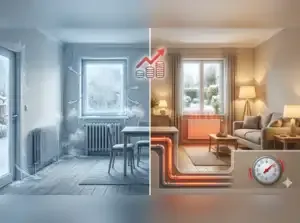
The basic physics explains one of the key reasons this strategy fails. Heat naturally moves from hotter regions to colder ones. When a radiator is switched off in a guest room, that room becomes quite cool compared with the rest of the house. Consequently, heat starts to escape from nearby heated rooms via walls, ceilings, floors and tiny gaps in the air.
Last year, independent researcher Nick Grant checked this phenomenon in detail in a UK blog post called “Energy Surprises” on the topic of modelling studies. The simulation studied a typical two-story house and left one room unheated. The analysis revealed that the opposite space’s radiators worked 19–26% harder to make up for the heat loss into the colder environment. However, the overall yearly energy savings were only between 3.3% and 5.4%, despite this increased effort.
This means that by using less heat in one room, the rest of the house uses more. In real terms, expected savings are more than offset by surging demand elsewhere.
Technical Information On Boiler Efficiency And Return Temperature
A second important factor is the way hydronic systems work. These systems send hot water around through radiators and then return it to the boiler for re-heating. This allows for the heat to be evenly distributed while being uniformly withdrawn from the water when multiple radiators are in operation.
But when some radiators are turned off, less of the heat is absorbed from the circulating water. This makes hotter water return to the boiler sooner. This means that the boiler needs to work hotter and typically longer in order to ensure the setpoint temperature is achieved inside.
This is especially detrimental to modern condensing boilers whose most efficient operating specter centers around a lower return temperature. Above the condensation threshold (roughly 130°F / 55°C) of return temperature, a system cannot condense exhaust gases to capture latent heat. This can reduce efficiency by 15%, meaning any savings from turning off radiators is cancelled out.
Real Buildings and Controlled Experiments Evidence
These findings are supported by real-world data as well, beyond modeling. A research project at the Technical University of Denmark (DTU) in Denmark, led by Michele Tunzi, investigated multi-apartment buildings with district heating systems. The team used an IoT-based heat meters to show what happened with the shift in heat distribution when radiators were switched off in certain rooms.
The study found that disabling radiators in one room caused the other radiators — both in the same apartment and neighboring units — to make up for the missing heat. This upset the system and resulted in higher return temperatures and decreased overall efficiency. Under efficiency-based heating tariffs, some buildings faced financial penalties that rose to thousands of dollars a year.
The research at DTU therefore clearly showed that uneven heating conditions result not only in discomfort but also cost more money and harm the environment.
Supporting Insights from a U.S. Energy Analysis
Even though most of the detailed studies come out of Europe, their findings are very applicable to the United States. According to analyses conducted by the U.S. Department of Energy (DOE), hydronic systems—especially ones that lack advanced zoning controls—can also become less efficient if heat distribution is uneven.
DOE modeling of residential boilers has shown that poor zoning can increase system cycling and reduce efficiency, especially when boilers operate outside their optimal temperature range. This is consistent with the European findings for return temperature and heat imbalance.
With millions of American residences still using boiler-based heating systems, especially in colder areas, these discrepancies can lead to a significant impact on energy bills.
Why Does This Happen? The Physics Behind the Counterintuitive Outcome
Behind all this is some combination of heat transfer and system dynamics. Heat flows along the temperature gradient, so cold rooms are actively pulling heat from warmer rooms. However, boilers are designed to operate most efficiently under non-variable and balanced loads and consistent return temperature.
Both of these principles break down when radiators are turned off. The system is less stable, less efficient, and more expensive to run than anticipated.
A Smarter Way to Capture Heating Efficiency
Instead of shutting radiators off completely, experts advise keeping a steady temperature throughout the home and at moderate levels. Fitting thermostatic radiator valves (TRVs) can reduce heat demand, without making room temperatures feel colder than comfortable; According to research by BEAMA for Europrogetti in 2015 set point temperatures at least a couple of degrees lower in rooms not habitually occupied has a noticeable impact on reducing the overall heat load.
Improved insulation in walls, floors and doors between rooms can also help reduce unwanted heat transfer. Modern controls like weather-compensated boilers and smart thermostats you can adjust output according to live conditions for even greater efficiency.
Conclusion
The concept of saving money on heating bills by turning off radiators in rooms you don’t use: seductive, but largely a fallacy. Analysis from the United Kingdom and Denmark, which has been corroborated by U.S.-based energy research, indicates that heat leakage and lower boiler efficiency largely outweighs any expected savings.
In many instances, the net benefit is small — or even negative. Instead, try a more credible answer: even heating, insulation (including structuring), and smart operation. For hydronic heating, breaking point between energy savings and energy loss—trade-off is a constant resetting on the system.
Heat Does Not Stay Put: The Trouble With Thermal Leakage
The basic physics explains one of the key reasons this strategy fails. Heat naturally moves from hotter regions to colder ones. When a radiator is switched off in a guest room, that room becomes quite cool compared with the rest of the house. Consequently, heat starts to escape from nearby heated rooms via walls, ceilings, floors and tiny gaps in the air.
Last year, independent researcher Nick Grant checked this phenomenon in detail in a UK blog post called “Energy Surprises” on the topic of modelling studies. The simulation studied a typical two-story house and left one room unheated. The analysis revealed that the opposite space’s radiators worked 19–26% harder to make up for the heat loss into the colder environment. However, the overall yearly energy savings were only between 3.3% and 5.4%, despite this increased effort.
Image Credit - Gemini
Technical Information On Boiler Efficiency And Return Temperature
A second important factor is the way hydronic systems work. These systems send hot water around through radiators and then return it to the boiler for re-heating. This allows for the heat to be evenly distributed while being uniformly withdrawn from the water when multiple radiators are in operation.
But when some radiators are turned off, less of the heat is absorbed from the circulating water. This makes hotter water return to the boiler sooner. This means that the boiler needs to work hotter and typically longer in order to ensure the setpoint temperature is achieved inside.
This is especially detrimental to modern condensing boilers whose most efficient operating specter centers around a lower return temperature. Above the condensation threshold (roughly 130°F / 55°C) of return temperature, a system cannot condense exhaust gases to capture latent heat. This can reduce efficiency by 15%, meaning any savings from turning off radiators is cancelled out.
Real Buildings and Controlled Experiments Evidence
These findings are supported by real-world data as well, beyond modeling. A research project at the Technical University of Denmark (DTU) in Denmark, led by Michele Tunzi, investigated multi-apartment buildings with district heating systems. The team used an IoT-based heat meters to show what happened with the shift in heat distribution when radiators were switched off in certain rooms.
The study found that disabling radiators in one room caused the other radiators — both in the same apartment and neighboring units — to make up for the missing heat. This upset the system and resulted in higher return temperatures and decreased overall efficiency. Under efficiency-based heating tariffs, some buildings faced financial penalties that rose to thousands of dollars a year.
The research at DTU therefore clearly showed that uneven heating conditions result not only in discomfort but also cost more money and harm the environment.
Supporting Insights from a U.S. Energy Analysis
Even though most of the detailed studies come out of Europe, their findings are very applicable to the United States. According to analyses conducted by the U.S. Department of Energy (DOE), hydronic systems—especially ones that lack advanced zoning controls—can also become less efficient if heat distribution is uneven.
DOE modeling of residential boilers has shown that poor zoning can increase system cycling and reduce efficiency, especially when boilers operate outside their optimal temperature range. This is consistent with the European findings for return temperature and heat imbalance.
With millions of American residences still using boiler-based heating systems, especially in colder areas, these discrepancies can lead to a significant impact on energy bills.
Why Does This Happen? The Physics Behind the Counterintuitive Outcome
Behind all this is some combination of heat transfer and system dynamics. Heat flows along the temperature gradient, so cold rooms are actively pulling heat from warmer rooms. However, boilers are designed to operate most efficiently under non-variable and balanced loads and consistent return temperature.
Both of these principles break down when radiators are turned off. The system is less stable, less efficient, and more expensive to run than anticipated.
A Smarter Way to Capture Heating Efficiency
Instead of shutting radiators off completely, experts advise keeping a steady temperature throughout the home and at moderate levels. Fitting thermostatic radiator valves (TRVs) can reduce heat demand, without making room temperatures feel colder than comfortable; According to research by BEAMA for Europrogetti in 2015 set point temperatures at least a couple of degrees lower in rooms not habitually occupied has a noticeable impact on reducing the overall heat load.
Improved insulation in walls, floors and doors between rooms can also help reduce unwanted heat transfer. Modern controls like weather-compensated boilers and smart thermostats you can adjust output according to live conditions for even greater efficiency.
Conclusion
The concept of saving money on heating bills by turning off radiators in rooms you don’t use: seductive, but largely a fallacy. Analysis from the United Kingdom and Denmark, which has been corroborated by U.S.-based energy research, indicates that heat leakage and lower boiler efficiency largely outweighs any expected savings.
In many instances, the net benefit is small — or even negative. Instead, try a more credible answer: even heating, insulation (including structuring), and smart operation. For hydronic heating, breaking point between energy savings and energy loss—trade-off is a constant resetting on the system.