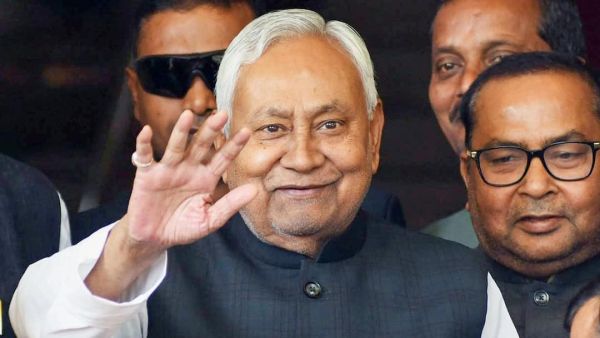
Bihar Chief Minister Nitish Kumar, who was elected to the Rajya Sabha earlier this month, is expected to resign as a member of the Bihar legislature on March 30.
Under constitutional provisions, any member of a state legislature elected to Parliament is required to step down from their state post within 14 days of the election. Kumar, who secured his Rajya Sabha seat on March 16, must therefore resign from his position as a Member of the Legislative Council (MLC) by the March 30 deadline.
Meanwhile, Nitin Nabin, the BJP’s national president, has also not yet resigned from the Bihar Assembly. His resignation has reportedly been delayed as he travelled to Delhi for an important meeting.
Political activity in Bihar has intensified amid speculation that Chief Minister Nitish Kumar may resign from the State Legislative Council. Senior leaders of his party have been holding key meetings at the Chief Minister’s official residence.
According to rules, Kumar is required to resign from the assembly by March 30 after winning a Rajya Sabha seat on March 16.
Several prominent leaders met Nitish Kumar on March 29, including Union Minister Rajiv Ranjan Singh (Lalan Singh), Water Resources Minister Vijay Kumar Chaudhary, Rural Works Minister Ashok Chaudhary, JD(U) Executive President Sanjay Jha, and Mokama MLA Anant Singh.
During the meeting, several party workers reportedly urged the Chief Minister to continue his role in Bihar politics.
Succession Debate Gains Momentum
Speculation over Kumar’s successor has further raised the political temperature in the state. Deputy Chief Minister Samrat Chaudhary from the BJP is being seen as a frontrunner for the top post. Kumar himself had earlier hinted during his Samriddhi Yatra that new leadership would emerge in Bihar.
At the same time, some leaders within the Janata Dal (United) have backed Kumar’s son Nishant Kumar as a potential successor, stating that he has the qualities required for the role.
Political analysts suggest that after becoming a Rajya Sabha member, Kumar’s role in state politics may become largely ceremonial.
Resignation Moves And Political Signals
In a related development, BJP’s national president Nitin Nabin was also expected to resign as a member of the Legislative Assembly. However, his resignation was postponed due to his engagement in the Assam elections.
Assembly Speaker Prem Kumar said that the resignation was deferred in view of Nabin’s responsibilities, highlighting the fluid political situation in the state.
Reacting to the developments, Leader of Opposition Tejashwi Yadav alleged that the BJP had pressured Nitish Kumar to step down as Chief Minister.
He claimed that the BJP was working towards weakening the JD(U), and Kumar’s move to the Rajya Sabha was part of that strategy.
“Even though Nitish Kumar is the national president of the JD(U), the party is no longer in his hands and it is being run by a group that is associated with the BJP,” Yadav said.
A Turning Point For Bihar Politics
Nitish Kumar had earlier announced his resignation from the post of Chief Minister on March 5 and had expressed his long-standing desire to serve both in the state assembly and Parliament.
During the filing of his Rajya Sabha nomination, Union Home Minister Amit Shah, Deputy CM Samrat Chaudhary, and other NDA leaders were present.
With a possible resignation now imminent, Bihar’s political landscape may be headed for a significant shift, potentially redefining the direction of both the government and the ruling alliance in the state.
-
Assembly polls: Amit Shah promises Uniform Civil Code in Assam
-
Great Nicobar Island: Galathea Bay sees record turtle nesting, contradicting NGT stance

-
Lisa Kudrow 'preserved' another role as she wasn't convinced 'Friends' would be a hit

-
Japan PM open to top-level talks with Iran if national interest warrants
-
Vaishakh Month: Perform this ritual during the month of Vaishakh, and you will receive the special grace of Lord Vishnu..