New Delhi: Fresh details have emerged from the ongoing West Asia conflict, suggesting that a newly developed United States missile may have been used in a deadly strike on Iran’s southern city of Lamerd, raising serious concerns over civilian casualties and the use of advanced weaponry in active combat zones.
Footage shows a US PrSM missile striking a residential area and sports hall in Lamerd, Iran, on the first day of war, resulting in 21 fatalities. ? pic.twitter.com/OxjiTILZYY
— OSINT FrontLine | Global ? (@OSINT_Front) March 29, 2026
According to analyses by weapons experts and visual investigations cited in international media reports, the February 28 strike targeted an area near a military compound but also hit a sports hall and an adjacent elementary school. Local officials, quoted in Iranian media, said at least 21 people were killed in the attack.
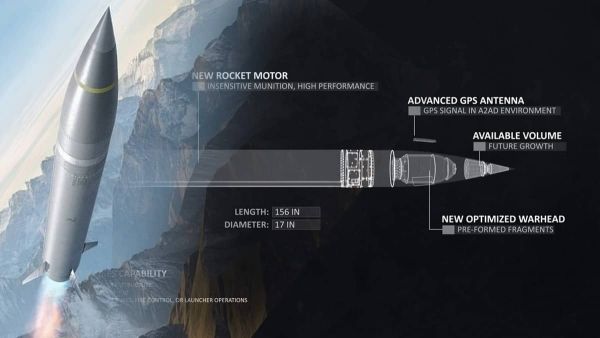
Evidence from videos and photographs of the site indicates the possible use of the Precision Strike Missile (PrSM), a short-range ballistic missile developed by the US Army.
PrSM production accelerates! A new DoW framework will quadruple Precision Strike Missile output. This expansion comes on the heels of a historic first as PrSMs were used in combat, providing an unrivaled deep‑strike capability. pic.twitter.com/oSmIlOEXR4
— Lockheed Martin (@LockheedMartin) March 25, 2026
What Is the ‘PrSM’ Missile?
Precision Strike Missile (PrSM), a next-generation surface-to-surface missile developed by the US Army. The PrSM is designed to detonate above its target, mid-air and release tungsten fragments, causing widespread damage over a large area, a feature that aligns with the damage pattern observed at the Lamerd site.
The strike is believed to mark one of the first combat uses of the PrSM, a relatively new addition to the US arsenal that only completed prototype testing last year before entering deployment.
US ATACMS/PrSM missile launches from Kuwait towards Iran.
— Daily Iran Commentary (@IR_News2) March 24, 2026
Gulf countries provide their territory to facilitate these attacks, but when Iran retaliates, they complain about Iran attacking them. pic.twitter.com/Pe26ebl4wv
A War Testing New Weapons
The strike coincided with the opening phase of a large-scale military escalation involving US and Israeli forces targeting Iranian positions. The conflict is increasingly turning into a testing ground for advanced weapon systems, with the PrSM potentially seeing its first real-world deployment.
The Lamerd attack occurred on the opening day of a large-scale US-Israeli military offensive against Iran, part of a broader escalation in the region. The conflict, which began on February 28, has seen coordinated airstrikes across multiple Iranian cities targeting military infrastructure, but has also resulted in significant civilian casualties.
Reports also indicate that on the same day, another US strike using a Tomahawk cruise missile hit a school in Minab, killing dozens more, highlighting the scale and intensity of the initial assault.
The Iranian regime was warned. CENTCOM is now delivering swift and decisive action as directed. pic.twitter.com/nNDoDexH6g
— U.S. Central Command (@CENTCOM) March 1, 2026
The ongoing war has increasingly become a testing ground for new-generation weapons systems, with the PrSM among the most prominent. Designed for precision deep strikes and capable of being launched from HIMARS platforms, the missile represents a shift toward longer-range, high-impact battlefield capabilities.
Rising Questions Over Civilian Impact
While the intended target of the Lamerd strike is believed to have been a nearby military installation, the damage to civilian structures has intensified scrutiny. The incident adds to growing concerns about the humanitarian cost of precision warfare, especially when conducted in densely populated regions.
However, the reported use of such advanced weaponry in areas with civilian presence has drawn scrutiny, especially as casualty figures mount. While the intended target in Lamerd was believed to be a nearby military facility, the proximity of civilian infrastructure has once again raised questions over targeting accuracy and the humanitarian cost of modern warfare.
As the conflict continues to intensify, the use of next-generation missiles like the PrSM is likely to remain under global watch, particularly amid growing calls for accountability and restraint in the region.
-
Raja Raghuvanshi REBORN? Baby Born at Exact Date & Time of His Death, Family Calls It Miracle, Named Him Raja

-
Fears popular UK fish and chip shop could close after 94 years

-
New Dating Trend Allows Partners To Cheat! More About Tolyamory & Why It Is A Red Flag

-
Martin Lewis urges shoppers to look out for this code when buying medication

-
What Makes 'Dhurandhar: The Revenge' a Record-Breaking Hit? Discover the Secrets Behind Its Success!