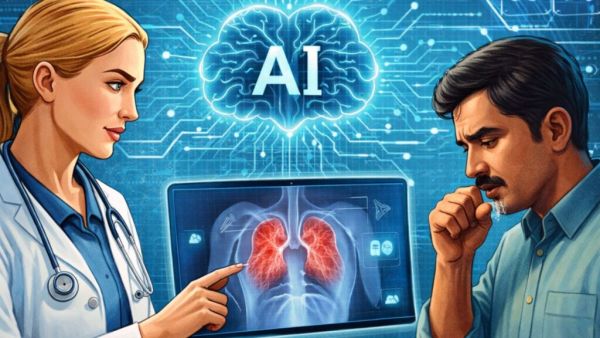
It has been decided to go ahead with the traditional screening method to implement artificial intelligence (AI) based TB detection campaign. The Public Health Department informed that more than 11,000 at-risk villages and urban areas of the state will be focused on in a 100-day special campaign starting from March 24 under the ‘TB Free India’ campaign. Meanwhile, the entire campaign will be controlled instantly through the ‘Nikshaya’ system and emphasis has been placed on day-wise planning. With this, the administration aims to achieve early detection of patients, timely treatment and reduction in mortality.(Photo Courtesy – AI)
Feeling tired of doing small chores around the house? Then change the diet to compensate for the lack of potassium in the body
This year’s campaign towards TB eradication will not be limited to public awareness but will be a technology based ‘Active Search Campaign’. For this, for the first time, ‘risk maps’ (vulnerability mapping) have been prepared with the help of artificial intelligence and based on this, 11,091 villages and urban wards of the state have been selected. Instead of traditional symptom-based screening, the campaign will involve active screening of the at-risk population directly.
Together with tuberculosis, other diseases can also be examined together
The elderly, diabetics, malnourished, HIV infected, persons in contact with tuberculosis patients as well as migrants and slum dwellers will be screened on priority. Notably, rapid screening will be done using easy-to-use artificial intelligence-based X-ray machines and suspected patients will be immediately referred for further testing, services are planned to be delivered through ‘Nikshay’ mobile teams in remote and tribal areas.
Do not ignore these physical symptoms in summer, there may be a risk of heart attack
Another important aspect of this campaign is the combined screening of tuberculosis along with other diseases. Diabetes, high blood pressure, anemia and malnutrition will be screened from the Ayushman Arogya camp.