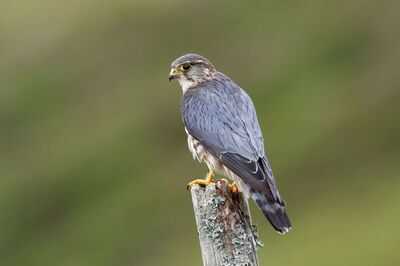
Lead scientist Dr Rob Cooke, a senior ecologist at UKCEH, said: "Some species that have been part of our landscapes for centuries are now at risk of being lost, such as the Merlin, the UK's smallest bird of prey, Mountain Ringlet and Large Heath butterflies, as well as plants such as Burnt Orchid, Grass-of-Parnassus and Alpine Gentian.
"This will negatively affect local habitats and a range of ecological functions, from soil health and nutrient cycling to pollination and food production, with knock-on effects for wildlife and people."
The scientists say 2050 is a "point of no return" where decisions on climate and land use made up to then will determine the trajectories of species trends in future decades.
The scientists modelled six plausible future scenarios, involving different total greenhouse gas emissions and varying land management practices.
They found that even under mild warming scenarios, there will still be upheaval for biodiversity in Britain and it is likely already too late for some species due to the environmental changes that have already happened.
But the study warned that under better scenarios, up to 69 fewer species - across plants, birds and butterflies - would eventually become extinct in Britain compared with the worstcase scenario.
Dr Cooke added: "Our results show that the next 20 years will be decisive. The choices we make now will set Britain on a path either towards accelerating biodiversity loss or towards nature recovery."
-
Age is just a number! Want to stay fit and young even after 50? Then apply these healthy habits to your body today

-
Treatment from constipation to stomach ache at home – know effective tips

-
Why should you eat Kundru vegetable in the summer season, read it and see its benefits.
-
Best places in India for river rafting

-
Who is Ashwini Bhide? Who became the first woman commissioner of Mumbai BMC, know how was her administrative journey.