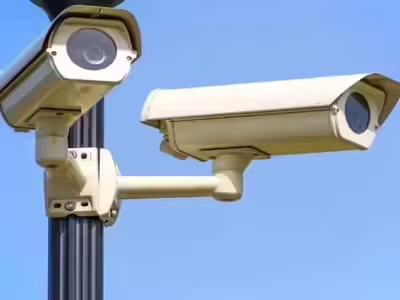
New Delhi, April 1, 2026 — A major shift has occurred in India today as the central government has implemented stringent regulations concerning internet-connected CCTV cameras. Brands such as Hikvision, Dahua, and TP-Link will no longer be available for sale in the country.
The new ER-01 regulations have come into full effect under the STQC (Standardisation Testing and Quality Certification) framework established by the Ministry of Electronics and Information Technology (MeitY). Following a two-year transition period, the sale of products lacking STQC certification has become illegal.
The government is refusing to certify cameras that contain System-on-Chip (SoC), firmware, or components of Chinese origin. This effectively removes major players like Hikvision and Dahua, which previously held about one-third of the Indian CCTV market, from the scene.
Reasons Behind the Government's Decision
The primary motivation for this decision is national security and the threat of cyber espionage.
- Concerns persist regarding data theft, remote access, and unauthorized surveillance associated with Chinese cameras.
- These cameras are manufactured by companies linked to the Chinese government, raising fears of data leaks to foreign powers.
- The new regulations mandate companies to declare the country of origin for critical components (like SoC), and certification is granted only after rigorous testing in Indian labs.
- So far, 507 CCTV models have received STQC certification, but most Chinese brands have either failed or not been certified.
Impact of the New Regulations
- New Purchases: Starting today, new internet-connected cameras from Chinese brands will not be available in stores.
- Existing Cameras: There is no immediate need to remove previously installed cameras, but technical support, updates, and warranties may be affected, with potential for stricter measures in the future.
- Market Changes: Indian companies such as CP Plus, Qubo, Prama, Matrix, and Sparsh, along with brands using chips from Taiwan or other countries, are expected to gain significant market share in homes, shops, offices, government buildings, and public spaces.
- Price Effects: Initial price increases may occur, but in the long run, the growth of Indian manufacturing could stabilize prices.
Expert Opinions
Industry experts believe this decision is a significant step towards self-reliant India and enhancing digital security. It aims to reduce dependence on Chinese products while fostering innovation and job creation within Indian companies. However, small retailers and installers may face initial supply chain challenges.
The government has made it clear that all brands, whether Chinese or not, must comply with STQC regulations, but products containing Chinese chips and firmware are not being approved.
Advice for Consumers:
- When purchasing a new CCTV, opt for STQC certified products.
- Verify certification on the brand's website or the MeitY/STQC portal.
- If using older Chinese cameras, ensure strong passwords, separate networks, and regular updates for data security.
This decision is a result of the ER regulations initiated in 2024, prioritizing cybersecurity. The ban on Chinese CCTV reflects India's increasing digital vigilance, especially amid rising global cyber threats.
It remains to be seen how Chinese companies will respond to this decision and whether they will initiate local manufacturing in India.
-
Kangana Ranaut To Return In ‘Queen 2’, Shooting Likely To Begin By April-End

-
Russian Military Plane Crash In Crimea Leaves 29 Dead

-
Who Kidnapped American Journalist Shelley Kittleson In Iraq? What We Know So Far

-
Rory McIlroy Returns For DP World India Championship 2026 In Delhi

-
JEMScN Registration 2026 Commences At wbjeeb.in/jemscn; Direct Link To Apply Here