
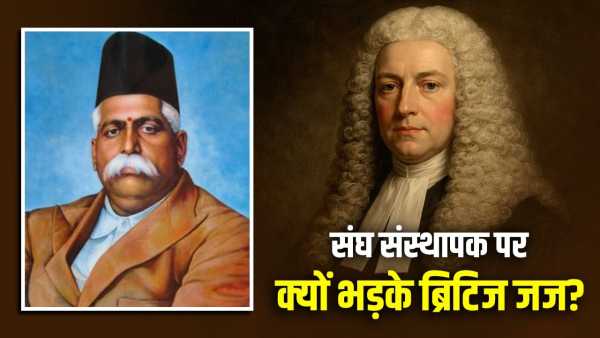
As soon as Rashtriya Swayamsevak Sangh is discussed, opponents raise questions on its role in the freedom struggle. On the other hand, people associated with the Sangh and its supporters cite Sangh founder Dr. Keshav Baliram Hedgewar's association with revolutionary organizations and then Congress as well as his visit to jail. However, Hedgewar disliked Mahatma Gandhi's support for the Khilafat movement. Return of non-cooperation movement. Flood of riots. With incidents like the large-scale massacre of Hindus in Moplas in Kerala, Hedgewar's distance from Gandhi and Congress increased.
This was the point when Hedgewar felt it necessary to organize the Hindus and he started the Sangh. On the occasion of his birthday, read Hedgewar's defense statement in the court, after hearing which the judge said that it is more seditious than the accused speech.
defending oneself on treason charges
Dr. Hedgewar did not at all agree with Gandhi's support to the Khilafat movement to re-establish the Caliphate in Türkiye. But as a Congress worker, he continued his travels and addressing meetings to intensify the freedom struggle. His provocative speeches in Katol and Bharatwara in May 1921 were considered treasonous by the British police and he was arrested.
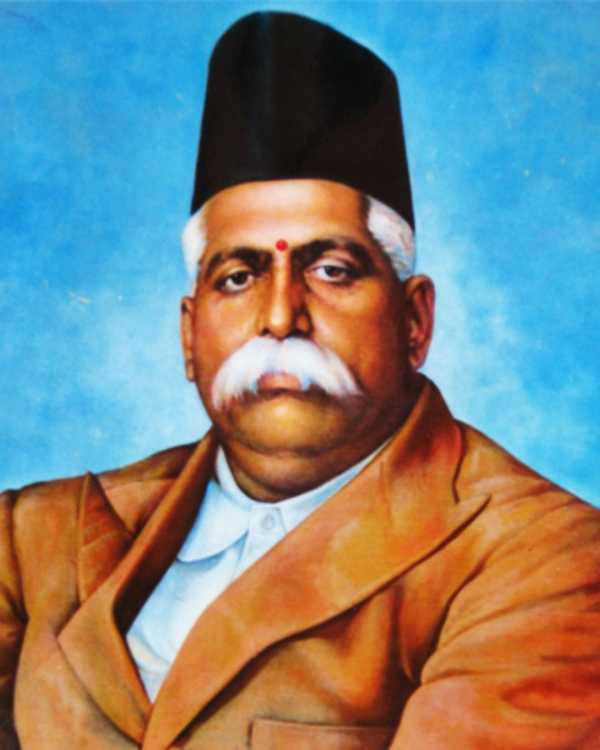
Dr. Keshav Baliram Hedgewar.
The hearing of this case started on 14 June 1921 before Judge Smellie. Hedgewar refused to take the help of any lawyer for his defense and decided to present his case in the court himself. In reality, like all the fighters associated with the freedom movement, Hedgewar's aim was not to use the court platform to defend himself but to spread the message of freedom more effectively.
Question on the status of the court!
Hedgewar's written statement of 5 August 1921 raised questions on the status of the court itself. The allegation was that Hedgewar's speeches filled the minds of Indians with feelings of dissatisfaction, hatred and treason against British rule. Sowed the seeds of enmity between Indians and Europeans. Hedgewar replied, “I consider it an insult to our great country that a foreign government should interrogate an Indian and sit in judgment on him.”
Hedgewar said that there is no legitimate government in India. It is a snatched power emanating from an oppressive power. The laws and courts that exist are unauthorized and sham. This is the fraud that fraudsters and snatchers have created to loot this helpless country.
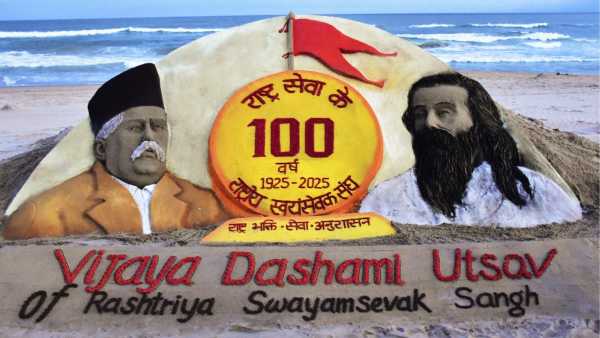
RSS has completed 100 years of its establishment.
The day is not far when foreigners will leave India
His speeches, which the British police classified as treason, were described by Hedgewar as his efforts aimed at instilling reverence for the motherland in the minds of the countrymen. Arun Anand has included this statement of Hedgewar in his book “5 Sarsanghchalak”.
Hedgewar further said, "I am trying to create confidence in the minds of people that India is for the Indians. It cannot be accepted that any Indian who is saying something for his country and for the spread of nationalism is called a traitor. Today, for those who consider themselves the Government of India, I would like to say that they should understand that the day is not far when all the foreigners will be forced to leave India.
India belongs only to Indians
Describing every word of his speeches as true and just, Hedgewar also proposed to justify them. On this occasion, he also said, "India belongs to Indians, so we demand independence. This is the essence of all my speeches. People have to be told how to get independence and how to behave after getting it? Otherwise there is a fear that the people of India will start imitating the British rule."
Hedgewar raised questions on the entire British justice system. Asked which law says that one country should rule over another country? Government lawyer, I am asking you a simple question whether this is not against natural justice? If it is true that no country can rule over another country then who gave the British people the right to crush Indians under their feet? How can they say that they own this country?
Believe in God's court, not yours
This statement of Hedgewar created a stir in the court. Judge Smellie said, “This is even more seditious than the original speech.” On August 19, 1921, the court ordered that Hedgewar give an affidavit with a surety of Rs 3,000 that he would not give any speech for the next one year which would come under the ambit of treason. In response, Hedgewar said that my soul says that I am absolutely innocent. The government's repression policy will add fuel to the fire. This fire is already burning. I believe that the day is not far when foreign rule will prevail. Will suffer the consequences of his sins. I have full faith in the justice of Almighty God. Therefore I will not follow the order of your court. Immediately the court sentenced him to one year rigorous imprisonment. Outside the court, Hedgewar said, "It is wrong to impose a false case and allow ourselves to be crushed like insects. It is our duty to expose the fraud of foreign rulers to the whole world. I am confident that by the time I come out of jail after a year, the entire freedom movement will have gained more momentum."
Why did you move away from Congress?
Born on 1 April 1889, Dr. Hedgewar was associated with the revolutionary and nationalist stream active in Bengal and Maharashtra during his student days. While studying in Calcutta, he was involved in the secret revolutionary organization Anushilan Samiti. Anti-colonialism is visible in his early life itself. This connection was not just ideological. He was influenced by the thinking of armed revolution. Due to his involvement in the Vande Mataram movement in 1907, he was expelled from the college. He further became a member of the Indian National Congress and played a very active role in the Nagpur session of 1920. Meanwhile, he also remained in jail for a year. But Gandhi's stance on communal riots after his support to the Khilafat Movement and the withdrawal of the Non-Cooperation Movement distanced him from the Congress.
The massacre of Hindus among the Moplas in the Malabar region of Kerala disturbed him greatly. At this juncture, he felt that organization, discipline and character building of the Hindu society were necessary for long-term nation building. In this background, he founded the Rashtriya Swayamsevak Sangh on Vijayadashami 1925. He served as the first Sarsanghchalak of the Sangh till his death on 21 June 1940.
-
American tries a custard cream for the first time but is confused by 1 thing

-
Carol Kirkwood's 'sad' insight into divorce heartache as she exits BBC Breakfast

-
'In the morning, when the city is still dreaming': Poems of evolving urban and interior geography

-
Gujarat Local Body Elections 2026: Voting on April 26, Results on April 28; Model Code of Conduct Comes into Force

-
ITVX viewers can rediscover 'best Disney show ever' starring Zendaya