
The global wealth management industry is gathering serious momentum, propelled by strong market fundamentals, rapid technological evolution, demographics and AI-driven business models, according to experts.
Leading executives and industry specialists said Artificial Intelligence (AI) AI is evolving into a true adviser copilot, enhancing decision support and productivity without diminishing the importance of human expertise. A striking 77% of global wealth managers believe AI will help them deliver broader, more personalised services.
Referring to ongoing transformation in family businesses, experts observed that family enterprises are adopting institutional grade reporting, sustainability driven strategies, and complex multi asset allocation frameworks that mirror the priorities of the next generation.
“The future belongs to firms that can blend human wisdom with machine intelligence, offering clients both the reassuring handshake and the algorithmic edge. With markets expanding, technology firing on all cylinders, and family enterprises reinventing themselves, wealth management is poised to enter a golden era, one where innovation, trust, and long-term vision go hand in hand.”
Fresh data shows the wealth management industry is expanding from $2.1 trillion in 2025 to $2.24 trillion in 2026, with long term forecasts projecting continued growth to $2.92 trillion by 2030, underscoring a solid upward trajectory fuelled by rising affluent populations and increasingly complex investment needs.
Human advisors Versus AI
Alok Kumar, Founder of next-gen digital wealth management platform — RuDo Wealth, said AI is evolving into an adviser copilot as it improves productivity, decision support, and monitoring, but it does not remove the need for human judgement. The best outcomes come when AI handles the heavy lifting, pattern detection, scenario analysis, summarising portfolio risk, prompting rebalancing, and drafting clear client communications.
“Humans remain essential for suitability, tradeoffs, and behavioural coaching. Markets do not just test portfolios, they test people. When a goal changes, when a client is anxious, when uncertainty rises, the most important input is judgement and calm decision making, not faster computation,” Kumar told BTR.
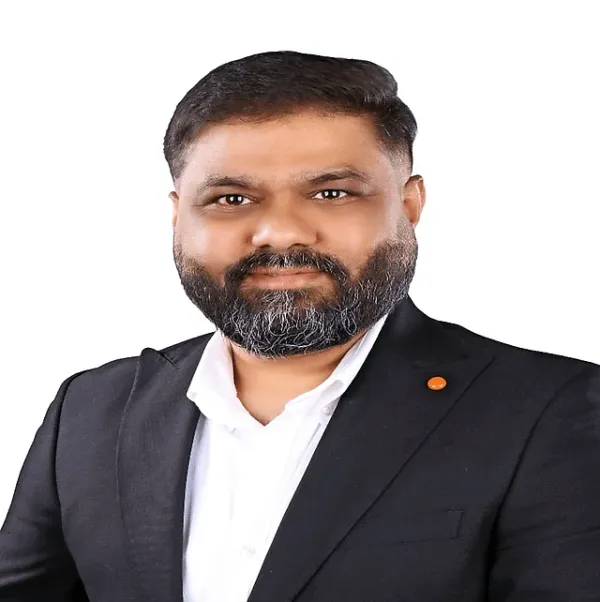
Alok Kumar, Founder of next-gen digital wealth management platform — RuDo Wealth
“So yes, the advisory model is changing, but mainly in workflow. Advisors spend less time on administration and more time on planning, coaching, and accountability. The responsibility for decisions remains human, AI simply raises the quality and speed of information available to that human,” he added.
RuDo Wealth is a new FSRA-licensed digital wealth management firm under ADGM. It provides institutional-grade, factor-based wealth management focused on liquid, transparent markets — accessible to investors throughout their financial journey.
Wealth Management Landscape
Shivkumar Rohira, CEO (EMEA), Klay Group, said the wealth management landscape over the next 12 to 24 months is likely to be shaped by rate divergence, episodic volatility, and a stronger focus on liquidity and risk management.
“Central bank policy remains a key driver: the Federal Reserve began 2026 by holding the policy rate at 3.5–3.75% and staying explicitly data-dependent, while the European Central Bank has also kept rates on hold, reinforcing meaningful cross-market divergence for currencies, bond repricing, and equity sector dispersion,” Rohira told BTR.
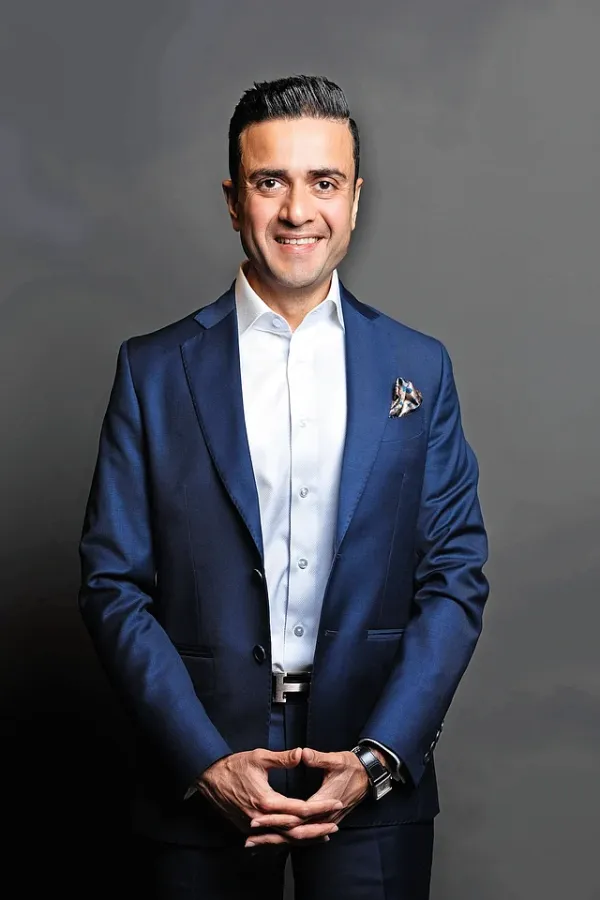
Shivkumar Rohira, CEO (EMEA), Klay Group
At the same time, he said geopolitical uncertainty is influencing behaviour. Positioning is shifting away from “calling the next move” toward building resilience through diversification across regions and jurisdictions, and a clearer line of sight on portfolio liquidity. “Another important backdrop is sentiment: after three consecutive years of double-digit S&P 500 total returns through 2025, it is easy for investor confidence to turn into complacency, which is typically when risk management matters most. In practice, that points to higher-quality fixed income for stability, structured approaches to manage downside, and more disciplined rebalancing as volatility returns,” he said.
Above all, he said clients want clarity and control. The right response is disciplined portfolio construction, an explicit focus on liquidity, and transparent risk reporting so portfolios can stay invested even when the headlines are noisy.
Family Businesses transition
Sebastian Goeres is Chief Executive Officer of LGT Middle East, said most families continue to retain full ownership of the operating companies that created their wealth, with family members actively involved in management. This concentration can be a strength, but it also means that leadership transitions carry emotional, operational, and financial weight all at once, especially if the family’s core businesses are affected by the uncertainties.
He said generational transitions across the Middle East are becoming harder to defer and more difficult to simplify, continuing to be a major point of focus for family businesses in 2026. “Families are increasingly aware that succession is not just about ownership, but about leadership, decision-making, and shared responsibility in a world that teems with uncertainty and requires rapid reaction times from family businesses to maintain their long-term goals. Current challenges point to more deliberate planning and more consistent execution in the context of family business governance,” Goeres said.
At the same time, he said government policy is accelerating the shift. In the UAE, new family business laws, updated corporate governance codes, and incentives for onshore family office structures are nudging families to address succession and governance earlier and more systematically. Many are now responding proactively to regulatory expectations around transparency, continuity, and institutional resilience.
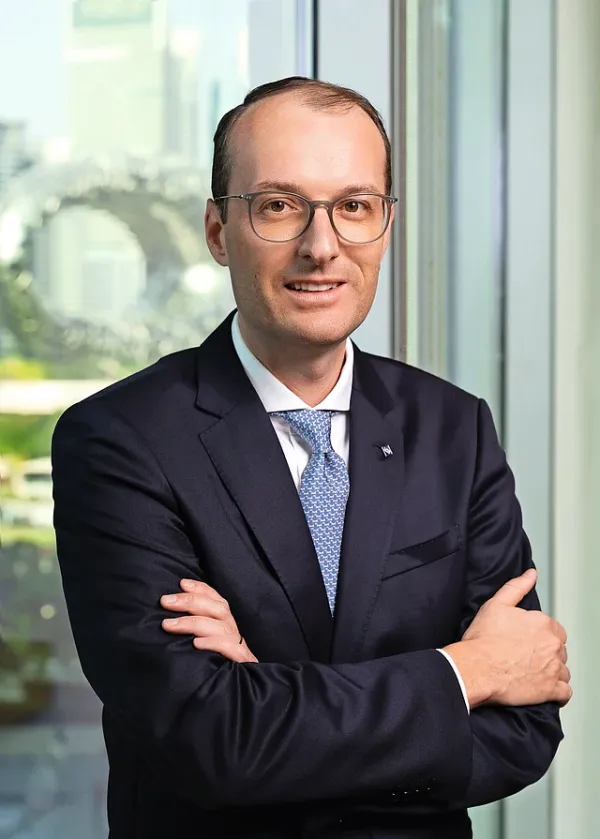
Sebastian Goeres is Chief Executive Officer of LGT Middle East
“As the year unfolds, more GCC families are moving from intent to implementation, translating long-discussed succession plans into practical governance and stewardship frameworks. Families that navigate generational transition most effectively in 2026 and beyond will be those that treat it as an ongoing process rather than a one-time event. Sustained communication, clarity of roles, and realistic expectations are becoming just as important as formal structures. In a region where family businesses remain central to economic life, the opportunity lies not only in transferring wealth, but in transferring confidence, capability, and trust across generations.
Deloitte’s global insights series highlights sweeping transformations across governance, digital resilience, and operational practices, all driven by strategic priorities across 354 single family offices worldwide. Similarly, the 2025 Bank of America Family Office Study underlines that 60% expect leadership to transition to the next generation within a decade, accelerating the need for structured governance, formal investment processes, and enhanced reporting standards.
Emerging Macro Trends
Rohira of Klay Group elaborated some of the key macro trends shaping the wealth management industry and said stakeholders should keep an eye on the current affairs and latest developments in technology and financial sectors. From an analytical perspective, he identifies:
Interest rate regime and capital market cycles: The shift to higher interest rates has re-defined client behaviour, planning horizons, and demand for advisory services rather than just portfolio mix. From a business standpoint, it’s important to monitor real yields, central-bank guidance, yield-curve dynamics, and credit spreads as indicators.
Geopolitical relationships and rising tensions: Evolving political alliances and geopolitical tensions increasingly influence capital flows, client sentiment, and cross-border structuring decisions within wealth management. Trade policy shifts, sanctions, election cycles, and currency volatility signal potential portfolio adjustments and jurisdictional risks.
Technology and AI-driven personalisation: Wealth management is moving from relationship-led to relationship-plus-data intelligence, where AI enables scalable personalisation, predictive risk monitoring, and behavioural insights. Key indicators include digital engagement metrics, client acquisition costs, robo-advisory AUM growth, and fintech investment flows.
Shift from product-centric to advice-centric models: Clients increasingly value holistic financial planning over product distribution, pushing firms toward transparent, fee-based advisory structures. Metrics such as trajectory of fees, retention rates, advisory AUM growth, and client satisfaction are signals of industry evolution.
Alternative assets and private markets expansion: Access to private equity, private credit, infrastructure, and real assets is broadening beyond ultra-high-net-worth investors, fundamentally changing diversification strategies. Important indicators are private-market AUM growth, secondary-market liquidity, decreasing lock-up durations, and allocation weights in model portfolios.
Over the next 3–5 years, growth in wealth management industry is likely to be driven by continued inflows, cross-border diversification demand, and the steady build-out of advisory, funds, and alternatives capabilities in these centres.
Outlook for Wealth Management
Rohira said the UAE’s wealth ecosystem has reached scale and is still expanding.
Boston Consulting Group defines ‘major booking centres’ as the leading hubs where cross-border assets are booked/custodied, and estimates the UAE was one of the fastest-growing major centres in 2023–24, highest percentage growth alongside Singapore, and is projected to expand from about $0.7 trillion in 2024 to $0.9 trillion by 2029.
Dubai International Financial Centre reported $700 billion of assets under management (AUM) in 2024 and an ecosystem of 470+ wealth and asset management firms, while in Abu Dhabi, Abu Dhabi Global Market reported 11,920 active licences by third quarter of 2025 and highlighted a 48% year-on-year jump in AUM, with 161 fund/asset managers and 220 funds.
Over the next 3–5 years, he said growth is likely to be driven by continued inflows, cross-border diversification demand, and the steady build-out of advisory, funds, and alternatives capabilities in these centres. “The base case is a larger, more institutionalised wealth-management market, with faster growth in investable assets than headline GDP as the UAE keeps attracting entrepreneurs, global talent, and family capital; it will be increasingly defined by bespoke, goals-based portfolios tailored to each client’s jurisdiction, liquidity needs, and risk preferences,” he said.
Look for Asset Classes and attractive Themes
In this environment, Rohira said a multi-asset mindset matters more than a single ‘best idea’, because different return drivers can take turns as rates and geopolitics evolve. “Yields are far more attractive than they were through much of the last decade, which brings income back as a meaningful component of total return and helps restore fixed income’s role in portfolios.”
He said equities still offer long-term growth, but leadership is likely to be less narrow, with outcomes driven more by dispersion and fundamentals than by one dominant segment.
“AI remains the defining multi-year theme, increasingly shaping productivity, capex, and corporate winners and losers well beyond just the largest tech names.”
After a strong run in risk assets, he said return paths can become more uneven, making concentration and complacency bigger risks than lack of opportunity. “Overall, diversification, liquidity awareness, and disciplined rebalancing are the practical tools that help investors stay invested through noise without relying on a single directional call.”
In private banking, Rohira said AI is moving beyond chatbots into the core advisory workflow: cleaner data, faster insight, and more consistent decision-making across teams. On portfolios, machine learning helps refine forward-looking risk inputs (volatility, correlation, drawdowns) and tests allocations across many regimes, so optimisation is more robust than simply extrapolating history.
On forecasting, the biggest win is not ‘predicting markets’ but accelerating scenario analysis and stress testing, turning research into actionable portfolio adjustments when risk spikes.
“On client segmentation, analytics can translate real constraints into practice (multi-currency exposure, liquidity events, jurisdictional rules, legacy holdings), which is especially relevant in Dubai’s internationally structured client base. Advisors then spend more time on judgement and coaching, while clients get clearer reporting, quicker responses, and earlier risk alerts in volatile periods. The key is governance: explainability, audit trails, and human override so personalisation scales without compromising suitability or compliance.”
About the AI role to ensure transparency, avoiding bias, and maintaining compliance, Kumar said the starting point is being clear about scope.
“At RuDo today, we do not use AI models to generate investment recommendations. Our portfolio construction and suitability checks are rules-based, documented, and designed to be explainable.
“When we introduce AI enabled decision support in future, it will sit inside the same governance standards that regulators expect for any model risk. Clear ownership, model inventory, validation before deployment, ongoing monitoring, and a full audit trail. Transparency matters most at the client level, the client should understand the rationale in plain language, not in technical terms.”
On bias, he said the discipline is straightforward. “Test outcomes across relevant client segments, monitor drift over time, and keep humans accountable for the final decision. The technology may evolve, but the duty of care does not.”
AI-enabled Personalisation
Rohira said AI-enabled personalisation is increasingly real, but in the wealth management industry it has to be privacy-first and permissioned, using firm-controlled systems rather than feeding client information into public models.
“The practical uplift comes from secure analytics on data we already hold and are mandated to monitor, such as exposures, concentration, FX, liquidity, and suitability constraints. That allows more proactive engagement through event-driven alerts and faster scenario analysis when markets move, without changing the confidentiality boundary.”
For HNW and UHNW clients, he said personalisation is mostly about codifying nuance, including jurisdictional rules, legacy holdings, and cashflow events, into repeatable monitoring and review prompts. “Advisors stay accountable for decisions, with human sign-off and clear audit trails, so technology improves speed and consistency, not autonomy. Net effect is a more responsive service model where clients get clearer risk visibility and timely advice, while trust and discretion remain the foundation.”
Alok Kumar of RuDo Wealth said wealth is intergenerational. “What sustains the relationship across decades is not just portfolio performance but the experience around it, the service quality, personalisation, and advisory support that clients carry with them through every life stage. Yet most clients still hear from their advisor once a quarter, and between those meetings, life happens. Goals shift, cash flows change, markets move.”
AI changes this by making personalisation continuous rather than periodic. Think of it as an advisor in your pocket, available around the clock, he said. “A service layer that understands your goals, monitors your portfolio, and responds when something meaningful changes. Most of what clients’ need between meetings is repetitive but important. How has my portfolio performed? Does anything need rebalancing? What does this market move mean for my plan? AI can handle this instantly and in context of that specific client situation. When that works, engagement transforms. Conversations with the advisor shift from what happened to what should we do next.”
Use AI wisely
Kumar said the capabilities that will matter most are the ones that close the gap between what private banking offers and what the affluent receive today.
First, AI as a continuous risk intelligence layer. Not periodic reviews based on backward looking metrics, but forward-looking stress testing, tail risk detection, and real time portfolio health monitoring, delivered in language any client can understand. This has been institutional territory. It will not be for much longer.
Second, hyper personalised goal planning that accounts for real complexity. Multiple currencies, multiple tax jurisdictions, changing life circumstances. AI that can model goal probability across these variables and explain in plain terms whether a client is on track will be genuinely transformative.
Third, making premium tax aware portfolio optimisation accessible at scale. Today this is manual, expensive, and reserved for the ultra-wealthy clients. AI can change the economics of delivery entirely, turning what was a private banking privilege into a standard of service. “The firms that win will be the ones that combine capability with trust,” Kumar said.
To a question about how to quantify fintech contribution to investment performance, risk reduction, or operational efficiency, he said if you only measure headline returns, you miss where technology creates the most lasting value.
For affluent clients, the metric that matters is risk adjusted return, how much risk did you take to generate that outcome, and was it consistent across market cycles.
“This is where AI can make a real difference. Not by promising more alpha, but by building better risk models, identifying hidden correlations, stress testing against real scenarios, and flagging when a portfolio risk profile has quietly drifted from what the client agreed to. That is institutional grade risk management made accessible to a much wider group of investors.
“Beyond risk, technology improves discipline. Tighter rebalancing, less cash drag, fewer avoidable mistakes during volatile periods. These compound quietly over five and 10-year horizons into meaningful value. And operationally, when AI handles the preparation, documentation, and monitoring, advisors spend more time on actual advice. Clients get faster clarity. That may not show up in a performance report, but it shows up in trust and retention,” Kumar concluded.
-
Tragic Loss: Bengali Actor Rahul Arunoday Banerjee Drowns While Filming

-
Delhi Residents Enjoy Pleasant Morning with Cooler Temperatures

-
Alia Bhatt reveals why she 'will not be speaking again until Tuesday'

-
Instagram Gets WhatsApp-Like HD Photo Sharing: Send High-Quality Images Without Losing Clarity

-
Even at the age of 83, Amitabh Bachchan is troubled by not working; sharing a blog post, he wrote: "Not working feels strange."