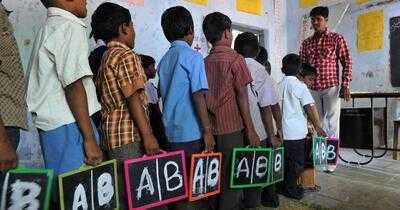
The deeper problem is that India has normalised a linguistic hierarchy in which people slowly learn to distrust their own languages, through everyday corrections, quiet embarrassment and the constant pressure to sound more “proper”, more “educated”, more “acceptable”. (“A Hindi professor responds: English is the real bottleneck stifling other Indian languages”).
It is true that in large parts of North India, speakers of Bhojpuri, Awadhi, Braj, Magahi and other languages encounter this hierarchy first through Hindi. Standardised Hindi becomes the language of respectability, of school, administration, and mobility.
But this is where the current debate misses an important dimension. Language hierarchy does not affect all speakers in the same way. For many women, especially those entering education from non-elite and non-metropolitan backgrounds, language becomes a site of constant scrutiny.
A man negotiating between languages may still claim space despite errors. A woman’s language becomes evidence of education, upbringing, belonging. In this context, the question is how linguistic power operates at different levels and shapes who feels entitled to speak and in which language.
The current debate assumes that the solution lies in choosing the right dominant language. But Hindi’s expansion produces hierarchies that render neighbouring languages inferior. Access to English is shaped by privilege. Regional pride can often be...
Read more
-
Dominos Rider Goes The Extra Mile To Deliver Diet Coke, Gets Rs 40 Lakh Tip

-
Reduce the harmful effects of alcohol with 5 tips5 tips to reduce alcohol harm

-
What if KKR vs PBKS match gets canceled due to rain? KKR vs PBKS Rain Forecast Eden Gardens IPL 2026 Kolkata Weather Update
-
Lucknow defeated Hyderabad by 5 wickets, Rishabh Pant hit a brilliant fifty

-
Odisha’s Ranji Player Sambit Baral Selected For BCCI CoE High-Performance Camp