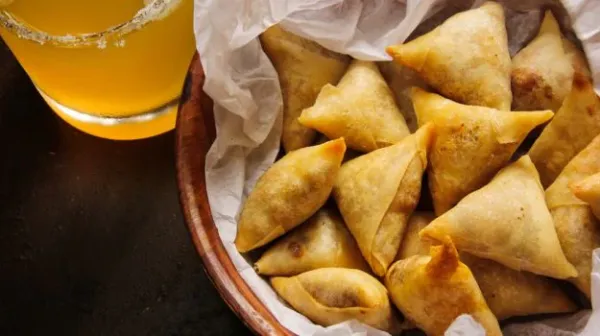
Few snacks are as loved across India as the humble samosa. Crispy on the outside and packed with a spicy filling, it is a staple across homes and street stalls alike. Most people associate it with a simple potato filling – but a viral post is now questioning that very origin story. A post on
He points to a Persian manuscript called the Ni’matnama, written between 1501 and 1510 for the Sultan of Mandu. Framing his claims around this text, the man writes, “The samosa is one of the most eaten street foods on the planet,” adding that this is “a 500-year-old recipe… written in Persian in a manuscript sitting in the British Museum.”
According to the post, the manuscript – now housed in the British Museum – describes a very different version of the snack. “The samosa recipe inside calls for roasted aubergine pulp, dried ginger, and lamb… all fried in ghee,” he notes.
The man also underlines how key ingredients we associate with samosas today weren’t part of the original. “No potatoes, no chilli. Both arrived in India after this manuscript was written,” he says.
The post further traces the manuscript’s journey through history, claiming it passed through the hands of Mughal emperor Akbar and Tipu Sultan before reaching British collections.
Calling it “the samosa before it became street food,” the post suggests the snack may have started as a richer, more royal dish – very different from the version we grab off the street today.
The post went viral with over 85,000 views. Several people shared their reactions in the comments section.
A person wrote, “I thought the origin was Oman, where they call it Sambosa, even today.”
Another one added, “This proves it’s Indian as Pharsi was the language of the Muslim elite in India, just like French was the language of the Russian Court.”
A person labeled a samosa as an “immigrant” in India in a detailed comment. They wrote, “Everyone links the samosa to India today. It’s an immigrant, though. The dish actually kicked off in the Middle East and Central Asia. Locals called it sanbusak or sanbosag. That just means ‘triangle’ in Persian.”
Someone else said, “I didn’t know museums carried food recipes in their collections. This shows how food is also a part of history and culture.”
Giving more detail about the manuscript, a user wrote, “The Ni’matnama isn’t just full of recipes. It includes aphrodisiacs, betel leaf prep, hunting tips, and even ‘delights’ for the battlefield. A full royal pleasure manual!”
Whether royal or roadside, the samosa’s journey shows that even the most familiar foods can have surprisingly layered histories. What are your thoughts on this? Let us know in the comments below.
-
Investigation Continues in Nancy Guthrie Kidnapping Case
-
F1 rule change imminent after huge crash as teams reach agreement

-
Labour leave open loophole for criminals despite vital change to key scheme

-
Miriam Margolyes says 'death feels close' in heartbreaking end of life admission

-
UK weather maps show exact date 21C heat returns - 12 hottest cities