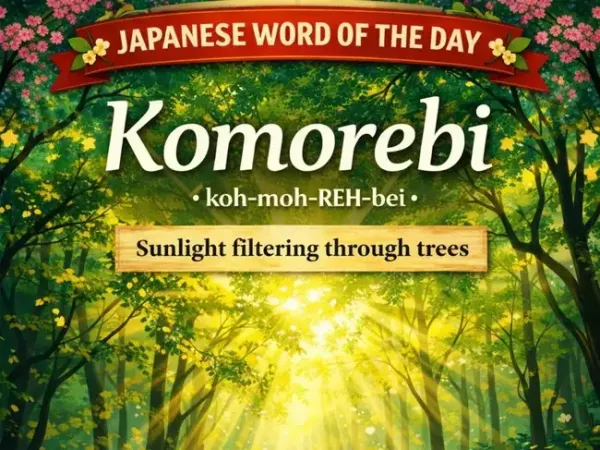
A gentle Japanese word is finding its way into global conversations, offering a poetic way to describe a moment many people experience but rarely name. “Komorebi,” a term rooted in everyday Japanese life, is gaining attention for capturing a fleeting natural beauty, sunlight filtering through the leaves of trees.
There is no exact English equivalent. While one might describe it as “sunlight through trees,” that translation misses the emotional and visual depth the word carries in Japanese.
A word shaped by nature
Japan’s language has long been influenced by its natural surroundings, and “Komorebi” is a perfect example. The word is a combination of three elements:
As more people look for ways to disconnect from busy routines, words like “Komorebi” resonate because they encourage noticing beauty in everyday life.
How people are using it
The word is being adopted in creative ways, especially among younger audiences:
More than just vocabulary
“Komorebi” is not just a descriptive term, it reflects a mindset. It encourages slowing down and being present, something that many feel is missing in today’s fast-paced digital world.
Language experts say such words gain popularity because they offer more than meaning, they offer perspective.
A growing interest in Japanese expressions
From “ikigai” (a sense of purpose) to “wabi-sabi” (finding beauty in imperfection), Japanese words have long intrigued global audiences. “Komorebi” fits naturally into this group, adding another layer to how people think about life, nature, and mindfulness.
The growing appeal of such words reflects a shift in priorities. More individuals are turning toward mindfulness, nature, and slower living. “Komorebi” fits naturally into this mindset, encouraging people to notice the small details that often go ignored.
This process, sometimes referred to as linguistic awareness, helps individuals connect more deeply with their environment. Once you know the word, a simple walk in a park can feel more vivid and intentional.
Creators often pair such visuals with calming music, reflective captions, and minimal dialogue. The word “Komorebi” becomes more than just text—it becomes part of a mood, a visual identity that audiences instantly relate to.
Similar words from other cultures have also gained attention, showing that language is increasingly becoming a shared, global experience. Instead of replacing English, these words are enriching it.
However, its poetic nature may also keep it somewhat niche—used more in creative and reflective contexts rather than everyday conversation.
For many, this word serves as a gentle reminder to slow down and reconnect with the natural world, even in the middle of a busy schedule.
In that sense, it is more than just a “word of the day.” It becomes a way of thinking—one that encourages awareness, calm, and a deeper connection with the world around us.
At a time when communication is often reduced to quick messages and short captions, “Komorebi” stands out. It reminds people that some of the most meaningful experiences are simple, quiet, and often overlooked.
Sometimes, all it takes is a single word to help people see the world a little differently—and “Komorebi” does exactly that.
What does “Komorebi” mean?
“Komorebi” (pronounced koh-moh-reh-bee) refers to the dappled light that appears when sunlight passes through branches and leaves. It’s not just about light or trees, it’s about the feeling of that moment.There is no exact English equivalent. While one might describe it as “sunlight through trees,” that translation misses the emotional and visual depth the word carries in Japanese.
A word shaped by nature
Japan’s language has long been influenced by its natural surroundings, and “Komorebi” is a perfect example. The word is a combination of three elements:- “Ko” meaning tree
- “More” meaning to leak or filter
- “Bi” meaning light
Why it’s trending globally
In recent years, “Komorebi” has been widely shared on social media platforms like TikTok and Instagram, where users post calming videos of forests, parks, and sunlit paths. The word often appears in captions that focus on mindfulness, slow living, and appreciating small moments.As more people look for ways to disconnect from busy routines, words like “Komorebi” resonate because they encourage noticing beauty in everyday life.
How people are using it
The word is being adopted in creative ways, especially among younger audiences:- “Caught a moment of komorebi on my walk today.”
- “Nothing heals like a little komorebi.”
- “Chasing komorebi vibes this weekend.”
More than just vocabulary
“Komorebi” is not just a descriptive term, it reflects a mindset. It encourages slowing down and being present, something that many feel is missing in today’s fast-paced digital world.Language experts say such words gain popularity because they offer more than meaning, they offer perspective.
A growing interest in Japanese expressions
From “ikigai” (a sense of purpose) to “wabi-sabi” (finding beauty in imperfection), Japanese words have long intrigued global audiences. “Komorebi” fits naturally into this group, adding another layer to how people think about life, nature, and mindfulness.Why “Komorebi” resonates with modern lifestyles
In a time when daily life is often dominated by screens, notifications, and constant movement, “Komorebi” offers a pause. It captures a quiet, almost unnoticed moment—something many people are now actively seeking.The growing appeal of such words reflects a shift in priorities. More individuals are turning toward mindfulness, nature, and slower living. “Komorebi” fits naturally into this mindset, encouraging people to notice the small details that often go ignored.
The psychology behind words like “Komorebi”
Psychologists suggest that naming a feeling or experience can make it more meaningful. When people learn a word like “Komorebi,” they don’t just understand it—they begin to notice it more often in their surroundings.This process, sometimes referred to as linguistic awareness, helps individuals connect more deeply with their environment. Once you know the word, a simple walk in a park can feel more vivid and intentional.
Social media and the rise of aesthetic language
The popularity of “Komorebi” is closely tied to visual storytelling. Platforms like TikTok and Instagram thrive on visually appealing content, and soft sunlight filtering through trees fits perfectly into that aesthetic.Creators often pair such visuals with calming music, reflective captions, and minimal dialogue. The word “Komorebi” becomes more than just text—it becomes part of a mood, a visual identity that audiences instantly relate to.
A broader trend of untranslatable words
“Komorebi” is part of a growing global fascination with words that don’t have direct translations. These terms often gain traction because they express emotions or moments that people feel but struggle to describe.Similar words from other cultures have also gained attention, showing that language is increasingly becoming a shared, global experience. Instead of replacing English, these words are enriching it.
Can “Komorebi” become part of everyday English?
While it may not yet be widely used in formal conversation, “Komorebi” is steadily finding a place in informal language. Its usage in captions, blogs, and casual speech suggests that it could follow the path of other borrowed words that eventually became mainstream.However, its poetic nature may also keep it somewhat niche—used more in creative and reflective contexts rather than everyday conversation.
Bringing “Komorebi” into daily life
Incorporating the idea of “Komorebi” doesn’t require learning a new language—it simply requires a shift in attention. It could be as simple as noticing sunlight through trees during a morning walk or pausing to appreciate a quiet outdoor moment.For many, this word serves as a gentle reminder to slow down and reconnect with the natural world, even in the middle of a busy schedule.
A small word with a lasting impression
What makes “Komorebi” stand out is not just its meaning, but the feeling it leaves behind. It invites people to see beauty in ordinary moments and to appreciate experiences that are often overlooked.In that sense, it is more than just a “word of the day.” It becomes a way of thinking—one that encourages awareness, calm, and a deeper connection with the world around us.
At a time when communication is often reduced to quick messages and short captions, “Komorebi” stands out. It reminds people that some of the most meaningful experiences are simple, quiet, and often overlooked.
Sometimes, all it takes is a single word to help people see the world a little differently—and “Komorebi” does exactly that.