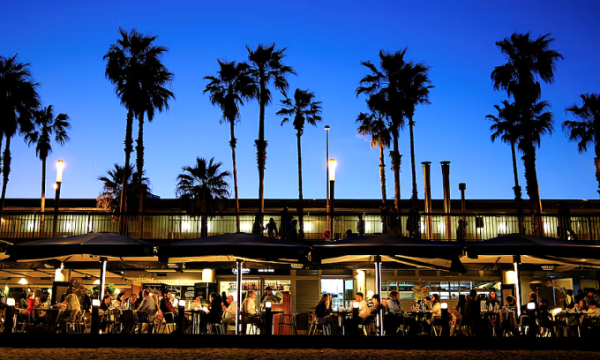
Summer flight bookings to Spain, the world’s second most visited country last year after France, soared 32% year-on-year as of April 2, while hotel searches rose 28%, according to digital travel marketing platform Sojern.
Its neighbor Portugal also recorded a 21% rise in flight bookings, with hotel searches up 16%.
Travel data firm Mabrian noted a pullback from Middle Eastern destinations last month and an uptick for the southern Mediterranean, with Spain, the main beneficiary of the shift.
The eastern Mediterranean, including European Union member Cyprus where a drone struck a British air base on March 2, has been hit by a wave of cancellations, highlighting the broader fallout from the Iran war.
Spain’s industry group Exceltur has nudged up its projections since the conflict started on Feb. 28, a modest upgrade that is still important at a time when inflation, geopolitical and economic concerns are curbing consumer spending and discouraging some travel.
“Summer holidays are planned months in advance. As destinations that attract large numbers of tourists are affected by the conflict, a significant part of this safe-haven effect is already materializing in purchases and bookings to Spain,” Exceltur Vice President Oscar Perelli said.
Sylvia Weiler, Sojern’s general manager for global destinations, added: “Travelers are adapting rather than retreating.”
Up to 181 million tourists visit the Middle East and eastern Mediterranean annually. Spain alone received a record 97 million last year.
Exceltur last week forecast Spain’s tourism activity would grow 2.5% in real terms this year to 227 billion euros ($267 billion) up from a previous 2.4% projection and last year’s 2.1% expansion.
It estimates diverted tourists could generate an additional 4.2 billion euros to that industry total this year.
The sector, a cornerstone of the economy that has helped Spain outpace most European peers in the past few years, is expected to expand faster than overall economic growth, which is forecast at 2.3%.
Spain’s main hotel association Cehat expects room occupancy rates to rise by up to 3% this summer.
“Tourists are choosing destinations farther from Mediterranean conflict zones, such as the Canary Islands, for their summer family holidays,” said Cehat President Jorge Marichal, warning however that gains could be offset by a reduction in overall travel.
Airlines are boosting capacity, with nearly 6% more seats available in April than a year ago, according to the official tourism agency Turespaña, with the strongest increases on flights from the United States and Britain.
However, higher jet fuel prices and further disruptions for long-haul travelers at Middle Eastern transit hubs could curtail the gains, Exceltur cautioned.
Cehat’s Marichal was more blunt: “It will all depend on what happens in the Strait of Hormuz, because all these forecasts could go out the window.”
The strait, through which roughly one-fifth of global oil and gas exports transit, has been all-but-shut during the Iran war.
-
Tragic Accident on Delhi-Meerut Expressway Claims Three Lives

-
Download Your MPPSC SSE Prelims Admit Card for 2026 Now

-
Vedanta power plant blast death toll rises to 20, 16 injured under treatment

-
Jet Fuel Shortage Threatens Global Air Travel Amid Ongoing Crisis

-
Review: 'Bhooth Bangla' is haunted by the curse of banality