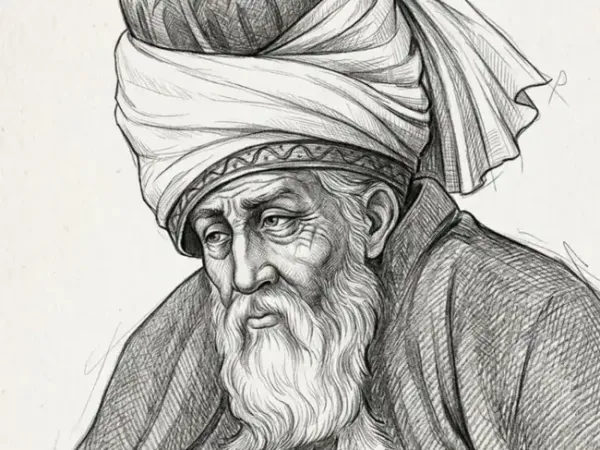
Timeless quotations frequently surpass the period in which they were first expressed. They move through generations, societies, and word of mouth, offering insight to individuals navigating circumstances far removed from those of their originator. Among the most lasting voices in spiritual and philosophical writing is the 13th-century Persian poet and Sufi thinker Rumi, whose verses still inspire audiences across the world and for the right reasons. His thoughts on love, spirituality, and inner growth remain strikingly meaningful, especially in today's ever-evolving era.
One of the lines by Rumi that finds a mention in his vast collection of lyrical poetry, titled the Diwan-e Shams-e Tabrizi, goes like this, ‘Forget safety. Run from what is comfortable. Live where you fear to live. Be notorious.’
Quote of the day by Rumi: Stepping beyond comfort
Rumi urges individuals to move beyond the boundaries of familiarity and ease. He suggests that true growth does not happen in spaces where everything feels predictable and safe. Comfort can often turn into stagnation, limiting potential and discouraging exploration. By encouraging people to step into uncertainty, he highlights the value of taking risks and embracing new experiences. In the real world, this can be seen when someone switches careers, starts a new venture, or chooses a path that feels uncertain but meaningful.
These decisions often come with fear, yet they open doors to learning and self-discovery. Staying within a safe routine may offer stability, but it rarely leads to transformation. This idea reminds individuals that discomfort is not always negative, but can be a sign of progress. Facing unfamiliar situations builds confidence, adaptability, and resilience over time. It allows people to discover strengths they did not know they had and to grow beyond the limits they once accepted as permanent.
Rumi quote of the day: Redefining fear and identity
Rumi’s idea also focuses on changing how one perceives fear and social approval. It suggests that living fully requires the courage to challenge expectations and step into spaces that may feel intimidating. Fear often acts as a barrier, preventing people from pursuing passions or expressing their true selves. In everyday life, this appears when individuals hold back from sharing ideas, avoid opportunities, or conform to norms to avoid judgment.
By shifting perspective, fear can instead become a guide that points toward areas of growth. This mindset encourages people to act despite uncertainty, rather than waiting for complete confidence. It also challenges the need for constant validation from others. Living authentically may sometimes invite criticism or misunderstanding, but it also leads to a deeper sense of fulfilment. Over time, embracing this approach helps individuals build a stronger sense of identity. They begin to define themselves not by external approval, but by their willingness to explore, take risks, and live with intention.
More about Rumi
Jalal al-Din Muḥammad Rumi, widely known as Rumi, was born in 1207 in Balkh, now in Afghanistan. He came from a family deeply rooted in Islamic scholarship. His father, a respected theologian, was often referred to as the “Sultan of the Scholars,” which shaped Rumi’s early exposure to spirituality and learning. After his father’s death in 1231, Rumi took over as the head of a madrasah, becoming a teacher and spiritual guide at a young age. A turning point in his life came in 1244 when he met Shams Tabriz. This encounter transformed Rumi from a traditional scholar into a passionate poet and mystic.
Rumi’s writings, especially Divan-e Shams-e Tabrizi and Masnavi, are still considered among the greatest works of Persian literature. Through his teachings, Rumi also inspired the formation of the Mevlevi Order. As a key figure in Sufism, he believed in the deep connection between the human soul and the divine. His works continue to guide people across cultures and generations. Although his writings were composed primarily in Persian and Arabic, they also contain elements of Turkish and some Greek.
Rumi spent most of his life in Konya, where he passed away in 1273. After his death, Rumi’s followers organized themselves into the Mawlawiyyah order, often known in the West as the Whirling Dervishes, famous for their mystical dance performed as a spiritual practice, according to Britannica. Rumi’s mausoleum, known as the Green Dome, still stands in Konya today and continues to attract visitors and pilgrims from around the world.
One of the lines by Rumi that finds a mention in his vast collection of lyrical poetry, titled the Diwan-e Shams-e Tabrizi, goes like this, ‘Forget safety. Run from what is comfortable. Live where you fear to live. Be notorious.’
Quote of the day by Rumi: Stepping beyond comfort
Rumi urges individuals to move beyond the boundaries of familiarity and ease. He suggests that true growth does not happen in spaces where everything feels predictable and safe. Comfort can often turn into stagnation, limiting potential and discouraging exploration. By encouraging people to step into uncertainty, he highlights the value of taking risks and embracing new experiences. In the real world, this can be seen when someone switches careers, starts a new venture, or chooses a path that feels uncertain but meaningful.
These decisions often come with fear, yet they open doors to learning and self-discovery. Staying within a safe routine may offer stability, but it rarely leads to transformation. This idea reminds individuals that discomfort is not always negative, but can be a sign of progress. Facing unfamiliar situations builds confidence, adaptability, and resilience over time. It allows people to discover strengths they did not know they had and to grow beyond the limits they once accepted as permanent.
Rumi quote of the day: Redefining fear and identity
Rumi’s idea also focuses on changing how one perceives fear and social approval. It suggests that living fully requires the courage to challenge expectations and step into spaces that may feel intimidating. Fear often acts as a barrier, preventing people from pursuing passions or expressing their true selves. In everyday life, this appears when individuals hold back from sharing ideas, avoid opportunities, or conform to norms to avoid judgment.
By shifting perspective, fear can instead become a guide that points toward areas of growth. This mindset encourages people to act despite uncertainty, rather than waiting for complete confidence. It also challenges the need for constant validation from others. Living authentically may sometimes invite criticism or misunderstanding, but it also leads to a deeper sense of fulfilment. Over time, embracing this approach helps individuals build a stronger sense of identity. They begin to define themselves not by external approval, but by their willingness to explore, take risks, and live with intention.
More about Rumi
Jalal al-Din Muḥammad Rumi, widely known as Rumi, was born in 1207 in Balkh, now in Afghanistan. He came from a family deeply rooted in Islamic scholarship. His father, a respected theologian, was often referred to as the “Sultan of the Scholars,” which shaped Rumi’s early exposure to spirituality and learning. After his father’s death in 1231, Rumi took over as the head of a madrasah, becoming a teacher and spiritual guide at a young age. A turning point in his life came in 1244 when he met Shams Tabriz. This encounter transformed Rumi from a traditional scholar into a passionate poet and mystic.
Rumi’s writings, especially Divan-e Shams-e Tabrizi and Masnavi, are still considered among the greatest works of Persian literature. Through his teachings, Rumi also inspired the formation of the Mevlevi Order. As a key figure in Sufism, he believed in the deep connection between the human soul and the divine. His works continue to guide people across cultures and generations. Although his writings were composed primarily in Persian and Arabic, they also contain elements of Turkish and some Greek.
Rumi spent most of his life in Konya, where he passed away in 1273. After his death, Rumi’s followers organized themselves into the Mawlawiyyah order, often known in the West as the Whirling Dervishes, famous for their mystical dance performed as a spiritual practice, according to Britannica. Rumi’s mausoleum, known as the Green Dome, still stands in Konya today and continues to attract visitors and pilgrims from around the world.