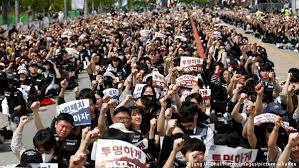
The electronics giant Samsung is inching closer to facing a labor strike amid a crucial period for the worldwide chip market. Thousands of employees recently converged at the firm’s Pyeongtaek site in South Korea. They declared that they would start their 18-day strike on May 21 if negotiations fail. The reason behind this labor unrest can be summed up in one word: profit sharing.
Samsung Electronics is currently at the center of this unprecedented rise in the memory chip market. It is joined in its dominance by other leading firms like SK Hynix and Micron Technology in manufacturing and supplying almost all of the world’s DRAMs and high-bandwidth memories (HBMs). These components have become critical for AI-powered devices since they manage the flow of information into and out of processing units, which limits their speed.
The High-Stakes Battle Over Samsung’s HBM Windfall
This development has helped to boost profitability. According to analysts, Samsung reported an operating income of around $38 billion during the first quarter of 2026. Most of this income can be attributed to the high demand from data centers.
The large cloud firms keep ordering a lot of HBM, whose margin is higher compared to traditional memory chips. As such, Samsung has decided to increase production of the latter.
The workers are counting on benefiting from their increased profitability. This group has asked Samsung to remove the ceiling on their performance bonus. Furthermore, they suggested allocating 15 percent of operating income to them. According to their estimate, Samsung will have to provide between $25 billion and $30 billion per annum. Unfortunately, Samsung has not been agreeable to their suggestion.
Tensions continue rising due to comparisons made between them and their competitors. Some reports indicate that SK Hynix intends to pay their workers an average bonus worth approximately $400,000 to more than 35,000 staff members. Such news has only made them more frustrated since they believe their firm should be a market leader in paying bonuses.
Timing is a crucial factor since the competition in the memory market is already fierce. For instance, data centers are expected to consume roughly 70 percent of the high-end memory in the current period. Hence, there will not be enough memory for other consumer products such as smartphones and laptops. The cost of ordinary DRAM has been steadily increasing since 2025.
How a Samsung Strike Could Reshape the Global Memory Market?
Even a short strike would have implications throughout the technology sector. Having only three main producers, the market is vulnerable to such events, and any disruption can lead to shortages of chips within a couple of days. This would impact the development of GPU servers used to power AI applications and services. Moreover, increased manufacturing costs might also be passed on to the customers.
Indeed, Samsung has already been preparing itself for such consequences. In addition to filing lawsuits against actions that might disrupt its production processes during strikes, it has managed to maintain the smooth work of all its manufacturing lines.
However, the large number of employees who participated in the event in Pyeongtaek indicates that they strongly supported the union’s stance. According to estimates, the number of participants was around 30,000 to 39,000 people.
Samsung’s history of strikes is not new, as employees went on their first strike lasting for 25 days in 2024. This strike had ended when it became obvious that too many employees would not be able to maintain a work stoppage for a long time. In today’s case, things look differently, as the company is now working within a strong profitability cycle.
It should be noted that a wider picture is also important in this issue. In the past, memory chips were regarded as being cyclical. Their prices were subject to the laws of supply and demand.
If there actually happens a strike, it will test the resilience of the entire chain of production of memory chips. It will also change the way profit sharing will look in the age of AI. Right now, there are significant differences between the positions of both parties.
-
Watch planets live at this event in Hyderabad this May: Details inside

-
TGSRTC bus collides with lorry in Telangana’s Medak, several injured

-
Sonam Raghuvanshi, accused of killing husband during honeymoon, granted bail

-
Elections winding down, oil at USD 120: Is India going to increase fuel prices?

-
Walkthrough Samantha’s ultra-luxurious properties in Hyderabad