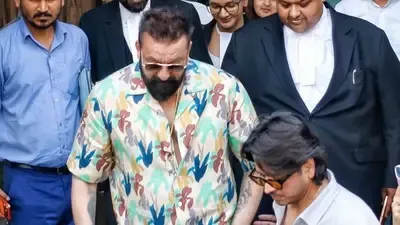
Actor Sanjay Dutt issues an unconditional apology over an alleged obscene song and pledges to fund education for 50 tribal children following scrutiny by the National Commission for Women.
The recent controversy involving veteran Bollywood actor Sanjay Dutt over the alleged obscenity in a Kannada film song has sparked widespread debate on artistic responsibility, censorship, and the evolving standards of public accountability in Indian cinema. The actor, who appeared before the National Commission for Women (NCW) on April 27, offered an unconditional apology for the song titled “Sarke Chunar Teri Sarke,” which drew criticism for its perceived objectionable content and portrayal of women. The matter, however, did not end with an apology alone. In a move that has drawn both appreciation and scrutiny, Dutt also announced that he would bear the educational expenses of 50 tribal children, positioning his response as both corrective and socially responsible.
The controversy traces back to the song from the film “KD: The Devil,” which features performances by Sanjay Dutt and Nora Fatehi. Soon after its release, the song began circulating widely across digital platforms, attracting criticism for its lyrics and choreography. Several viewers and advocacy groups alleged that the song contained sexually suggestive elements and double-meaning phrases that objectified women. The backlash intensified on social media, where users questioned the ethical boundaries of entertainment and demanded accountability from those involved.
Responding to media reports and public concern, the National Commission for Women took suo motu cognisance of the issue. The commission observed that, at first glance, the song appeared to contain objectionable content that could be interpreted as violating provisions under the Bharatiya Nyaya Sanhita, the Information Technology Act, and the Protection of Children from Sexual Offences (POCSO) Act. As part of its inquiry, the NCW issued summons to key individuals associated with the song, including Sanjay Dutt and Nora Fatehi, seeking explanations regarding the content and its intent.
On the scheduled date, Sanjay Dutt appeared before the commission in Delhi accompanied by his legal counsel. During the proceedings, the actor expressed regret over the controversy and clarified that he had not been fully aware of the meaning and implications of the lyrics at the time of recording. According to his lawyer, the song was originally presented in a different language, and Dutt did not grasp the nuances of its Hindi adaptation. Despite this explanation, the actor chose to take responsibility and offered an unconditional apology, acknowledging the concerns raised by the commission and the public.
This defence—that of lack of awareness—has sparked its own debate. Critics argue that actors, particularly those with decades of experience like Sanjay Dutt, have a responsibility to understand the content they are associated with, regardless of language barriers. Supporters, on the other hand, suggest that film production is a collaborative process involving multiple layers of translation, adaptation, and direction, and that performers may not always have full control over final outputs.
What sets this incident apart from many similar controversies is the actor’s decision to accompany his apology with a tangible social initiative. Sanjay Dutt announced that he would fund the education of 50 children from tribal communities, covering their academic expenses. His legal representative stated that this decision was taken voluntarily, reflecting the actor’s sense of responsibility and his desire to contribute positively to society in light of the controversy. The National Commission for Women acknowledged this commitment and placed it on record, noting it as a constructive step.
While such gestures are often welcomed, they also raise questions about whether social contributions can or should mitigate controversies related to artistic expression. Some observers view Dutt’s initiative as a genuine attempt to make amends, while others caution against conflating accountability with philanthropy. The debate highlights a broader issue: how public figures navigate the intersection of personal responsibility, public image, and social impact.
The controversy also brought attention to the role of digital platforms in amplifying content and criticism alike. The song’s lyrical video, which had been widely shared on platforms such as YouTube, was eventually taken down following the backlash. This removal reflects a growing trend where digital content is subject to rapid scrutiny and can be withdrawn or modified in response to public sentiment. It also underscores the power of online communities in shaping discourse around media ethics.
For Nora Fatehi, who also featured in the song, the situation prompted a separate response. She clarified through social media that she does not support content that disrespects women and distanced herself from the controversy. Her statement highlighted the complexities faced by performers who may be associated with controversial material without having full control over its conceptualisation or final presentation.
The incident has reignited discussions about censorship and creative freedom in Indian cinema. On one hand, filmmakers and artists argue for the right to explore diverse themes and expressions without undue restriction. On the other hand, regulatory bodies and advocacy groups emphasize the need to ensure that content does not perpetuate harmful stereotypes or offend societal values. Striking a balance between these perspectives remains an ongoing challenge.
Legal experts note that the involvement of multiple laws in this case—including provisions under the Bharatiya Nyaya Sanhita, IT Act, and POCSO Act—indicates the seriousness with which such matters are treated. However, they also point out that interpretation plays a crucial role in determining whether content crosses legal thresholds. The distinction between suggestive content and unlawful material is often nuanced, requiring careful evaluation.
From an industry perspective, the controversy serves as a reminder of the importance of due diligence in content creation. Producers, directors, lyricists, and actors are increasingly expected to be mindful of the cultural and social implications of their work. With the rise of digital platforms and global audiences, content is no longer confined to regional boundaries, making sensitivity and awareness even more critical.
Sanjay Dutt’s career, spanning several decades, has seen its share of highs and lows. Known for his versatile performances and enduring popularity, he has also faced controversies in the past. This latest episode adds another chapter to his public journey, one that reflects both the challenges and expectations placed on established figures in the entertainment industry.
Public reactions to the apology have been mixed. Some fans have expressed support, appreciating the actor’s willingness to take responsibility and contribute to social causes. Others remain critical, arguing that accountability should go beyond apologies and gestures, calling for more stringent oversight of content before it reaches audiences.
The role of institutions like the National Commission for Women is also under the spotlight. By taking suo motu cognisance of the issue, the NCW demonstrated its proactive approach to addressing concerns related to women’s representation in media. Its actions underscore the importance of institutional mechanisms in ensuring that public grievances are heard and addressed.
At a broader level, the incident reflects changing societal expectations. Audiences today are more vocal and aware, often demanding higher standards of accountability from public figures and content creators. This shift is driven in part by increased access to information and the ability to engage in public discourse through social media.
The controversy surrounding “Sarke Chunar Teri Sarke” is not an isolated case but part of a larger pattern where entertainment content is increasingly scrutinized for its social impact. Similar debates have emerged in the past over songs, films, and advertisements, indicating a growing sensitivity to issues of representation and respect.
As the dust begins to settle, the focus may shift to the long-term implications of this episode. Will it lead to more cautious content creation practices? Will it influence regulatory frameworks or industry guidelines? Or will it simply be remembered as another moment in the ongoing dialogue between art and accountability?
For Sanjay Dutt, the immediate priority appears to be rebuilding trust and reinforcing his public image. His decision to support the education of tribal children may contribute positively to this effort, but it also places him under continued public observation. How effectively he follows through on this commitment will likely influence perceptions of his sincerity.
In conclusion, the controversy surrounding Sanjay Dutt’s alleged involvement in an objectionable song highlights the complex interplay between creative expression, social responsibility, and public accountability. It underscores the need for greater awareness and sensitivity in content creation while also raising important questions about the role of institutions, audiences, and artists in shaping the cultural landscape. As the entertainment industry continues to evolve, such incidents serve as critical moments of reflection, prompting stakeholders to reassess priorities and practices in an increasingly interconnected world.
The post Sanjay Dutt Apologises Over Controversial Song Row, Assures Support for Tribal Children’s Education After NCW Hearing appeared first on CliQ INDIA.
-
Madhuri Dixit’s amazing style: unmatched even at the age of 58

-
IPS Transfer: These 4 IPS officers were transferred, got new responsibilities, see the list here
-
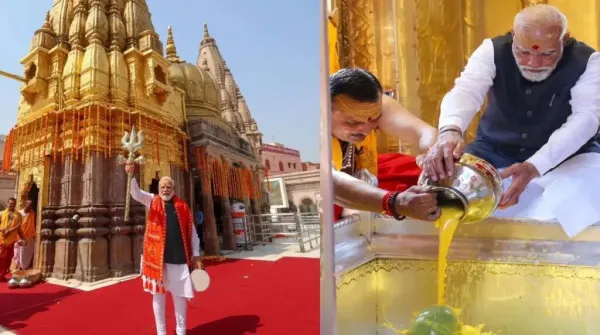
Crowd gathered on the streets of Banaras! PM Modi did a grand road show in Kashi, bowed his head in the court of Baba Vishwanath
-
Crunchyroll launches on Galaxy Play in Vietnam

-
Kubra Khan’s ‘Tableeghi’ pronunciation clip goes viral