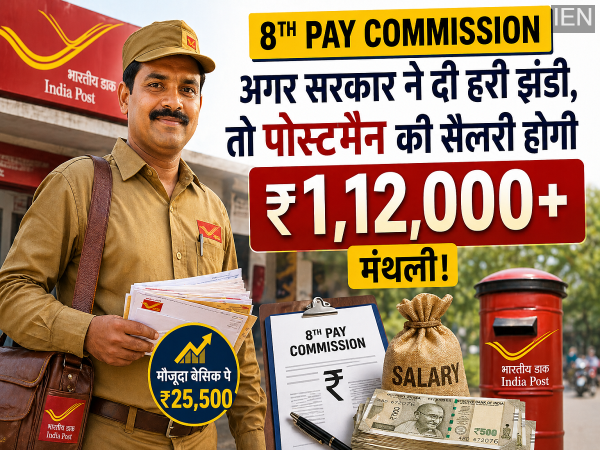
As discussions around the upcoming pay revision gather momentum, employees of the India Post have put forward a bold proposal that could significantly reshape salary structures in the government sector. Ahead of the recommendations of the 8th Pay Commission, postal employees have demanded a massive hike in salaries—including a proposal to raise a postman’s monthly basic pay to over ₹1.12 lakh.
This proposal, if accepted by the government, could mark one of the most dramatic pay revisions in recent years and substantially improve the financial standing of thousands of postal employees across the country.
Big Salary Jump Proposed for Postmen
Currently, a postman or mail guard earns a basic salary of around ₹25,500 under Level 5 of the pay matrix. However, the new demand submitted by the Federation of National Postal Organisations suggests increasing this figure to approximately ₹1,12,000 per month.
This proposed jump is more than four times the existing basic pay, reflecting growing concerns among employees about inflation and the rising cost of living. If implemented, it would significantly elevate the financial status of postal staff and potentially make government jobs more attractive.
What Prompted These Demands?
The memorandum was submitted on April 20, 2026, as part of the consultation process where the 8th Pay Commission is gathering inputs from various employee unions and associations. The FNPO has outlined a comprehensive set of recommendations covering not just salaries but also allowances, promotions, pension benefits, and workplace improvements.
The demands highlight the need to align salaries with modern economic realities and ensure better career growth for employees across different cadres.
Entry-Level Salary May See Major Boost
One of the key proposals includes a significant hike in entry-level salaries. For Level 1 employees, such as Multi-Tasking Staff (MTS), the minimum basic pay is proposed to increase from ₹18,000 to ₹69,000.
Such a revision would benefit thousands of junior employees and help reduce financial stress at the lower levels of the workforce.
Fitment Factor Could Rise to 3.83
A major component of salary revision is the fitment factor—the multiplier used to calculate new salaries and pensions. Currently set at 2.57, postal employees have demanded an increase to 3.83.
If approved, this change alone could result in a substantial rise in salaries and pensions across all levels, making it one of the most impactful aspects of the proposal.
Annual Increment May Double
Another important demand is to increase the annual increment rate from 3% to 6%. Employee representatives argue that the current increment is insufficient to keep pace with inflation, and doubling it would provide better long-term financial stability.
Proposed Salary Structure Across Roles
The memorandum also outlines revised salary expectations for various roles within the postal department:
- Multi-Tasking Staff (Level 1): From ₹18,000 to ₹69,000
- Driver: From ₹19,900–₹21,700 to ₹83,200
- Postman/Mail Guard (Level 5): From ₹25,500 to ₹1,12,000
- Postal/Sorting Assistant (Level 6): From ₹35,400 to ₹1,35,700
- Supervisor (LSG): From ₹44,900 to ₹1,82,500
- Higher Supervisory Grades (HSG-II/I): Up to ₹2,15,100
These figures reflect the scale of expectations employees have from the upcoming pay commission.
Allowances and Benefits Also in Focus
Apart from salary hikes, the proposal includes significant changes in allowances:
- House Rent Allowance (HRA) is proposed to increase to 30%, 35%, and 40% depending on city classification
- Linking HRA with Dearness Allowance (DA) to ensure periodic revisions with inflation
- Introduction of new allowances for digital and financial responsibilities
Promotion and Career Growth Reforms
To address stagnation in career progression, the FNPO has demanded at least five promotions under the Modified Assured Career Progression (MACP) scheme. This move aims to ensure employees receive timely career advancement and salary upgrades.
Special Provisions for Women Employees
The proposal also includes progressive steps for women employees, such as:
- 12 days of menstrual leave annually
- Improved Child Care Leave (CCL)
- Workplace crèche facilities
These measures aim to create a more inclusive and supportive work environment.
Medical and Pension Reforms
The memorandum calls for 100% cashless healthcare under the Central Government Health Scheme (CGHS) for both employees and pensioners. Additionally, it suggests shifting the pension burden entirely to the central government to ensure financial security for retirees.
What Happens Next?
While these proposals are ambitious, their implementation will depend on the recommendations of the and final approval by the government. Historically, pay commissions tend to balance employee demands with fiscal considerations, meaning the final outcome could differ from current expectations.
Final Word
The demand to raise postman salaries beyond ₹1 lakh per month highlights growing aspirations among government employees for better compensation and working conditions. If even partially accepted, these proposals could lead to a significant transformation in India’s public sector pay structure.
For now, all eyes are on the and the government’s next move, which will determine whether these ambitious salary hikes become a reality.
-
Western Odisha Roasts At 43-44°C, Coast Stays Cooler As Thunderstorms Brew

-
'Life tips the scales, every now and then': These poems are a eulogy to loss, grief and a new start

-
Odisha: Adivasi man brings skeletal remains of sister to bank to prove she's dead, withdraw savings

-
Eder Militao to Miss World Cup After Hamstring Surgery

-
Piyush Chawla Urges Delhi Capitals to Stay Positive After RCB Defeat