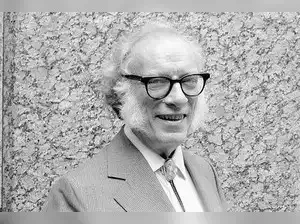
Thought of the Day: Few thinkers have shaped how we imagine the future quite like Isaac Asimov. A scientist, storyteller and relentless explainer of complex ideas, Asimov didn’t just write about robots and galaxies, he changed how people think about them. Best known for introducing the ethical framework now called the Three Laws of Robotics, he helped transform science fiction from fantasy into something grounded, thoughtful and deeply human. Yet for all his futuristic vision, Asimov’s most powerful insights often turned inward. His reflections on human behavior, empathy and self-awareness reveal a quieter legacy, one that feels just as urgent in today’s fast-moving, hyperconnected world.
Human emotions, fear, ambition, insecurity, hope are more universal than people often admit. By examining your own reactions, motivations and patterns, you begin to recognize those same traits in others. The quote flips a common instinct: instead of asking, “Why are they like this?” it asks, “When have I felt this way?”
In a world shaped by differences, culture, politics, identity, this idea offers a grounding perspective. It doesn’t erase differences, but it builds a bridge through shared experience. Asimov’s insight becomes especially relevant in moments of conflict, where understanding often breaks down. The closer you look at yourself, the easier it becomes to replace judgment with empathy.
Asimov’s name is almost inseparable from I, Robot, a collection of stories that introduced readers to a radically different idea of machines. Before him, robots in fiction were often portrayed as dangerous, uncontrollable threats. Asimov changed that narrative by giving them rules, clear ethical boundaries designed to protect humanity.
These Three Laws of Robotics became one of the most influential concepts in science fiction history. They didn’t just shape stories; they influenced real-world discussions about artificial intelligence and ethics decades later. In many ways, Asimov anticipated debates that are now unfolding in tech labs and policy rooms across the globe.
But what stands out is this: even when writing about machines, Asimov was ultimately exploring human values. His robots were reflections of us, our fears, our logic, our moral dilemmas.
Asimov’s ambition extended far beyond robots. With the Foundation series, he created a sweeping narrative about the rise and fall of civilizations. Inspired by the collapse of the Roman Empire, the story introduced “psychohistory,” a fictional science that could predict the behavior of large populations.
Through characters like Hari Seldon, Asimov explored how patterns, when studied closely, can reveal the future. It’s a concept that connects directly to today’s thought of the day. Just as psychohistory looks for patterns in societies, the quote encourages individuals to look for patterns within themselves.
Understanding the self, in this sense, becomes a form of insight not just into individuals, but into humanity as a whole.
He contributed regularly to The Magazine of Fantasy and Science Fiction, earning recognition for his ability to educate without overwhelming. Books like The Human Brain and The Neutrino showcased his range, while his essays revealed a mind constantly searching for connections between knowledge and experience.
Even in his most technical writing, there was a consistent thread: curiosity about how things work, whether those “things” were atoms, societies or people.
It asks for a pause.
Instead of reacting outwardly, it encourages looking inward first. That shift can change conversations, relationships and even how people approach disagreement. Recognizing your own flaws, biases and emotional triggers makes it easier to see those same complexities in others.
In practical terms, it’s a tool for better communication, stronger relationships and deeper self-awareness. In broader terms, it’s a reminder that empathy begins with honesty about who you are.
Today’s thought of the day reflects that enduring focus. It strips away complexity and returns to something fundamental: the idea that understanding the world begins with understanding yourself.
In an age driven by innovation and change, that message feels both timeless and necessary.
Thought of the Day
“All you have to do is take a close look at yourself and you will understand everyone else.”Thought of the Day Meaning
At its core, this thought is about something deceptively simple: self-awareness. Asimov suggests that the key to understanding others isn’t found in endless analysis or external observation; it starts with introspection.Human emotions, fear, ambition, insecurity, hope are more universal than people often admit. By examining your own reactions, motivations and patterns, you begin to recognize those same traits in others. The quote flips a common instinct: instead of asking, “Why are they like this?” it asks, “When have I felt this way?”
In a world shaped by differences, culture, politics, identity, this idea offers a grounding perspective. It doesn’t erase differences, but it builds a bridge through shared experience. Asimov’s insight becomes especially relevant in moments of conflict, where understanding often breaks down. The closer you look at yourself, the easier it becomes to replace judgment with empathy.
Thought of the Day: The Scientist Who Gave Robots a Moral Code
Asimov’s name is almost inseparable from I, Robot, a collection of stories that introduced readers to a radically different idea of machines. Before him, robots in fiction were often portrayed as dangerous, uncontrollable threats. Asimov changed that narrative by giving them rules, clear ethical boundaries designed to protect humanity.These Three Laws of Robotics became one of the most influential concepts in science fiction history. They didn’t just shape stories; they influenced real-world discussions about artificial intelligence and ethics decades later. In many ways, Asimov anticipated debates that are now unfolding in tech labs and policy rooms across the globe.
But what stands out is this: even when writing about machines, Asimov was ultimately exploring human values. His robots were reflections of us, our fears, our logic, our moral dilemmas.
Thought of the Day: A Universe Built on Patterns and Psychology
Asimov’s ambition extended far beyond robots. With the Foundation series, he created a sweeping narrative about the rise and fall of civilizations. Inspired by the collapse of the Roman Empire, the story introduced “psychohistory,” a fictional science that could predict the behavior of large populations.Through characters like Hari Seldon, Asimov explored how patterns, when studied closely, can reveal the future. It’s a concept that connects directly to today’s thought of the day. Just as psychohistory looks for patterns in societies, the quote encourages individuals to look for patterns within themselves.
Understanding the self, in this sense, becomes a form of insight not just into individuals, but into humanity as a whole.
More Than Science Fiction: A Voice for Curiosity
While many remember Asimov for his fiction, his nonfiction work was equally influential. Over decades, he wrote extensively on subjects ranging from chemistry and physics to literature and religion. His ability to explain complex ideas in clear, engaging language made science accessible to everyday readers.He contributed regularly to The Magazine of Fantasy and Science Fiction, earning recognition for his ability to educate without overwhelming. Books like The Human Brain and The Neutrino showcased his range, while his essays revealed a mind constantly searching for connections between knowledge and experience.
Even in his most technical writing, there was a consistent thread: curiosity about how things work, whether those “things” were atoms, societies or people.
How does this quote make a space for itself in today’s world
In today’s digital world, where opinions are instant and reactions are amplified, understanding others can feel more difficult than ever. Social media often rewards quick judgments rather than thoughtful reflection. Asimov’s quote pushes in the opposite direction.It asks for a pause.
Instead of reacting outwardly, it encourages looking inward first. That shift can change conversations, relationships and even how people approach disagreement. Recognizing your own flaws, biases and emotional triggers makes it easier to see those same complexities in others.
In practical terms, it’s a tool for better communication, stronger relationships and deeper self-awareness. In broader terms, it’s a reminder that empathy begins with honesty about who you are.
A Legacy That Connects Science and Humanity
Asimov wrote about distant galaxies, advanced civilizations and intelligent machines. But at the heart of his work was always a fascination with people, how they think, how they behave and how they connect.Today’s thought of the day reflects that enduring focus. It strips away complexity and returns to something fundamental: the idea that understanding the world begins with understanding yourself.
In an age driven by innovation and change, that message feels both timeless and necessary.