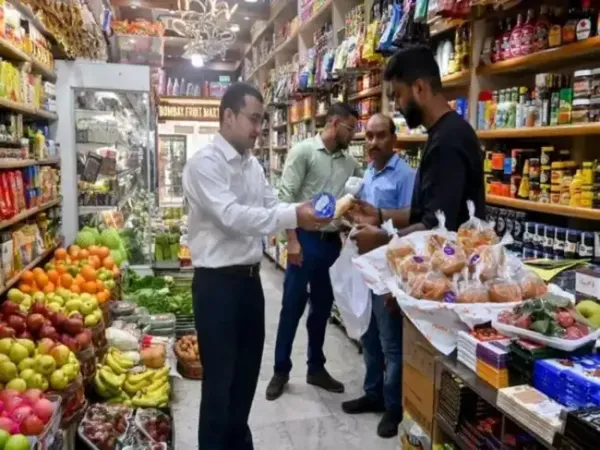
Kolkata: The Soybean Processors Association of India (SOPA), the apex body of the soybean processing industry, has written to the Ministry of Consumer Affairs, Food & Public Distribution to take urgent action to restore standardised packaging quantities for edible oils. The letter follows a joint representation submitted to the ministry by five national edible oil industry associations to draw the government's attention to the widespread consumer deception that has resulted from the deregulation of pack sizes since January 2023.
Also Read: Argentina emerges as India's main supplier of edible oils
Prior to January 1 of 2023, edible oil packaging in India was governed by standardised net quantity norms. Manufacturers were required to sell oil only in prescribed sizes — 250 ml/g, 500 ml/g, 1 kg/litre, 5 kg/litre, and so on. Pricing was transparent and competition occurred on a level playing field, with consumers able to compare products at a glance.
Effective 1 January 2023, the government removed these standard quantity restrictions, ostensibly to provide greater freedom to manufacturers and consumers. As a well-intentioned regulatory reform, it also introduced a requirement to declare the 'Unit Sale Price' (price per gram or ml) on packages, to enable informed consumer comparison.
The outcome, however, has been the opposite of what was intended, SOPA said.
Also Read: Global palm oil supply to tighten in FY27 amid biodiesel push and weather risks: SEA
A market survey of 40 edible oil pouches from different brands reveals a bewildering range of non-standard net quantities now prevalent on retail shelves: 350 g, 375 g, 400 g, 440 g, 750 g, 800 g, 810 g, 840 g, 850 g, 870 g, 880 ml, 900 ml, 910 g, 970 g — the list is illustrative only. There is, in law, total freedom to use any quantity.
In many instances, pouches have identical physical dimensions, look visually similar but contain different quantities. A pouch of 880 ml and a pouch of 910 ml may appear identical on the shelf. The 880 ml pouch is priced lower in absolute terms, and the typical consumer — shopping on the basis of visual cues and absolute price — naturally assumes the lower-priced pouch is the better deal. In reality, the 880 ml pouch carries a higher cost per litre. The deception is large scale, real, systematic.
A further dimension of deception arises from brands that declare volume in millilitres without specifying temperature. Since edible oils expand and contract with heat, one litre at 30°C is not the same mass as one litre at 40°C. In the absence of a temperature reference, the consumer has no basis for accurate comparison.
The deregulation has created an unfair competitive environment. Manufacturers who have chosen to retain standard, transparent pack sizes are losing market share to competitors exploiting non-standard pack sizes to create an impression of lower price. As a consequence, even honest manufacturers are being compelled to adopt confusing and non-standard pack sizes merely to remain competitive. A race to the bottom in consumer transparency is underway across the industry.
It has been argued, including by some in the industry, that the mandatory declaration of unit sale price (price per gram or ml) makes standardisation unnecessary and that consumers can calculate relative value from the declared per-unit price. SOPA strongly contests this argument.
The typical retail consumer does not perform per-unit calculations while shopping. The unit price is often expressed in paise, frequently with decimal places — for example, 24.72 paise per ml — in small print that is rarely read. Consumer psychology and high speed shopping at retail stores ensure that visual cues and absolute price dominate purchase decisions. The 'Unit Sale Price' remedy is theoretically sound but practically ineffective for the vast majority of consumers.
Also Read: Argentina emerges as India's main supplier of edible oils
Prior to January 1 of 2023, edible oil packaging in India was governed by standardised net quantity norms. Manufacturers were required to sell oil only in prescribed sizes — 250 ml/g, 500 ml/g, 1 kg/litre, 5 kg/litre, and so on. Pricing was transparent and competition occurred on a level playing field, with consumers able to compare products at a glance.
Effective 1 January 2023, the government removed these standard quantity restrictions, ostensibly to provide greater freedom to manufacturers and consumers. As a well-intentioned regulatory reform, it also introduced a requirement to declare the 'Unit Sale Price' (price per gram or ml) on packages, to enable informed consumer comparison.
The outcome, however, has been the opposite of what was intended, SOPA said.
Also Read: Global palm oil supply to tighten in FY27 amid biodiesel push and weather risks: SEA
A market survey of 40 edible oil pouches from different brands reveals a bewildering range of non-standard net quantities now prevalent on retail shelves: 350 g, 375 g, 400 g, 440 g, 750 g, 800 g, 810 g, 840 g, 850 g, 870 g, 880 ml, 900 ml, 910 g, 970 g — the list is illustrative only. There is, in law, total freedom to use any quantity.
In many instances, pouches have identical physical dimensions, look visually similar but contain different quantities. A pouch of 880 ml and a pouch of 910 ml may appear identical on the shelf. The 880 ml pouch is priced lower in absolute terms, and the typical consumer — shopping on the basis of visual cues and absolute price — naturally assumes the lower-priced pouch is the better deal. In reality, the 880 ml pouch carries a higher cost per litre. The deception is large scale, real, systematic.
A further dimension of deception arises from brands that declare volume in millilitres without specifying temperature. Since edible oils expand and contract with heat, one litre at 30°C is not the same mass as one litre at 40°C. In the absence of a temperature reference, the consumer has no basis for accurate comparison.
The deregulation has created an unfair competitive environment. Manufacturers who have chosen to retain standard, transparent pack sizes are losing market share to competitors exploiting non-standard pack sizes to create an impression of lower price. As a consequence, even honest manufacturers are being compelled to adopt confusing and non-standard pack sizes merely to remain competitive. A race to the bottom in consumer transparency is underway across the industry.
It has been argued, including by some in the industry, that the mandatory declaration of unit sale price (price per gram or ml) makes standardisation unnecessary and that consumers can calculate relative value from the declared per-unit price. SOPA strongly contests this argument.
The typical retail consumer does not perform per-unit calculations while shopping. The unit price is often expressed in paise, frequently with decimal places — for example, 24.72 paise per ml — in small print that is rarely read. Consumer psychology and high speed shopping at retail stores ensure that visual cues and absolute price dominate purchase decisions. The 'Unit Sale Price' remedy is theoretically sound but practically ineffective for the vast majority of consumers.