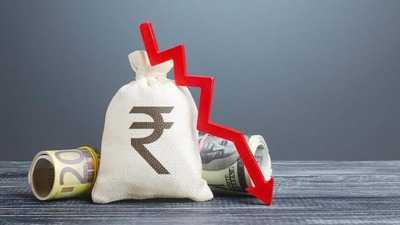
Indian rupee weakens beyond ₹95/$ amid oil price surge
30 Apr 2026
The Indian rupee has breached the 95 per US dollar mark for the first time since March 30.
The fall comes amid a stronger US currency, rising global crude oil prices, and continued foreign outflows.
The rupee opened at 95.02 against the dollar today, down by some 0.18% from its previous close of 94.85 on Wednesday.
Rupee's fall attributed to US Federal Reserve's hawkish signals
Policy influence
The rupee's fall is also attributed to the hawkish signals from the US Federal Reserve.
While keeping policy rates unchanged overnight, the decision showed a sharp division with three officials dissenting over guidance that continued to indicate a tilt toward easing.
This has led to a stronger dollar and higher US bond yields, making emerging market currencies less attractive.
Rupee depreciation driven by rising global crude oil prices
Market dynamics
The rupee's depreciation is also being driven by rising global crude oil prices and continued foreign fund outflows.
Brent crude is currently hovering over $126 per barrel, on track for a weekly rise of around 15%.
Higher oil prices typically widen India's trade deficit and increase demand for dollars, further weighing on the local currency.
RBI options to stabilize rupee limited
Regulatory constraints
The Reserve Bank of India's (RBI) options to stabilize the rupee remain limited as some regulatory measures aimed at containing depreciation are being rolled back.
This is especially true with foreign portfolio investor (FPI) flows expected to remain weak amid elevated Middle East tensions.
Amit Pabari, MD at CR Forex Advisors, said "Right now, the rupee is no longer trading in isolation -- it is reacting to three dominant forces: oil, capital flows and central bank policies."
SBI warns of inflationary expectations becoming unanchored
Economic forecast
The State Bank of India's economic research department has warned that without timely balance of payments (BoP) support measures, inflationary expectations could become unanchored amid persistent rupee weakness and volatile capital flows.
"It is therefore imperative to control the second-round effects," said Soumya Ghosh, Group Chief Economic Advisor at SBI.
"Exchange rate depreciation leads to higher imported inflation."
-
UP PGT Exam City Slips Released; 4-Year Wait Comes to an End

-
Airfares to be Decided Tomorrow: Will Flight Tickets Become More Expensive Again?

-
EPFO Settles Record 83.1 Million Claims in 2025-26; Now Preparing for a Pension Hike!

-
Relief for Medical Colleges: Government Revises Rules; Path Cleared to Increase MBBS Seats

-
Preparations for Admissions at Ambedkar University Delhi Intensify; Find Out When the Process Begins