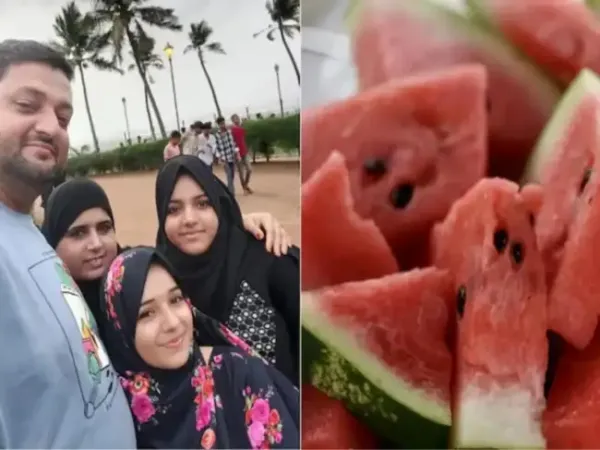
Days after a family of four died in south Mumbai, there could be some answers as to what happened at the Dokadia house after 1 am and whether watermelon played a role in their deaths or not. An investigation has ruled out food adulteration in the tragic death of Abdulla Dokadia, 44, his wife Nasreen and two minor daughters Ayesha and Zainab. The FDA reports have shown that none of the food samples collected from the house showed any signs of adulteration, additives such as artificial sweeteners or colours, reports TOI's Eshan Kalyanikar.
ALSO READ: Jabalpur mother-son viral photo: New image reveals woman's desperate last attempt to save her four-year-old child
Investigators are now waiting for the lab test results which will throw light on whether the deaths happened due to food poisoning resulting from bacterial growth or by the ingestion of a toxic substance.
ALSO READ: Watermelon safety guide: How should you store your favourite summer fruit?
The meat sample has been sent to BMC laboratories for protein analysis. FDA officials have noted that bacterial contamination or other toxins could not be ruled out, as those tests were not conducted.
ALSO READ: Jabalpur mother-son viral photo: New image reveals woman's desperate last attempt to save her four-year-old child
Mumbai watermelon case update
In a stunning twist, the Maharashtra Food and Drug Administration’s (FDA) tests on food samples (watermelon, biryani, water, and spices) collected from the home have found no signs of adulteration. Forensic experts will now perform other tests to look for toxins produced by microorganisms or by other poisonous substances. "The entire database of poisons will be compared with the findings of the tests," a top forensic expert told TOI.Investigators are now waiting for the lab test results which will throw light on whether the deaths happened due to food poisoning resulting from bacterial growth or by the ingestion of a toxic substance.
ALSO READ: Watermelon safety guide: How should you store your favourite summer fruit?
No artificial sweetener in watermelon
The FDA also ruled out the presence of synthetic dyes and other additives used to artificially enhance colour, sweetness, or size in the watermelon. All other food samples collected were found to meet standard quality norms. The water sample yielded inconclusive results, while the dates could not be tested due to insufficient quantity.The meat sample has been sent to BMC laboratories for protein analysis. FDA officials have noted that bacterial contamination or other toxins could not be ruled out, as those tests were not conducted.