
Listen to this article in summarized format
Loading...
××
Subscribe to

Unlock AI Briefing and Premium Content
New Year Offer 24 Hours Left
Subscribe NowAlready a member? Sign In
What's Included
- Exclusive Stories
- Daily ePaper Access
- Smart Market Tools
- Curated Investment Ideas
- Ad-lite Experience
Subscription

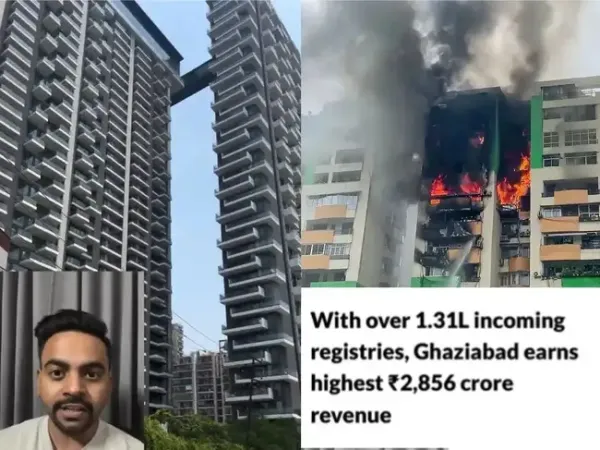
A video from a high-rise society in Ghaziabad has gone viral, raising sharp questions about the ground reality of so-called luxury housing. The clip shows premium apartments priced between ₹2 crore and ₹4 crore, but flags basic issues like damaged roads, poor air quality and concerns over fire safety. The post, widely shared on social media, captures a growing unease among residents about whether the price they pay matches the life they get.
That sharp phrasing has resonated online, with many users saying it reflects what they quietly feel but rarely say out loud.
Yet, the visuals tell a different story outside the gates. Broken roads, dusty surroundings and unhealthy AQI levels appear to be part of daily life. For many viewers, the contrast between price and basic infrastructure stands out more than the buildings themselves.
That becomes a serious issue when buildings rise far beyond that limit. The concern has gained attention after recent fire incidents in Indirapuram, where responders faced difficulty tackling fires on higher floors.
Recently, a fire incident at Gaur Green Avenue in Indrapuram put the spotlight on how ready NCR’s fire services really are for emergencies in high-rise buildings. As skylines continue to rise, a worrying gap remains. Thousands of residents living on higher floors in Noida and Ghaziabad are effectively out of reach for current firefighting systems. Hydraulic platforms in both cities can go up to about 42 metres, roughly 14 floors, even though many buildings now stretch close to or beyond 100 metres. In fact, average building heights in these areas already cross the 50-metre mark.
While fire engines carry hoses that can theoretically push water up to 60–75 metres, that range depends heavily on ideal conditions. In real-life situations, firefighting at such heights relies far more on hydraulic ladders. During the Gaur Green Avenue incident, initial efforts struggled to reach even the ninth floor, and the fire eventually climbed up to the 13th.
On the ground, resources remain limited. Noida runs nine fire stations with 28 fire tenders and four hydraulic cranes placed across key sectors, all with a maximum reach of 42 metres. Ghaziabad operates with five stations, 22 tenders and just one crane of similar capacity based in Vaishali. When the Gaur Green Avenue fire broke out around 8.50 am, multiple engines were rushed from Vaishali, with additional cranes later brought in from Noida.
Officials also point out that even after reaching a site, hydraulic platforms need about 15 to 20 minutes to fully deploy — a delay that can prove critical during fast-spreading fires.
Experts say the future of fire safety in NCR’s high-rises cannot rely only on external rescue systems. Buildings themselves will need to do more, from functional sprinklers and pressurised stairwells to smoke control systems and regular evacuation drills, to handle emergencies where outside access falls short.
Some pointed to opportunities in non-metro areas, where small businesses or local work can provide steady income without the pressure of long-term home loans. Others said quality of life, not just property value, should drive decisions.
For many, the idea of a home remains tied to space, ground access and cleaner surroundings — not just height and amenities on paper.
The debate comes as NCR cities like Ghaziabad and Noida continue to expand vertically. While demand for high-rise housing remains strong, incidents and viral posts like this are forcing a closer look at safety and infrastructure.
Authorities are reportedly reviewing fire safety systems and conducting audits, but for many, the bigger question remains unresolved.
At its core, the viral post taps into a simple but uncomfortable question — does paying ₹4 crore guarantee a better life, or just a taller address?
The answer, going by the reactions, is no longer as obvious as it once seemed.
Assembly Elections 2026
Election Results 2026 Live Updates: Who's ahead in which state
West Bengal Election Results 2026 Live Updates
TN Election Result 2026 Live Updates
“Live like a prisoner” remark strikes a chord
The viral post bluntly sums up the frustration. It says people are spending crores only to “live like a prisoner.” It goes a step further, comparing residents to “frogs in a well” who remain satisfied despite visible shortcomings.That sharp phrasing has resonated online, with many users saying it reflects what they quietly feel but rarely say out loud.
Tall towers, but basics under stress
The video walks through clusters of 30-plus storey towers in Ghaziabad. These projects generate massive revenue, with over ₹6,600 crore in registrations and large tax collections flowing to authorities.Yet, the visuals tell a different story outside the gates. Broken roads, dusty surroundings and unhealthy AQI levels appear to be part of daily life. For many viewers, the contrast between price and basic infrastructure stands out more than the buildings themselves.
Fire safety gap raises fresh concern
One of the most worrying points raised in the video is fire preparedness. Equipment like hydraulic cranes and fire tenders can reportedly reach only up to around 14 floors in many cases.That becomes a serious issue when buildings rise far beyond that limit. The concern has gained attention after recent fire incidents in Indirapuram, where responders faced difficulty tackling fires on higher floors.
Recently, a fire incident at Gaur Green Avenue in Indrapuram put the spotlight on how ready NCR’s fire services really are for emergencies in high-rise buildings. As skylines continue to rise, a worrying gap remains. Thousands of residents living on higher floors in Noida and Ghaziabad are effectively out of reach for current firefighting systems. Hydraulic platforms in both cities can go up to about 42 metres, roughly 14 floors, even though many buildings now stretch close to or beyond 100 metres. In fact, average building heights in these areas already cross the 50-metre mark.
Ghaziabad, Noida have 80-floor buildings
The contrast becomes sharper when looking at the tallest structures. Noida’s Supernova tower rises to 307 metres with around 80 floors, while Ghaziabad’s Saya Gold Avenue and Apex Drio touch about 120 metres, each with 40 storeys.While fire engines carry hoses that can theoretically push water up to 60–75 metres, that range depends heavily on ideal conditions. In real-life situations, firefighting at such heights relies far more on hydraulic ladders. During the Gaur Green Avenue incident, initial efforts struggled to reach even the ninth floor, and the fire eventually climbed up to the 13th.
On the ground, resources remain limited. Noida runs nine fire stations with 28 fire tenders and four hydraulic cranes placed across key sectors, all with a maximum reach of 42 metres. Ghaziabad operates with five stations, 22 tenders and just one crane of similar capacity based in Vaishali. When the Gaur Green Avenue fire broke out around 8.50 am, multiple engines were rushed from Vaishali, with additional cranes later brought in from Noida.
Officials also point out that even after reaching a site, hydraulic platforms need about 15 to 20 minutes to fully deploy — a delay that can prove critical during fast-spreading fires.
Authorities admit upgrades are overdue
Ghaziabad has already placed requests for higher-capacity machines, while Noida officials say a 75-metre hydraulic platform is expected soon. “We should have it in the next three months,” he told TOI. However, a similar promise made in July 2025 for a 100-metre crane has yet to materialise.Experts say the future of fire safety in NCR’s high-rises cannot rely only on external rescue systems. Buildings themselves will need to do more, from functional sprinklers and pressurised stairwells to smoke control systems and regular evacuation drills, to handle emergencies where outside access falls short.
Online reactions: ‘Better options outside metros’
The discussion quickly spread online, with many users arguing that similar or even better living conditions are available in smaller towns at a fraction of the cost, often around ₹50–60 lakh.Some pointed to opportunities in non-metro areas, where small businesses or local work can provide steady income without the pressure of long-term home loans. Others said quality of life, not just property value, should drive decisions.
“Better to develop rural areas,” say users
Several comments backed the idea of investing beyond big cities. “Better to develop rural areas” became a recurring sentiment. Users mentioned cities like Chandigarh as examples of more balanced living.For many, the idea of a home remains tied to space, ground access and cleaner surroundings — not just height and amenities on paper.
The debate comes as NCR cities like Ghaziabad and Noida continue to expand vertically. While demand for high-rise housing remains strong, incidents and viral posts like this are forcing a closer look at safety and infrastructure.
Authorities are reportedly reviewing fire safety systems and conducting audits, but for many, the bigger question remains unresolved.
At its core, the viral post taps into a simple but uncomfortable question — does paying ₹4 crore guarantee a better life, or just a taller address?
The answer, going by the reactions, is no longer as obvious as it once seemed.